Showing posts with label wellhead protection. Show all posts

Friday, September 27, 2019

BLOG: Emergency Management and Drinking Water Protection Workshop

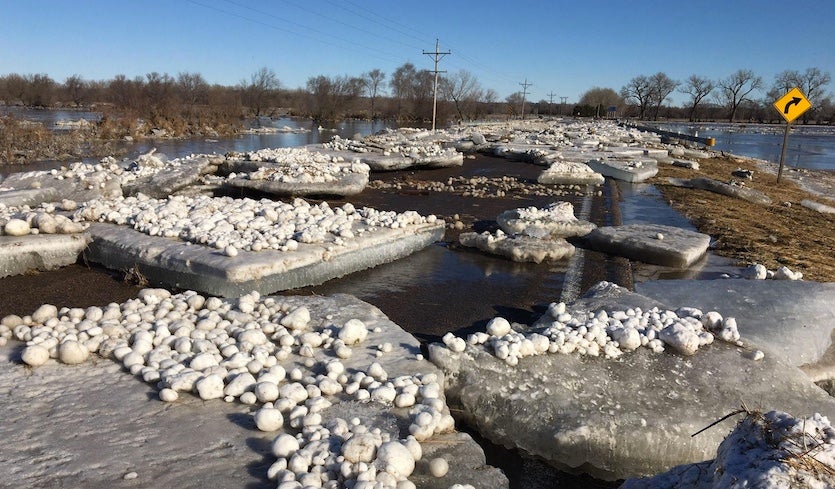
The effects of the historic flooding Nebraska experienced this spring are still being felt all these months later, and will continue to be felt into the future. A natural disaster such as this is a good opportunity to look at contingency planning for community drinking water supplies in the event of an emergency.

Image credit: Nebraska State Patrol

The Nebraska Wellhead Protection Network is hosting a workshop on the subject October 3, 2019 from 9:00 a.m. to 4:30 p.m. at Valley Irrigation (28800 Ida Street, Valley, Nebraska) and invites you to join us. "Emergency Management and Contingency Planning to Protect Nebraska's Water Supply" will cover:

  • Why having a comprehensive emergency management plan is important
  • How to develop an emergency management plan
  • Stories of how towns and businesses survived Nebraska's flooding this spring
The agenda includes:
Lunch and a tour of Valley's facilities, which were impacted by spring flooding, are generously provided by Valley Irrigation.

Join us and help your community be prepared for emergencies! Register by October 1.


Questions? Contact the Groundwater Foundation at info@groundwater.org or 402-434-2740.

Friday, June 28, 2019

BLOG: Project GROW and Wellhead Protection

by Sara Brock, Groundwater Foundation

The Nebraska Wellhead Protection Network (WHPN) met on Thursday, June 27 at the Upper Big Blue Natural Resources District offices in York, Nebraska.

Much of the meeting focused on Upper Big Blue NRD's Project GROW (Growing Rotational crops On Wellfields). Upper Big Blue Water Conservationist Dan Leininger and Site Manager/Farmer Scott Gonnerman talked about the method of planting and harvesting cover crops as well as the soil and water health benefits they have seen as a result. Notably, they have increased water infiltration rates from 0.5 inches/hour to over 6 inches/hour, significantly reducing runoff. They have also been able to decrease their need for applied nitrogen, saving themselves money and protecting water quality at the same time. Department Manager Marie Krausnick briefly touched on a Source Water Grant and collaboration with the City of York that makes Project GROW possible.


The meeting concluded with a tour of the Project GROW site, which is located on the City of York’s wellfield. Visiting the soybean field, WHPN members saw leafy rows peaking out that had been shielded from the previous night’s hail by the triticale stalks that covered the field.


The pollinator habitat, opposite the soybeans, looked grassy and healthy. At two years old, it’s still filtering out some of the chemicals that have been added to the soil over the years, but it will grow bigger and have more blooms as the soil health is restored.

The tour ended at the community garden, a space that is open to members of the public to grow their own fresh produce. Using what they’ve learned from the Upper Big Blue NRD staff and Project GROW, York residents are growing tomatoes, zucchini, and more. The NRD also put in a couple rows of fruit trees and bushes that, in a few years, will be open to harvest by the public.


Attendees represented several state and local organizations such as the Nebraska Departments of Environmental Quality and Department of Health and Human Services, several Natural Resources Districts, and community utilities. 


Click here to learn more about Project GROW. Click here to learn more about the Nebraska Wellhead Protection Network.

Wednesday, May 22, 2019

BLOG: Wayne's Story


by Jennifer Wemhoff, Groundwater Foundation

Wayne Madsen loved groundwater. He spent his career as a well driller with the family business he inherited from his father, tapping into the groundwater resources of Southwest Nebraska. He had a vision for the next generation of groundwater professionals, that they would be educated, engaged, and community-minded.

Wayne acted to make that vision a reality.

Wally and Wanda Water Drop
He saw the value in educating youth about groundwater. He was heavily involved in educating tens of thousands of kids at the Groundwater Foundation’s Nebraska Children’s Groundwater Festival. There they learned what groundwater is, how it moves, how we all rely on it, and planted the seeds for a lifetime of groundwater stewardship. Many kids even got to see firsthand what a well drilling rig looked like, and were fascinated by the process of tapping the resource that brought water to their homes. Wayne was instrumental in created “Wally and Wanda Water” water drop costumes that made the rounds at parades, fairs, festivals and home shows throughout Nebraska. He and his wife, Jean, even donned those costumes from time to time, bringing another element of fun to learning about groundwater to both kids and their parents.

Wayne’s hometown of Trenton, Nebraska also became a Groundwater Guardian thanks to, you guessed it, Wayne’s leadership. He wanted the broader community to know about the water they drank and that its protection was up to them. He spoke at meetings and events, pulled a float in area parades promoting the Groundwater Guardian team and groundwater, championed wellhead protection efforts, and volunteered significant time and expertise to other Groundwater Foundation educational programs.

Wayne Madsen receives the
Kremer Award in 2000
Wayne was a well-respected groundwater professional – he served on the Nebraska Well Drillers Association Board of Directors as its President and chaired the Public Affairs Committees. He worked with the Nebraska Legislature to adopt water well licensing laws, state water well construction standards, and continuing education requirements for water well professionals. His fellow groundwater professionals even named an award after him – the Wayne Madsen Award for Community Service.

The vision Wayne had for the future water professionals is here. You can follow his example for community engagement and education by getting involved with the Groundwater Foundation. Supporting the Foundation’s youth education and community action programs will help create a bright future for groundwater.

Friday, September 28, 2018

BLOG: Nebraska Wellhead Protection Network

by Sara Brock, The Groundwater Foundation

The Nebraska Wellhead Protection Network is a collaboration of the Groundwater Foundation, state agencies, local municipalities, and private organizations who are involved in protecting and conserving groundwater and drinking water sources in Nebraska. A recent meeting was held on September 26, 2018 at the Water Treatment Plant in Auburn, Nebraska. Ken Swanson, manager of Auburn’s Water and Wastewater Treatment, and Dave Hunter, general manager of Auburn Board of Public Works, hosted the 24 of us inside Auburn’s Water Treatment Plant amidst all of the pumps, filters, and equipment.

Auburn’s public water system is supplied by groundwater from the alluvial aquifer underneath the Nemaha River valley and, because of this, is classified as “Groundwater Under the Direct Influence of Surface Water” or GWUDI. Communities that utilize GWUDI as a source have to have additional methods and treatments to ensure that the water that enters the public system meets all drinking water standards. The water treatment plant one part of Auburn’s complex and proactive approach to providing clean water in their area.  Fully automated, the plant self-cleans its filters, provides treated and safe water to all of its residents, and was designed to allow for additional filtering tanks and treatment processes should water quality and quantity issues arise in the future. While the filters were turned off during the presentation portion of the meeting, Ken and several of Auburn’s water operators were able to show us how the plant performs a filter flush and backwash during the tour.

Beyond the plant, Auburn has been working closely with the Nebraska Department of Environmental Quality to update their Wellhead Protection (WHP) Plan, including a re-drawing of the boundaries to include the Surface Water Contribution Area, encompassing a whopping 51,000 acres of land in and around Auburn. Dave’s presentation focused very passionately on the idea that groundwater and surface water protections absolutely must be integrated because “they all end up in the same bucket” and the 2017 version of the plan not only reflects this, but has also opened up Auburn’s WHP and Drinking Water Protection Management Plan (DWPMP) to new sources of funding. Auburn is the first municipality in the U.S. to utilize federal 319 funding for an integrated groundwater and surface water management plan.


The complex history and future plans of Auburn’s water system was a useful subject for many of the attendees of this meeting, including representatives from Syracuse, York, and Wilber.  These communities are in the process of developing and implementing wellhead protection and drinking water protection management plans. Talking with Ken and Dave as well as Jonathan Mohr, a senior environmental planner with JEO Consulting Group who assisted in the development of the plans, the meeting provided potential next steps and opportunities to replicate and improve upon Auburn’s WHP model.

For more information about the Nebraska Wellhead Protection Network, visit https://www.groundwater.org/action/community/newhp.html.

Tuesday, September 11, 2018

BLOG: Proactive Source Water Management for a Unique Water System

by Jonathan Mohr, JEO Consulting Group, Inc. and David Hunter, Auburn Board of Public Works

The City of Auburn, population 3,000, is located in southeast Nebraska, near the Little Nemaha River, approximately seven miles upstream of its confluence with the Missouri River. The City receives its drinking water from a wellfield located east of the community within an alluvial aquifer along the Little Nemaha River. The wellfield consists of 11 vertical wells averaging 45 to 50 feet below the ground's surface, pumping up to 150 million gallons per year. The source water area also includes multiple small perennial tributaries, which provide recharge to the aquifer, and are therefore hydrologically connected to the alluvial aquifer.


This connection has resulted in several unique water management challenges for the Auburn Board of Public Works (BPW), which is responsible for managing the community’s water system. This hydrologic connection resulted in a 2008 determination by the Nebraska Department of Health and Human Services that the water system is a “groundwater system under the influence of surface water.” Only 12 water systems in Nebraska (out of 602) carry this designation, which requires a higher level of water treatment. As a result, the BPW started construction of a new water treatment plan in 2009 which went online in 2011.

In order to better manage this unique resource, the BPW developed the Auburn Drinking Water Protection Management Plan (DWPMP) to guide decision-makers towards their goal of providing a long-term, safe, and reliable source of drinking water. The plan was approved by the Nebraska Department of Environmental Quality (NDEQ) and U.S. Environmental Protection Agency Region VII in July 2018, making Auburn the first municipality in the United States with an approved DWPMP.

The idea behind the DWPMP began in 2014 by the NDEQ Source Water Protection Program. NDEQ staff worked with U.S. EPA Region VII to recognize the hydrologic connection between surface water and groundwater. Historically, EPA has only focused funds towards protecting surface water quality; however, by recognizing this hydrologic connection and the risks to groundwater from nonpoint source pollution, NDEQ has opened the door to funding additional opportunities. NDEQ can now allow communities with an approved DWPMP to use funding from the Nonpoint Source Management Program 319 Funds to implement projects and programs to safeguard a groundwater-based drinking water source. Auburn’s DWPMP focuses on improving the water quality within the perennial streams that recharge the alluvial aquifer where Auburn’s wells are located.


A hydrologically connected aquifer requires a unique methodology to identify and delineate the wellhead protection area (WHPA). The former WHPA was updated to include a "conjunctive delineation" which identifies an area from which surface water may contribute to the groundwater reaching a well. Auburn’s conjunctive WHPA now includes the watersheds of the locally contributing tributaries, and a small portion of the Little Nemaha River watershed upgradient of the wellfield. This allows for holistic management and protection of both surface and groundwater resources. The new WHPA is 51,400 acres, one of the largest in Nebraska, and the first to be officially designated a conjunctive delineation by NDEQ.


Working with stakeholders and the public was critical to developing the DWPMP.  These included the Nemaha Natural Resources District (NRD), NDEQ, the Natural Resources Conservation Service, and private property owners. Stakeholders, including agricultural producers, provided input on preferred best management practices (BMPs), including cover crops, grassed waterways, no-till farming, soil sampling, and use of bioswales and constructed wetlands within urban areas.

Another key plan recommendation, currently under design by JEO Consulting Group, Inc., is exploring the use of artificial groundwater recharge (AGR) to increase the storage capacity of the aquifer. This could increase the quantity of water available to Auburn’s wells, build resistance to drought, and create a more sustainable and resilient water system. Structures used to achieve AGR will also improve streambank stabilization, improve water quality, and improve aquatic habitat. AGR structures include in-stream grade control, low-head weirs, or similar structures which raise the surface level of the tributaries, thereby increasing storage in the aquifer. An existing 19-acre borrow pit immediately north Auburn is another target for AGR, by pumping water from a local tributary into the pit and allowing it to seep into the aquifer.

The DWPMP is a shining example of collaboration between Auburn BPW, Nemaha NRD, NDEQ, agricultural producers, and citizens. The Auburn community and agricultural producers will benefit from the plan and its future actions with safe drinking water, improved soil health, reduced erosion, and improved water quality for years to come.
__________

Jonathan Mohr is a Senior Environmental Planner at JEO Consulting Group, Inc. in Lincoln, Nebraska. Reach him at jmohr@jeo.com. David Hunter is the General Manager for the Auburn, Nebraska Board of Public Works. Reach him at dhunter@auburnbpw.com.

Friday, June 22, 2018

BLOG: A Joint Approach to Source Water Protection

by Tim McLelland, Manager, Hamilton to New Baltimore Groundwater Consortium

The Hamilton to New Baltimore Groundwater Consortium (Consortium), which was originally formed in 1967, currently consists of seven independent public and industrial water suppliers in southwest Ohio, including Greater Cincinnati Water Works; Southwest Regional Water District; City of Fairfield; MillerCoors, LLC; City of Hamilton; Butler County Water and Sewer; and Southwestern Ohio Water Company. The Consortium is a multi-jurisdictional collaboration of water suppliers to protect their source water from pollution and overuse through a single Source Water Protection Program (SWPP). In 1991, the Consortium began working on the development of a joint multi-jurisdictional, multiple wellfield Wellhead Protection Program (WHPP) known today as the SWPP. 

The water producing members of the Consortium operate wellfields throughout southwest Ohio. Together, Consortium members operate a total of 53 production wells supplying a combined average daily output of 62 million gallons of groundwater to over 315,000 people and hundreds of businesses and industries throughout the region. The members of the Consortium draw water from the Great Miami Buried Valley Aquifer, which extends from the headwaters of the Great Miami River north of Dayton to the confluence with the Ohio River near Cincinnati.   

The Consortium has pooled resources and employs me to oversee the overall SWP-related activities of the Consortium members and SWPP management strategies. Consortium members collectively fund all SWPP activities. 

Benefits of a Joint Approach
Developing and administering a joint SWPP has proven beneficial for all members through:
1. Cost efficiencies for the overall program; 
2. Ability to account for the inter-relationships between eight independent but closely located wellfields;
3. Coordinated regional network of early-warning monitoring wells, including the pooling of financial and technical resources which allows for a more cost-effective monitoring program;
4. Development of a consistent public education message about the importance of protecting the local drinking water supply with guidance and support from the Groundwater Foundation and Groundwater Guardian Program;
5. For six out of seven members, the ability to establish and administer protection ordinances outside of their home jurisdiction; and.
6. Ability to maintain a strong coordinated communication and networking relationships among Consortium members.

Potential Contaminant Sources
In 2007, we collected hydrogeologic information to update the original source water delineation from 1991. The updated delineation included SWP areas and maps depicting the new time-of-travel (TOT, the time it takes water to travel within the aquifer towards discharge points, including pumping wells, throughout the region) zones for each of the Consortium members. These zones are also considered to be the most vulnerable and sensitive areas. We have identified a one-year, five-year and 10-year TOT zones specific to our area. We also created a potential contaminant source (PSC) inventory for facilities in each of the three TOTs. PCSs include known releases, such as leaking underground storage tanks or potential sources of contamination, such as aboveground storage tanks or active rail lines. PCSs are not limited to manmade facilities - for example, naturally-occurring processes such as the dissolution of minerals in the aquifer may also be classified as PCSs. Just because a site is identified as a PCS does not mean it actually is polluting source water, only that there is a risk. By creating an inventory of these sites, we can determine where best to use our resources to minimize risk.

Effective Management and Controls
For a source control strategy to be truly effective, the strategy must reflect the types of potential pollution sources identified in the assessment. Our PCSI identified 704 potential pollution sources in 28 categories in the one, five, and 10-year TOTs. The most predominant sources were aboveground storage tanks, underground storage tanks, bulk chemical storage sites, automotive repair shops and small quantity generators.

Proper management of potential contaminant sources within SWPAs is critical to the success of any SWPP. We decided to implement a wide variety of available source control strategies and have worked carefully to balance the importance of an effective plan that meets the protection objectives of SWP while maintaining public support.

As we all know by now, SWP offers communities a great deal of flexibility in developing appropriate strategies for protecting groundwater resources while promoting the economic viability of the community. In general, we chose a combination of regulatory and non-regulatory management options for the SWPP Source Control Strategy Plan. The regulatory approach relies on local ordinances and enforcement to initiate changes in the SWPAs but also to protect property from contamination. On the other hand, the non-regulatory approaches rely on voluntary actions from the community and partnerships with organizations that have similar priorities. 

The Value of Education
Public education and the promotion of best management practices are the cornerstone of an effective SWPP and play a significant role in the SWPP during the implementation of the regulatory source control strategies. We have been actively working on groundwater public education for over 20 years with the assistance of a Public Education Committee. We are proud to be designated as a Groundwater Guardian for 20 consecutive years. We typically implement around 12 Result-Oriented Activities (ROA) each year. 


The most consistent and successful ROA to date is our children’s water festival, Waterfest. The Soil and Water Conservation District and Storm Water Districts assist with financial support and planning the event. Over the years we have had presenters from the Cincinnati Zoo bring endangered cheetahs, fishing cats, and various other cats. We have also had the Newport Aquarium present, Cool Critters who bring reptiles, and other organizations that bring rescued birds of prey. Many different watershed, wetland, and water quality presentations are given by local, state and federal agencies. Two years ago, a well driller installed a well at Waterfest. Since then, we have used the well as part of demonstrations to show kids how a well is purged, how we collect elevation data and sample groundwater quality. 
  
We are very fortunate to have Miami University Hamilton campus host our Waterfest each year, and has been an awesome partner for our event! We are very fortunate and thankful to our presenters and volunteers, and to have learned from other water festivals around the country to get fantastic ideas to make ours even better.

If you would like to learn more about the Groundwater Consortium, please find us online at www.gwconsortium.org, follow me on Twitter or like us on Facebook!   

__________

Tim McLelland is the Manager of the Hamilton to New Baltimore Groundwater Consortium and the Team Leader for the Consortium's Groundwater Guardian team. Reach Tim at 
tim.mclelland@hamilton-oh.gov.

The views expressed in this blog are those of the author and do not necessarily represent the view of The Groundwater Foundation, its board of directors, or individual members.

Wednesday, March 7, 2018

It's Water-Wise Wednesdays with Frannie the Fish! {Wellhead Protection: Why is it important?}

This is Part 5 in Frannie's exploration of Wellhead Protection.   Read Part 1, Part 2, Part 3, and Part 4 to learn about what it is, who protects the wellheads, and why it's important.
----

So far we’ve learned about the steps it takes to create a Wellhead Protection Plan, what some potential contaminant sources are, and a couple ways to educate water professionals and the public.  But how did the idea of Wellhead Protection come about and why is it really important?

Way back in 1974, the Safe Water Drinking Act (SDWA) was signed into law to protect public health by making sure that local public water systems followed federal drinking water standards set by the Environmental Protection Agency (EPA).  This meant that the local water systems were responsible for making sure their customers were provided with clean, safe water.

Local water systems quickly realized that it’s much easier and less expensive to provide their customers with clean water if the system receives clean groundwater from the very beginning. Clean water means fewer treatments and tests which means less money that the water system has to spend on making sure that their water complies with federal standards.  Being proactive about water safety became, and still is, an important part of wellhead protection.

In 1986, the SDWA was amended to require states to develop Wellhead Protection Programs.  States became responsible for helping communities form local boots-on-the-ground teams who protect public supply wells, determining the land area that affects drinking water sources, identifying and managing potential contaminant sources, and developing contingency plans for future water supply needs should the existing supply become contaminated or depleted.

Today, many communities are still using the program to create Wellhead Protection Plans.  Some states use Source Water Assessment Programs to update plans that were developed in the late 80’s and early 90’s. Keeping our water clean now is making it easier and less expensive to have clean water in the future.

Wednesday, February 21, 2018

It's Water-Wise Wednesdays with Frannie the Fish! {Wellhead Protection: Annual Drinking Water Quality Report}

This is Part 4 in Frannie's exploration of Wellhead Protection.   Read Part 1, Part 2, and Part 3 and look for more blogs to learn more about what it is, who protects the wellheads, and why it's important.
----

What is the Annual Drinking Water Quality Report?
The Annual Drinking Water Quality Report, also called the Annual Consumer Confidence Report, prepared by your local water system, is designed to provide consumers with information about the quality of the water delivered by their public water system.  The report includes information about the system itself, but also information on the source of the drinking water, contaminants in the raw and finished water, and any violations or exemptions that the water system is operating under. 
If you live in a community of greater than 100,000 people, you might be able to find your Annual Water Quality Report online, otherwise you can pick up a copy from your local health department or public water supplier.

Why is the Annual Drinking Water Quality Report Important?
Consumer awareness and education is the first line of defense in protecting wellfields and the groundwater below them.  The Annual Water Quality Report explains the process that delivers clean, safe water to our bathtubs, sinks, and garden hoses and alerts customers when they might need to take steps to prevent pollution and overuse of their water source.  

What Can You Do with the Information in the Annual Drinking Water Quality Report?
Beyond taking the preventative steps listed in the report to keep your water clean, you can also share the information with decision makers in your state and local governments, schools and school districts, and your friends and family. It’s important for you to take action and even more important for you to share with others how they can do the same. 

Wednesday, February 7, 2018

It's Water-Wise Wednesdays with Frannie the Fish! {Wellhead Protection: Potential Contaminant Sources}

This is Part 3 in Frannie's exploration of Wellhead Protection.   Read Part 1 and Part 2 and look for more blogs to learn more about what it is, who protects the wellheads, and why it's important.
----

Frannie has survived this frigid weather with warm tea, a cozy blanket, and summaries from previous meetings of the Nebraska Wellhead Protection Network and she wanted to go back to the idea of taking an inventory of potential groundwater contamination sources.
In some areas, it might be easy to pick out potential contaminant sources, such as farms that use pesticides and fertilizers as well as landfills.  But some, like these three, may be less obvious.

1) Road Salt Storing and Use.  It snowed a lot this winter and the roads have been slick and icy.  To help melt the ice, hard-working snow plow drivers spread salt.  Maybe you or your family have even put some road salt on your sidewalks or driveways. Being ready for these icy winter conditions takes a lot of preparation and so all of that salt has to be stored somewhere dry to keep it from leaching into the groundwater. We need the road salt to keep the streets safe to travel on, but we need to take care to use it only when we need it and otherwise keep it stored safely away.

2) Septic tanks and drainfields.  If you are not connected to your city’s sewer system, then you might be using a septic system/drainfield layout. Septic systems treat the sewage waste that come from a home and a drain field is a network of perforated pipes laid in gravel beds.  After the solids settle in the septic tank, the liquids are released to the drainfield where they pass through the pipes and are filtered by the gravel and soil.  Human waste is a pretty dangerous contaminant and so this source must be carefully observed.

3) Mines, pits, and quarries.  Yes, holes in the ground are a potential contaminant source. Any kind of extraction or industrial operation will be using some chemicals to operate and maintain their equipment that, in normal conditions, might be considered safe.  However, in a pit or quarry or mine, many of the geological layers that normally filter runoff and groundwater are removed.  These sites are especially vulnerable and need to be monitored.

Wednesday, January 24, 2018

It's Water-Wise Wednesdays with Frannie the Fish! {Wellhead Protection: Nebraska Wellhead Protection Network}

This is Part 2 in Frannie's exploration of Wellhead Protection.   Read Part 1 here and look for more blogs to learn more about what it is, who protects the wellheads, and why it's important.

----

Wellhead Protection AreaFrannie knows that it takes a lot of teamwork to develop and enforce a Wellhead Protection Area. From members of government to city water operators to customers, everyone has to work together to protect the water supply.

Wells and wellfields are highly influenced by the surface around them. For example, if a community uses too much fertilizer on its lawns or crops, a well has the potential to act as a direct pipeline, funneling the chemicals into the groundwater below.  It’s important for people and agencies to communicate with each other about appropriate strategies for facing groundwater threats.

In Frannie’s home state of Nebraska, a special group meets 3-4 times each year to hold such conversations.  Back in 2001, The Groundwater Foundation, funded by the NebraskaDepartment of Environmental Quality, began to facilitate and record the meetings of the Nebraska Wellhead Protection Network (NeWHPN).  Members include the Nebraska Department ofHealth and Human Services, the 23 Natural Resources Districts in Nebraska, theNebraska Rural Water Association, local water systems and water supply operators as well as other people, businesses, and agencies who are involved with tackling groundwater and drinking water issues.
Nebraska Wellhead Protection Network
Network meetings often cover topics and hot button issues that are requested by and relevant to Nebraska communities facing threats to their groundwater, including nitrate contamination and depletion.   Many meetings include tours of the facilities being discussed or workshops that help network members develop skills that facilitate groundwater education and protection.

If you’d like to read about what the NeWHPN has covered in the past or you’d like to participate in future meetings, check out their page on The Groundwater Foundation’s website.


Wednesday, January 10, 2018

It's Water-Wise Wednesdays with Frannie the Fish! {Wellhead Protection: What is it?}

This is Part 1 in Frannie's exploration of Wellhead Protection.   Look for her upcoming blogs to learn more about what it is, who protects the wellheads, and why it's important.

----

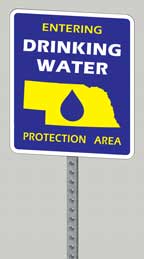
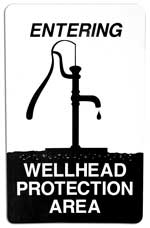
Frannie is learning more and more about how to protect the groundwater in her community.  Recently, she saw a sign just outside of her city that said "Wellhead Protection Area".  She didn't know what that meant, so she went to The Groundwater Foundation's website to find out.
"Wellhead protection" is a fancy term for the idea that we should protect the land around the area where a community gets their water. Many communities use wells to withdraw groundwater and then transport it to a water treatment plant where they treat it and pipe it into the public water system.  Growth and development in a community is important, but it also brings the potential to deplete or contaminate the water everyone drinks.
Each state has a different approach to wellhead protection but will generally involve 5 key points:
1) Delineating the Wellhead Protection Area.  Several maps, containing data on groundwater flow and geology and geographic boundaries, are combined into a single map that determines the land area that could influence the groundwater supply.
2) Conducting a Potential Contaminant Source Inventory. This just means that information is collected about all of the sources in the areas that could potentially contaminate the groundwater.  This may include farms, gardens, factories, or other types of industry.
3) Contaminant Source Management. All of the information that was collected in the Potential Contaminant Source Inventory is put to use to develop best practices where businesses can safely use their materials without threatening the groundwater.
4) Contingency Planning. No wellhead protection plan is complete without a plan for the worst case scenario.  In the event of a well that has to be shut-down due to contamination, natural disaster, physical breakdown, or any other cause, a community must have an idea of short-term and long-term drinking water supply replacements.
5) Education. A community is made up of it's people, so ultimately it is the people in the area who have to protect their water.  A community should make their wellhead protection plan available to the public as well as provide workshops or opportunities on social media for people to learn about the plan.

Friday, September 22, 2017

BLOG: 2017 Groundwater Guardians Make a Difference

by Sara Brock, Groundwater Foundation Program Manager

The Groundwater Foundation's Groundwater Guardian program has been around since 1994, but this was my first year working with the teams and learning about the various activities that communities across the country do to keep their groundwater safe. Communities earn their Groundwater Guardian designation by implementing Results-Oriented Activities (ROAs) that help educate their community about the their groundwater. These ROAs can take many shapes and forms, so here are my top 5 favorite ROAs that communities have completed in 2017.

5. In North Carolina, Orange County’s team is contributing data for the Orange Well Net (OWN), a national groundwater observation well network. This network is a drought monitoring tool that is equipped with an early warning system for declining groundwater levels.  By detecting drought conditions earlier, water suppliers can enact the necessary steps to prevent a serious water crisis. 


4. Many of our teams are based in water districts and utilities or have roles in some other governing role in regulating their city’s water supplies.  It’s common, and in some cases legally required, that these agencies provide an annual water quality report. While steps like these are routine, they are a crucial and concise way of getting all relevant information out to the public.

3. In Elkhart, Indiana, a high school student aquatic biology program collaborated with community volunteers to remove a whopping 2,280 pounds of trash from their river! This number includes the 17 tires they pulled out, along with more commonly littered items. 


2.  Shrewsbury Borough’s Groundwater Guardian team in Pennsylvania is really friendly with its community, working within businesses and even hospitals to make sure that wellhead protection requirements are met. Developers are provided with GIS maps of Wellhead Protection Areas to ensure that no future contamination threatens the community’s water supply.

1. My favorite ROA is slightly biased in that, in May, I personally got to run an activity at the Grand Island Children’s Groundwater Festival. Over 700 5th grade students participated in a staple event of the area for almost 30 years. The most amazing thing about this festival is that it is replicated in almost every state that has a Groundwater Guardian team!  Besides the Children’s Groundwater Festival in Nebraska that I attended, similar festivals have taken place in Alabama, California, Illinois, Michigan, New Hampshire, New York, Ohio, and Texas.

Being the manager of the Groundwater Guardian program has been a great learning experience.  It’s sometimes easy to look at the gargantuan issues of depletion and pollution and think there’s no way to save our water.  The Groundwater Guardian’s network of talented and passionate individuals is an inspiring force that educates and supports communities to always do better by protecting and conserving of our most precious resource, water. 

Friday, June 2, 2017

BLOG: Communities and Collaboration: Upcoming Groundwater Foundation Events

by Sara Brock, The Groundwater Foundation

June is an exciting month for The Groundwater Foundation as we bring many of our collaborative projects to fruition.

Working with the Nebraska Department of Environmental Quality (NDEQ) and educators in Western Nebraska, we bring the Recharging Groundwater Education program to a teacher’s workshop in Ogallala. Among the other useful tools teachers can use to enhance student science learning, we’re providing classrooms with Awesome Aquifer Kits and supplementing the traditional curriculum with new and updated activities, worksheets, andtechnologies.

Mid-June is marked by an exciting collaboration with the University of Nebraska – Lincoln and Robert B. Daugherty Water for Food Institute with the WELS2 program. It will bring Nebraska’s science educators the HydrogeologyChallenge program with an emphasis on model-based learning. Participating teachers will use the week to prepare and develop a groundwater curriculum that they will use during the 2017 – 2018 academic year. Understanding the concept of models and the Hydrogeology Challenge through Nebraska’s new College and Career Ready Standards for Science will empower teachers to incorporate groundwater education into their science classes, as well as provide students with a modern environment to learn and boost their problem-solving skills.

Finally, the Nebraska Wellhead Protection Network, another partnership with the Nebraska Department of Environmental Quality, will have its quarterly meeting on June 21st in Hastings, Nebraska.  Beyond sharing updates and ideas for education and outreach programs, attendees will also have the chance to learn about and tour Hastings’ brand new Aquifer Storage and Restoration facility. Begun in July 2016, the nearly-complete project aims to increase drinking water storage and quality and simultaneously reduce the economic burden of clean water on taxpayers. Interested in attending? Register here.

Wednesday, May 31, 2017

It’s Water-Wise Wednesdays with Frannie the Fish! {Awesome Aquifer Kit: Improperly Abandoned Well}

This week in Frannie’s exploration of the Awesome Aquifer Kit is all about why you should properly seal abandoned and unused wells.

Did you know that 42 million people in the United States use a private, or individual well to provide water for their families?  But as cities grow and develop, more and more people are turning to municipal systems to get clean, treated water directly to their faucets.  An unused well is basically a direct line for contaminants to enter the groundwater, so it is very important that, if a well is going to be decommissioned, then a well contractor should be called to seal it properly.

But what actually happens if a well is not sealed properly?

In rural areas, such as homes on or near farms, an open well can be contaminated with animal waste, fertilizers, and pesticides.  After a rain, runoff may simply pick up these dangerous chemicals and flow right over the open will, depositing them into the groundwater supply.   If a well is dug deep enough and is connected to other water supply sources in the area, it could contaminate large sections of the aquifers and prevent many other people in the area from being able to access clean water.

Forgotten wells are a big problem too.  Well casings may rust or break down and, even without the help of any outside contaminants, pollute the groundwater.
Wells that are dug, instead of drilled, are typically shallow enough not to majorly affect groundwater quality.  However, if these wells are not sealed properly, their wide shape may cause unsuspecting people and animals to fall into them and injure themselves.

To learn more about wells and to find out where you can go to test and protect yours, visit The Groundwater Foundation's Wells and Wellhead Protection webpages. 

Friday, October 28, 2016

BLOG: First Groundwater Focused Plan to Address Nonpoint Pollution

by Sam Radford, Wellhead Protection Program Coordinator and Laura Johnson, Integrated Report and TMDL Coordinator, Nebraska Department of Environmental Quality

The spotlight is on Nebraska as the EPA recently approved the Bazile Groundwater Management Area (BGMA) Plan. The BGMA Plan is the first groundwater focused plan in the nation to address nonpoint source pollution. The plan is the result of a collaborative effort to reduce groundwater nitrate contamination between the Nebraska Department of Environmental Quality (NDEQ) and four of Nebraska’s Natural Resources Districts (NRDs): Lewis and Clark, Lower Elkhorn, Lower Niobrara, and the Upper Elkhorn. The approval of this plan provides NRDs, Communities, and other Public Water Systems (PWS) an innovative framework to build upon, and new funding sources to protect the BGMA Wellhead Protection (WHP) Areas, as well as WHP Areas across the state.

Figure 1
The BGMA covers 756 square miles in northeast Nebraska and is home to 10 communities and over 7,000 residents (see Figure 1). Groundwater in the BGMA is the only drinking water source for communities and rural residents. Extensive row crop and sandy soils have allowed nitrate from land applied manure and commercial fertilizer to leach into the groundwater. The NRDs have collected data on groundwater nitrate concentrations since 1980. During that time, average nitrate concentrations have increased with some areas exceeding 30 mg/L, three times the levels safe for drinking water.

The plan focuses on reducing groundwater nitrate levels below 10 mg/L by progressively adopting more protective Best Management Practices (BMPs) throughout the BGMA. Community Wellhead Protection Areas are listed as the highest project funding priority. The NRDs will utilize a combination of agricultural BMPs required by elevated Groundwater Management plan phases, and voluntary BMPs outlined in the BGMA plan that go above and beyond phase requirements. Through the development of the BGMA Plan, the NRDs have created a cohesive strategy to monitor nitrate reductions in groundwater as fertilizer practices and irrigation methods are improved in the area. This monitoring data will also further refine future versions of the BGMA plan to ensure its goals are achieved.

To truly understand the significance of this plan, one must understand the history of water laws in Nebraska as well as at the federal level. In the past, groundwater and surface water were thought to be two separate water sources and were therefore regulated by separate water laws. At the federal level, the Clean Water Act (CWA) of 1972 charged the US EPA to regulate point source pollution to surface water. While the CWA began to successfully reduce point source contamination, it failed to effectively address nonpoint source contamination. In 1987, the CWA was amended, and the Section 319 Nonpoint Source Management Program was established to improve federal leadership and support, and focus local efforts on voluntarily reducing nonpoint source contamination (EPA 2016). Even with the 1987 amendment, the CWA act did not directly speak to groundwater, leaving management of groundwater resources to the states. Nebraska has been managing and regulating groundwater resources through the NRDs since the mid ‘70s. However, the hydrologic connection between surface and groundwater wasn’t legally recognized until 1996.This acknowledgement has led Nebraska to collaborative efforts that address nonpoint source contamination from a different perspective than what is generally found at the federal level.

The BGMA plan is the first EPA approved plan in the nation to address nonpoint source groundwater quality problems using the Clean Water Act. This is a milestone for communities who have struggled to obtain funding for projects that seek to educate and inform residents and local producers; and implement BMPs targeted at reducing nonpoint source groundwater pollution in their Wellhead Protection Areas. Until now, CWA Section 319 funding was only used on projects that address impairments in surface water or in areas that were listed as priority areas in a NRD’s watershed management plan. While more and more WHP areas are being targeted in watershed management plans, the BGMA plan is the first to address it from the standpoint of groundwater and to make WHP areas a priority for project funding.

Nebraska is unique in that approximately 88% of the state’s residents, and nearly all rural residents, primary source of drinking water comes from groundwater (NDEQ 2015). The geology, hydrology, and depth to groundwater determine how susceptible groundwater aquifers are to contamination. For example, sandy soils, little or no protective surface layers (i.e. clay or glacial till), and/or high groundwater tables leave drinking water aquifers especially vulnerable to point and nonpoint source contamination. The rate of groundwater movement ranges from inches per year(s) to inches per decade(s) compared to surface water which moves inches per day(s) to week(s) to enter surface waterbodies.

Table 1
Nonpoint source groundwater nitrate contamination is one of the most prevalent nonpoint source contaminants in Nebraska. It puts a heavy financial burden on communities and their Public Water Systems, as the only way to remove nitrate from drinking water is through treatment. In the last 20 years, five PWS and landowners with private wells in the BGMA have spent over $9 million dollars on treatment (see Table 1). This amount includes the cost of facility operations and maintenance (O&M) and point of use (POU) treatment systems for domestic well owners. Ultimately, the cost of treatment and O&M falls on the 4,201 residents that reside in the five affected communities and land owners in the surrounding area. In the future, the cost of treatment will only increase if the source of contamination is not addressed (NDEQ 2016). Nitrate contamination is prevalent throughout Nebraska and many other communities are dealing with the same problems as those in the BGMA (see Figure 2). This is just one example of why the work that has been done and will continue to be done in the BGMA is so important. Hopefully, the plan will pave the way for many other NRDs and communities to better respond to and manage nonpoint source contamination, especially in WHP areas.
Figure 2

The approval of the BGMA plan by the EPA has provided an entirely new source of funding that wasn’t previously available for groundwater and drinking water protection efforts. Since the creation of Nebraska’s voluntary Wellhead Protection Program, communities and PWS across the state have had the ability to create WHP protection plans to protect their drinking water sources. These plans identify possible sources of contamination in the WHP area and lay out management strategies to address sources of contaminants. The ultimate goal is to implement on-the-ground activities such as BMPs and education and outreach programs. More often than not this goal falls short as no direct funding is available to communities. Many communities do not have the time, support, education, or money needed to develop and implement effective WHP plans. Until now, the only financial assistance NDEQ has been able to give communities who wish to protect their drinking water sources are Source Water Protection (SWP) Grants. The grant program distributes up to $100,000 a year, which generally isn’t enough to fund multiple larger more involved projects. The SWP Grant has been limited in its ability to support long-term efforts to reduce nonpoint source contamination. The NDEQ is hopeful that communities will be able to better protect their drinking water sources through CWA Section 319 funding.

The BGMA plan approval by the EPA has also led to new activities for the SWP Grant to fund. As stated previously, the BGMA plan is the first in the nation to focus on ground water instead of surface water. Because most Nebraska communities use groundwater as a source for their drinking water, those communities were not included in earlier watershed management plans nor were they eligible for funding on their own. In response to the EPA approval of the BGWMA plan, the NDEQ is working with communities and the EPA to develop Drinking Water Protection Management (DWPM) Plans. These plans will be similar to the BGMA plan in that they will primarily be groundwater focused plans that specifically target WHP areas. These plans will:
  • Meet EPA requirements for alternative 9-element watershed management plans
  • Increase WHP area delineations from 20 to 50 year delineations using three-dimensional groundwater models
  • Include strong implementable Information and Education programs
  • Use community based planning processes to develop the plan

Currently three Nebraska communities are in the process of developing DWPM plans. Two through the 2016 SWP Grant and one proposed project that will combine available 319 planning money and other grant sources. The ability to independently qualify for 319 project funding would provide a much needed funding stream to the many struggling communities in Nebraska. These new opportunities would not be possible without the innovative work that was done on the BGMA plan. The NDEQ looks forward to working with Nebraska communities to protect and improve their drinking water.

A special thanks to the BGMA stakeholders and the many individuals from various local, state, and federal organizations for their contributions to the development of this plan.

You can view the plan at http://deq.ne.gov/publica.nsf/pages/16-013 and learn more about Drinking Water Protection Management Plans by visiting http://deq.ne.gov/NDEQProg.nsf/OnWeb/SWPGMain. Select the Invitations for 2016 Source Water Protection link and open the fact sheet PDF.

Sources:
EPA, 2016. Polluted Runoff: Nonpoint Source Pollution Webpage, https://www.epa.gov/nps/319-grant-program-states-and-territories

NDEQ, 2015. 2015 Nebraska Groundwater Quality Monitoring Report, 5 p. http://deq.ne.gov/publica.nsf/PubsForm.xsp?documentId=8DE603FF6ACDF2C086257F1100578674&action=openDocument.

NDEQ. 2016. Bazile Groundwater Management Plan, 42 p, http://deq.ne.gov/publica.nsf/pages/16-013.