Showing posts with label drought. Show all posts

Wednesday, October 4, 2017

BLOG: Groundwater in a Climate-Changed World

by Pat Mulroy, Non-resident Senior Fellow for Climate Adaptation and Environmental Policy for The Brookings Institution and Practitioner in Residence for the Saltman Center for Conflict Resolution at the UNLV William S. Boyd School of Law

When I began my career in water in the mid-1980’s, the very first issue we had to contend with was a groundwater table that had been so over-drafted in the 40’s, 50’s and 60’s that subsidence was causing houses to slip off their foundation. Previous generations had fooled themselves into believing the issuance of temporary water rights to avoid connecting to the Colorado River would not have an affect, but it did. After many years and millions of dollars in recharge efforts we were able to stabilize the groundwater table.  

Yes, experience has taught us the risks of unchecked pumping. However, even today there are areas where there is still an inordinate reliance on natural groundwater and the fears of the wells running dry mount every year. There are also areas that engage in “panic pumping” when drought has ravaged surface supplies or the courts have curtailed surface water diversions (or in the case of California, both).

As the effects of a warming planet really begin to take hold we are seeing surface water supplies evaporate at elevated rates and flood events that are scouring the countryside.  “Normal” weather patterns are very much in our rear view mirror. If there has ever been a time for conjunctive management of water resources it is now. There exist already great examples of created groundwater banks that are carefully recharged and managed to buffer the inevitable shortage. Those can be jurisdictionally proprietary or they can exist across state lines.

We have always held onto the notion that once we invest in water infrastructure we have to utilize it each and every year, whether it is a surface water diversion or groundwater resources. We have built a system of water right accounting, in states that have a groundwater appropriation system, which requires us to use the supplies to which we have rights each and every year. The rationale in arid states is obvious. In Nevada all groundwater belongs to the state and a water right is merely a permit to use those supplies. Since the resource is so scarce the notion of hoarding it when you have no beneficial use for it or you no longer are putting it to beneficial use was established long ago. Today, however, in the face of increased uses and decreased water availability this type of “use it or lose it” principle can work against us. When it is in the best interest of the basin that we conserve the supply and allow basins to rest, the law precludes us from doing it. States have begun to grapple with amending these restraints, at least affording the regulators more flexibility.

In a changing protecting our groundwater resources has never been more important. This will require careful examination of not only our usage, but also of the laws that have for so long created the framework within which govern all groundwater extractions. Effectively managing these groundwater resources may one day be the only thing that will allow a community and the surrounding environment to survive.

______


2017 Groundwater Foundation National Conference | October 24-26, 2017 | Boise, ID
Don't miss out - hear Pat Mulroy's keynote presentation, "Groundwater in a Climate-Changed World: Risks and Opportunities" along with other expert speakers. Register today! 


Pat Mulroy serves as a Non-resident Senior Fellow for Climate Adaptation and Environmental Policy for The Brookings Institution and also as a Practitioner in Residence for the Saltman Center for Conflict Resolution at the UNLV William S. Boyd School of Law.  Mulroy also serves on the Wynn Resorts Ltd Board of Directors. Between 1989 and early 2014, Pat Mulroy served as General Manager of both the Las Vegas Valley Water District and the Southern Nevada Water Authority (SNWA). Mulroy was a principal architect of the SNWA, helping to guide Southern Nevada through one of the worst droughts in the history of the Colorado River.  At UNLV’s Boyd School of Law and DRI, Mulroy’s focus is on helping communities in water-stressed areas throughout both the American Southwest and the world develop strategies to address increased water resource volatility and identify solutions that balance the needs of all stakeholders.

Friday, September 22, 2017

BLOG: 2017 Groundwater Guardians Make a Difference

by Sara Brock, Groundwater Foundation Program Manager

The Groundwater Foundation's Groundwater Guardian program has been around since 1994, but this was my first year working with the teams and learning about the various activities that communities across the country do to keep their groundwater safe. Communities earn their Groundwater Guardian designation by implementing Results-Oriented Activities (ROAs) that help educate their community about the their groundwater. These ROAs can take many shapes and forms, so here are my top 5 favorite ROAs that communities have completed in 2017.

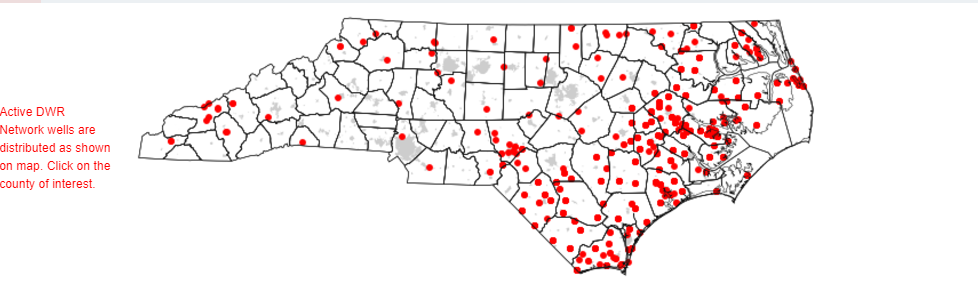
5. In North Carolina, Orange County’s team is contributing data for the Orange Well Net (OWN), a national groundwater observation well network. This network is a drought monitoring tool that is equipped with an early warning system for declining groundwater levels.  By detecting drought conditions earlier, water suppliers can enact the necessary steps to prevent a serious water crisis. 


4. Many of our teams are based in water districts and utilities or have roles in some other governing role in regulating their city’s water supplies.  It’s common, and in some cases legally required, that these agencies provide an annual water quality report. While steps like these are routine, they are a crucial and concise way of getting all relevant information out to the public.

3. In Elkhart, Indiana, a high school student aquatic biology program collaborated with community volunteers to remove a whopping 2,280 pounds of trash from their river! This number includes the 17 tires they pulled out, along with more commonly littered items. 


2.  Shrewsbury Borough’s Groundwater Guardian team in Pennsylvania is really friendly with its community, working within businesses and even hospitals to make sure that wellhead protection requirements are met. Developers are provided with GIS maps of Wellhead Protection Areas to ensure that no future contamination threatens the community’s water supply.

1. My favorite ROA is slightly biased in that, in May, I personally got to run an activity at the Grand Island Children’s Groundwater Festival. Over 700 5th grade students participated in a staple event of the area for almost 30 years. The most amazing thing about this festival is that it is replicated in almost every state that has a Groundwater Guardian team!  Besides the Children’s Groundwater Festival in Nebraska that I attended, similar festivals have taken place in Alabama, California, Illinois, Michigan, New Hampshire, New York, Ohio, and Texas.

Being the manager of the Groundwater Guardian program has been a great learning experience.  It’s sometimes easy to look at the gargantuan issues of depletion and pollution and think there’s no way to save our water.  The Groundwater Guardian’s network of talented and passionate individuals is an inspiring force that educates and supports communities to always do better by protecting and conserving of our most precious resource, water. 

Wednesday, July 12, 2017

It's Water-Wise Wednesdays with Frannie the Fish! {Mulch}

Evaporation happens when water is heated enough to turn into a gas and expand into the atmosphere.  When Frannie is gardening, she wants to make sure that her plants get enough water but that it’s not wasted by evaporating in the hot summer sun.

In the past, she learned the best times of the day to water are dawn and dusk when it isn’t so hot.  But there’s another common and inexpensive option that she’d like to share with you: Mulch.

Mulch is a material that you use to cover the soil around your plants. Many people use it in landscaping because it comes in a variety of colors and textures, but it also does several important things to help keep your plants healthy and strong.
  1. Evaporation Prevention. This is one of the most important purposes mulch serves in this hot weather. Mulch absorbs the heat from the sun and prevents it from reaching the soil that the plant is growing in. Because the soil is cooler, it is able to take in and retain more moisture than it would were it exposed.
  2. Weed Prevention. No one likes weeds.  They take up all the water and good nutrients in the soil that we want for our own flowers and food.  Mulch, by stopping the sunlight from reaching the ground, starves out weeds and they are unable to grow in that area. It also stops any new seeds from landing in your garden.
  3. Soil Improvement. Ok, so we know that the soil in our garden is cooler with more moisture and fewer weeds, but it also builds up the soil.  All types of mulch prevent the wind from eroding the soil but organic or natural mulch can go one step further by enhancing the soil with nutrients as they decompose.  An area mulched with pine needles, for example, becomes acidic as the mulch decomposes and becomes suited for acid-loving plants like azaleas. 
Try using mulch this summer and let us know how it goes on our Facebook, Twitter, or send us an email. Happy Gardening!

Thursday, November 17, 2016

BLOG: A Day in the Life of a Consulting Geologist

by Karen Griffin, Vice President, Olsson Associates


It is 6:30 a.m. and today I’m off to Riverton, Wyoming, to attend the annual conference for Conservation Districts. This is the first time I’ve been to this conference, and I’m excited to see some of the clients we’ve been working with and return to the only state in the country with a cowboy on its license plate. My mention of the cowboy will become abundantly clear as I describe one day on a recent trip to Wyoming. It was one of the most memorable days I’ve ever had as a consulting geologist.

For the past year and a half, we have been working on a watershed study for the Wyoming Water Development Commission (WWDC) and the Teton Conservation District (TCD) in Jackson, Wyoming. Yes, the study area includes the Grand Tetons, Bridger-Teton National Forest, portions of Yellowstone National Park and the entire National Elk Refuge. The watershed is 1.7 million acres of land in the center of the Greater Yellowstone Ecosystem, the largest intact ecosystem in the lower 48 – not to mention it includes one of the country’s most iconic mountain ranges. One that takes your breath away each and every time you see it.

The Grand Tetons at Grand Teton National Park
As I’ve headed out west to complete the project, I’ve had a lot of volunteers who wanted to join the project team. Who wouldn’t want to go to Jackson Hole every two months to see the seasons change across the amazing landscape?! And, luckily for us all, the scope of the project is almost as vast as the landscape and so I have been able to bring out several of our best scientists and engineers to help complete the project.

The team visiting Jenny Lake after meeting with the National Park Service at Grand Teton National Park. From left to right, Joan Darling, PhD (our wetlands and permitting expert), me, Jodee Pring (River Basin Planning Supervisor for the WWDC), and Brian Degen, PE (our irrigation engineer).
We were hired by the WWDC and the TCD to complete a Level I watershed study. A Level I watershed study is holistic evaluation of an area that is interconnected by water. The study evaluates the current condition of an area and looks at opportunities for water improvement projects that will restore, maintain, and enhance healthy watershed function. Specifically, a Level I watershed study looks for projects, programs, or activities that support sustainable, beneficial water use for current and future watershed residents – be they human, animal, or plant.

To learn the issues facing the water users in the district, we held public meetings in the town of Jackson and in the small community of Moran near the south entrance to Yellowstone. At the meetings, we heard from ranchers, land managers, wildlife conservationists, and the urban and rural residents about their issues with both drought and flooding. The summer of 2016 was no exception with dry conditions causing three major fires in the watershed. You may have heard about the Berry Fire that was reported on the national news because it closed the southern entrance to Yellowstone for several weeks. Conversely, in the winter, ice jams form in Flat Creek and they block the water flow through Jackson causing winter flooding in the residential and commercial parts of town. Water issues not only affect tourism and the urban residents; we heard from many of the local ranchers about the need to upgrade the irrigation systems that supply water to the green pastures that feed both livestock and wildlife across the watershed.

The greatest thing about these Level I watershed studies is that we start the project by completing a description and inventory of the watershed.  At the same time, we hold public meetings and go out to see the issues first hand. So the project team gets to see the big picture of the watershed as a whole by developing a series of GIS maps that document, for example, the geology, soils, land use, wetlands and sensitive habitats. And we also get to go see “the boulder that destroyed the headgate on our irrigation canal.” We then put together conceptual plans and cost estimates for the water improvements identified by the residents and stewards of the land.

Here is a prime example of the irrigation system improvement needs in the Upper Snake River Watershed. The Jensen Creek diversion used to provide water to several ranches just south of the Teton Village ski resort. The irrigation structure was crushed by a gigantic boulder during a debris flow. We prepared a conceptual plan and cost estimate for a replacement structure downstream this site.
That gigantic boulder was a pretty amazing thing to see, but the day I wanted to tell you about started at a public meeting at Fire Station #4 in Moran. We held a public meeting to find out what types of water improvement projects were needed in the northern part of the watershed. Several local ranchers came to hear what the study was about and realized that the issues they had with deteriorating and inefficient irrigation systems may be eligible for funding through the WWDC Small Water Project Program. Mort Yoakum, manager of the historic Pinto Ranch, invited me to come visit the ranch the next day. Before he left he asked me one question: “Do you know how to ride a horse?” 

I met him at the ranch headquarters the next morning where we loaded up two horses to ride across the pastures that needed irrigation system improvements. As we rode across the ranch, Mort told me the story of how the ranch was homesteaded and how at one time ran 2,000 head of cattle across this area. He showed me the flood irrigation ditches that crisscross the landscape. Some ditches were dug over 100 years ago, and we talked about some options that could be proposed to help improve water delivery, while improving water conservation. I asked him why he didn’t use ATVs to get around the ranch like so many ranchers do these days. He explained the ditches were too wide and deep in places for the ATVs to cross but the horses can jump across them easily. Next thing you know, he led us across a ditch and, yes, my horse easily leapt across without hesitating!

Mort Yoakum, manager of the Pinto Ranch takes me across their allotment on the Elk Ranch located in the northeast corner of Grand Teton National Park. The Tetons were covered in a haze that day because the Berry Fire was burning at the entrance to Yellowstone.
With that, I’ll leave you with my favorite picture of Mort, pointing to the main irrigation ditch as he described where he needed the water to feed his cattle, the antelope, and the heard of over 800 wild buffalo that share the natural resources of this area. 

Sunrise on the Elk Ranch at Grand Teton National Park discussing more efficient ways to deliver water to the cattle and wildlife that depend on this most precious resource. Yep, those are my horse’s ears in the foreground; we had a fantastic ride that morning.
Some days I wonder how I could be so lucky to have a job where I get to try to help folks find ways to conserve and protect this most precise resource – the interconnected groundwater and surface water that define this watershed. Especially when it means taking a ride across this iconic landscape with a rancher who is trying to maintain the legacy of a historic ranch while at the same time, preserving the natural resources that nourish a part of the greater Yellowstone Ecosystem.

____________________

About the Author
Karen Griffin is a professional geologist managing multidisciplinary projects focused in the fields of geology and hydrogeology.  She began her career in environmental geology in Santa Barbara, CA and moved to Boulder, CO to take a position as project manager for the restoration and cleanup of a 27 square mile superfund site called the Rocky Mountain Arsenal National Wildlife Refuge. She moved back to her home town in 2004 and is currently a Vice President and the Groundwater Technical Leader for Olsson Associates in Lincoln, Nebraska. Reach her at kgriffin@olssonassociates.com

Tuesday, December 22, 2015

Protection, groundwater needs. On Earth, it is.


By: Anthony Lowndes, The Groundwater Foundation

There has been a lot of talk about the water on celestial bodies over the last year. Saturn’s moon Titan is dotted with mysterious lakes and Enceladus vents water vapor and ice from a subsurface ocean. Oh, don’t forget that salt water running down the slopes of our neighbor, Mars. While it is undoubtedly exciting to find water elsewhere in our galaxy, we are humans, on Earth. I don’t mean to squelch these discoveries and the journeys we will take because of them, I only wish to point out that our “Blue Marble” is about 71% covered in water.

Image credit: Apollo 11 Astronauts
There are 2,551,000 mi3 of fresh water on or below the surface of the Earth.[1] Space is vast and seemingly unlimited unlike our supply of fresh water. People across the country and around the world are beginning to find this out the hard way. Much like balancing the light and dark sides of The Force (can you tell I saw the new Star Wars movie?), it is difficult to balance the supply and demand for water. The good news is there are people and communities working toward a balance in this force, the force of water. Many of those communities are Groundwater Guardians. Working globally and acting locally for the betterment of water supplies is what the Groundwater Guardian program is all about. 


The community-based approach to groundwater protection works, and it is something that you, here on Earth, can get involved with. Check the Groundwater Guardian directory to find a Groundwater Guardian community near you. If there aren’t any near you, be your own force and get one started.

May the force be with you.

[1] United States Geologic Survey. “How much water is there on, in, and above the Earth?” http://water.usgs.gov/edu/earthhowmuch.html

Friday, August 17, 2012

That's Your Excuse. Really?

Due to the extensive drought that has plagued a great portion of North America, the hometown of the Groundwater Foundation, Lincoln, Nebraska is under mandatory water restrictions.  But what is really needed is to change the mindset of people.  In general, people don’t really believe there will be a consequence if we do not limit our water use (“we won’t really run out of water”)  Or, they don’t see how not watering their little lawn will make a difference, or they expect someone else to limit their water use, or…the excuses go on and on.  Well, guess what, not recognizing the situation for what it is, and not being a part of the solution is unacceptable.

We all can use our water more wisely.  We can let our lawns go dormant a bit earlier than usual, we can and we must.  Let’s not sit around and hope for rain, or assume that sooner or later it will rain.  Let’s each make it our personal goal to do better.  

So, whether your community is suffering from the drought conditions or not, be part of the solution to ensure the resource is available today, tomorrow and for our future generations.  Make sure you are setting the example at home, at your workplace – it only takes one sparkplug to get the rest of the family or colleagues to rally. 

Water sustains life, water is a finite resource and to ensure its availability for future generations we must use it wisely. It is through individual actions that collectively we can make a difference.

For more water conservation tips, visit http://www.groundwater.org/howmuchamIdrinking.html.

Friday, July 29, 2011

Cruel Summer

By Jennifer Wemhoff, The Groundwater Foundation

I heard the song “Cruel Summer” by Bananarama on the radio the other day.  It was well into the 90s that day in Lincoln, with the heat index over 100 degrees.  The extreme weather that’s been plaguing much of the country as of late leads me to believe it is indeed a cruel summer.

“Hot summer streets and the pavements are burning…”

Portions of the U.S. are experiencing drought categorized as “exceptional” by the U.S. Drought Mitigation Center (http://droughtmonitor.unl.edu/).  Records for heat have been shattered across the country.  In northern Texas, Amarillo reached the 100 degree mark for 30 days in a row.  On July 19, Knoxville, Iowa had a head index of 131 degrees!  Talk about cruel.

“It’s too close for comfort, this heat has got right out of hand…”

While the heat and humidity have me longing for the cool crisp days of fall, summer, with the heat it brings, is an opportune time to promote water conservation.  Whether it’s installing water efficient appliances and fixtures in your home, utilizing native plants in your landscape, watering efficiently, or simply turning off the water when you brush your teeth, it’s important that each of us take measures to reduce our water use in these hot summer months, and encourage our friends, neighbors, and family members to do the same.

As far as the heat?  Well, I have to agree with Bananarama:

“It’s too hot to handle so I got to get up and go…"