Showing posts with label The Groundwater Foundation. Show all posts

Wednesday, September 19, 2018

It's Water-Wise Wednesdays with Frannie the Fish! {#TBT - Edible Aquifers}

Frannie likes to learn about groundwater by using hands on activities, so this week she's taking you back to an old favorite!  Here's how you can learn all about aquifers while creating your own yummy treats!
---

Edible aquifers are a fun and easy way to understand the geology of an aquifer. Your edible aquifer will help you learn about confining layers, contamination, groundwater recharge and water tables!

Here is what you will need to make your edible aquifer:

• Clear plastic cups
• Ice cream scoop
• Spoons
• Drinking straws
• Blue/red food coloring
• Vanilla ice cream or fruity sorbet
• Clear soda pop
• Small gummy bears, chocolate chips, crushed cookies, breakfast cereal, or crushed ice
• Variety of colored cake decoration sprinkles and sugars
What you will need to do:

1. Begin to make your edible aquifer by filling the clear plastic cup 1/3 full with gummy bears,
chocolate chips, or crushed ice (This represents sand and gravel).
2. Add enough soda (this represents the water) to just cover the candy/ice.
3. Add a layer of ice cream to make a “confining layer” over the water-filled aquifer.
4. Then add more “sand/gravel” on top of the confining layer.
5. Colored sugars and sprinkles will represent soils and should be sprinkled over the top to create the
porous top layer.
6. Now add the food coloring to the soda. The food coloring represents contamination. Pour the colored soda over the top of the aquifer.
7. Watch what happens when it is poured on the top of the aquifer. This is what happens when contaminants are spilled on the earth’s surface.
8. Using a drinking straw, drill a well into the center of your aquifer by poking the straw through the aquifer.
9. Slowly begin to pump the well by sucking on the straw. Watch the water go down in the water table.
10. Notice how the contaminants can get sucked into the well area and end up in the groundwater by
leaking through the confining layer.
11. Now recharge your aquifer by adding more soda which represents a rain shower.
12. Review what you have learned as you enjoy eating your edible aquifer.

Here is a video that shows you step by step how to make your edible aquifer!


If you would like more hands on activities that can help you learn about groundwater, visit the Students and Educator's page on The Groundwater Foundation website!

Wednesday, July 25, 2018

It's Water-Wise Wednesdays with Frannie the Fish! {Water Drop Scavenger Hunt}

If you were a tiny raindrop on top of the roof of the Groundwater Foundation, how would you get to the ground?

It may not be obvious, but the answer is right in front of you.  Do you see that pipe on the left side of the picture?  The pipe allows water to drain off the roof of the building onto the ground below.

When we draw the water cycle, we often forget to include the rain that gets stuck on rooftops or in parking lots. But a tiny droplet will travel to many unexpected places.  Look at the picture below and see if you can find one way that a water drop can travel from the sky to the ground and back again.


  • Precipitation falls from the sky and can either get caught up in trees or rooftops or it might make it all the way to the ground.
  • From the roof or trees, a drop of water can evaporate or flow down into the drainage pipes and run off into a collection point.
  • Trees also are able to perform transpiration, which means that they can release water into the air through their leaves.
  • A lawn might have a sprinkler system to keep it green and fresh.
  • Any extra water that reaches the ground from precipitation or irrigation can either evaporate, run off into a collection point like a drainage system or body of water, or seep into the ground to restore soil moisture and recharge groundwater levels.


Now it’s your turn to try this at home! Take a picture somewhere in your community and try to find all the places where a water droplet could travel.  Bonus activity: on a rainy day, try following a water drop or two, or two hundred!  Good luck!

Friday, November 3, 2017

BLOG: National Conference Highlights

Boise was amazing! We enjoyed the beautiful weather, vibrant downtown, informative and inspiring presentations, a ton of networking, and a chance to spend time with our groundwater family. Here are some of the highlights:
The Idaho state capitol, just a few blocks from the conference hotel.


River artwork on the outside of The Grove Hotel in downtown Boise.


Tuesday morning was bright and beautiful.


A group enjoyed an informative tour about the redevelopment and groundwater contamination concerns at one of Boise's Greenbelt parks.


The conference kicked off with a reception at the Boise WaterShed Environmental Education Center.


Members of The Groundwater Foundation's Board of Directors enjoyed the interactive artwork at the WaterShed Center.


The WaterShed Center features great interactive, hands-on exhibits about Boise's water.


Pat Mulroy's plenary address about groundwater in a climate-changed world started Wednesday's sessions.


Wednesday's program included numerous informative breakouts on technology, research, education, conservation, and groundwater management.


Groundwater Guardians traveled the room at lunch and shared their community's groundwater story.


Connections were made during multiple networking breaks.


Bill and Rosemarie Alley shared lessons learned about groundwater management from their book, High and Dry: Meeting the Challenges of the World's Growing Dependence on Groundwater.


We had the opportunity to sample water from Orange County Water District's Groundwater Replenishment System. And guess what - it tasted like water!


Wednesday, October 18, 2017

It's Water-Wise Wednesdays with Frannie the Fish! {DIY Halloween Bats}

Halloween is almost here!  Are you ready?  If not, it's easy! You can make your own bat decorations for any room in your house and even outside (as long as they don't get wet!) in just a few steps.

You'll need an empty toilet paper or paper towel roll, black paint, white paint or googly eyes or some other eye-sticker, brushes, black paper, scissors, and glue.  The string and the hole punch are optional if you are considering hanging your decorations from door handles or tree limbs.

Before beginning, if you're using a paper towel roll, you will need to cut it into three smaller pieces about the size of a toilet paper roll.

1. If you want to hang up your bats at the end, then you need to start by punching 2 holes on either side of the roll and thread your string through.  Then, fold the ends of the empty toilet paper roll in together.

2. Paint the roll black and, while it dries, cut out bat wings from the paper.  Make sure to leave a spot in the middle so you can glue the wings to the back of the roll. You're almost done!

3. Once the glue is dry, bend the wings back just enough so that they stick out from bat. At this point, you can either stick on your googly eyes or eye stickers or just dab on some white paint for the eyes.


 4. Hang your bat where everyone can see! Have a very Happy Halloween everyone!


P.S. You may have noticed that Frannie isn't here to do this craft with you today, but don't worry.  She's on her way to the Groundwater Foundation's 2017 National Conference in Boise, Idaho!  She is so excited to meet with groundwater professionals from all over the United States and share with you some stories about her adventures in a couple of weeks. See you then!


Thursday, September 28, 2017

BLOG: Groundwater - The Neglected Child of the Water World

by Bill and Rosemarie Alley

We look forward to participating in the Groundwater Foundation's national conference in Boise. Rosemarie will begin with her insights on writing about science for the general reader. Bill will follow with groundwater examples from around the world, and conclude with thirteen key factors that contribute to good groundwater governance.

As we all know, groundwater is the neglected child of the water world. There are many interesting books and documentaries about surface water that are raising awareness and appreciation for today’s challenges with rivers, streams, lakes and wetlands. But when it comes to groundwater—that 95 percent of earth’s unfrozen fresh water—most people are barely aware of it.

This has begun to change in recent years. Thanks in large part to the hard work of
organizations like the Groundwater Foundation and the National Ground Water Association, we are seeing a growing interest and appreciation of this great hidden world. From the community to the regional level, people are beginning to understand that effective groundwater governance requires collective action, with stakeholders working together, instead of the top-down decision-making that governs surface water. Groundwater is a democratic resource, not only because of its wide availability but also because managing it wisely means that people have to get together and be willing compromise.

As a scientist/nonscientist writing team, our goal in writing “High and Dry: Meeting the Challenges of the World’s Growing Dependence on Groundwater” was to bring greater visibility to the importance of, and growing threats to, this precious resource. Our goal was to cover groundwater as a global issue, but not as another crisis book. As such, we included stories of people and organizations who are working hard to make a difference, including the Groundwater Foundation.

We hope to see you in Boise!
______


2017 Groundwater Foundation National Conference | October 24-26, 2017 | Boise, ID
Don't miss out - hear Bill and Rosemarie and other expert speakers. The Alleys' book will be available for purchase and signing at the conference. Register today! 


As a scientist/nonscientist writing team, Dr. William M. Alley and Rosemarie Alley communicate complex environmental science issues to a broad public. Dr. Alley provides the scientific expertise and Rosemarie’s job is to turn it into an engaging narrative. They have written two books together, as well as articles and Op/Ed pieces, and have given talks to a wide range of audiences. Their experiences as an unconventional team have given them unique insights in how to successfully hook the public’s interest with environmental science issues.

Friday, September 22, 2017

BLOG: 2017 Groundwater Guardians Make a Difference

by Sara Brock, Groundwater Foundation Program Manager

The Groundwater Foundation's Groundwater Guardian program has been around since 1994, but this was my first year working with the teams and learning about the various activities that communities across the country do to keep their groundwater safe. Communities earn their Groundwater Guardian designation by implementing Results-Oriented Activities (ROAs) that help educate their community about the their groundwater. These ROAs can take many shapes and forms, so here are my top 5 favorite ROAs that communities have completed in 2017.

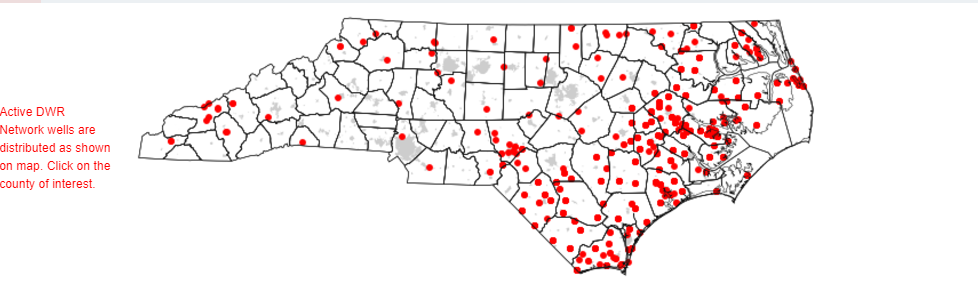
5. In North Carolina, Orange County’s team is contributing data for the Orange Well Net (OWN), a national groundwater observation well network. This network is a drought monitoring tool that is equipped with an early warning system for declining groundwater levels.  By detecting drought conditions earlier, water suppliers can enact the necessary steps to prevent a serious water crisis. 


4. Many of our teams are based in water districts and utilities or have roles in some other governing role in regulating their city’s water supplies.  It’s common, and in some cases legally required, that these agencies provide an annual water quality report. While steps like these are routine, they are a crucial and concise way of getting all relevant information out to the public.

3. In Elkhart, Indiana, a high school student aquatic biology program collaborated with community volunteers to remove a whopping 2,280 pounds of trash from their river! This number includes the 17 tires they pulled out, along with more commonly littered items. 


2.  Shrewsbury Borough’s Groundwater Guardian team in Pennsylvania is really friendly with its community, working within businesses and even hospitals to make sure that wellhead protection requirements are met. Developers are provided with GIS maps of Wellhead Protection Areas to ensure that no future contamination threatens the community’s water supply.

1. My favorite ROA is slightly biased in that, in May, I personally got to run an activity at the Grand Island Children’s Groundwater Festival. Over 700 5th grade students participated in a staple event of the area for almost 30 years. The most amazing thing about this festival is that it is replicated in almost every state that has a Groundwater Guardian team!  Besides the Children’s Groundwater Festival in Nebraska that I attended, similar festivals have taken place in Alabama, California, Illinois, Michigan, New Hampshire, New York, Ohio, and Texas.

Being the manager of the Groundwater Guardian program has been a great learning experience.  It’s sometimes easy to look at the gargantuan issues of depletion and pollution and think there’s no way to save our water.  The Groundwater Guardian’s network of talented and passionate individuals is an inspiring force that educates and supports communities to always do better by protecting and conserving of our most precious resource, water. 

Friday, June 2, 2017

BLOG: Communities and Collaboration: Upcoming Groundwater Foundation Events

by Sara Brock, The Groundwater Foundation

June is an exciting month for The Groundwater Foundation as we bring many of our collaborative projects to fruition.

Working with the Nebraska Department of Environmental Quality (NDEQ) and educators in Western Nebraska, we bring the Recharging Groundwater Education program to a teacher’s workshop in Ogallala. Among the other useful tools teachers can use to enhance student science learning, we’re providing classrooms with Awesome Aquifer Kits and supplementing the traditional curriculum with new and updated activities, worksheets, andtechnologies.

Mid-June is marked by an exciting collaboration with the University of Nebraska – Lincoln and Robert B. Daugherty Water for Food Institute with the WELS2 program. It will bring Nebraska’s science educators the HydrogeologyChallenge program with an emphasis on model-based learning. Participating teachers will use the week to prepare and develop a groundwater curriculum that they will use during the 2017 – 2018 academic year. Understanding the concept of models and the Hydrogeology Challenge through Nebraska’s new College and Career Ready Standards for Science will empower teachers to incorporate groundwater education into their science classes, as well as provide students with a modern environment to learn and boost their problem-solving skills.

Finally, the Nebraska Wellhead Protection Network, another partnership with the Nebraska Department of Environmental Quality, will have its quarterly meeting on June 21st in Hastings, Nebraska.  Beyond sharing updates and ideas for education and outreach programs, attendees will also have the chance to learn about and tour Hastings’ brand new Aquifer Storage and Restoration facility. Begun in July 2016, the nearly-complete project aims to increase drinking water storage and quality and simultaneously reduce the economic burden of clean water on taxpayers. Interested in attending? Register here.

Tuesday, April 25, 2017

BLOG: Developing Science Literacy Through Environmental Education

by the WELS2 Project Team (Tina Vo, Cory Forbes, Nick Brozovic, and Jane Griffin)

Around the globe, humans face an array of contemporary challenges associated with food, energy, and water systems. To prepare future generations of problem-solvers equipped to address these challenges, education must go beyond merely disseminating information. The Environmental Protection Agency (EPA), for example, has identified important components of environmental education that include an emphasis on awareness, knowledge and understanding, attitudes, skills, and participation in environmental challenges. When focused on these challenging issues of today, science literacy can involve:
  • Explaining, describing, predicting natural phenomena  
  • Considering multiple viewpoints and different stakeholders invested in the system
  • Identifying issues, biases, or limitations within research
  • Accounting for various mechanisms and their effects within a system 
  • Evaluating the validity of data collection methods
  • Creating and evaluating arguments around environmental topics
  • And a myriad of other science-oriented tasks and practices 
This knowledge and the associated skills define scientific literacy about interactions between humans and the environment. Supporting audiences to become more scientifically literate requires cultivating a culture and perspective that values critical thinking, problem-solving, and informed decision-making.


For example, decisions about water resources are complicated and involve human and environmental concerns.  A scientifically-literate person is one who’s prepared to ask questions such as: Who/what benefits from resource allocation? Who/what might be hurt by these decisions? What evidence do we have to support these claims and how did we obtain that evidence? How will this impact the water availability for others? Have we considered the natural and economic factors will be influenced? And these are only a few aspects to consider. While issues like this are complicated, frameworks like the ones developed at the University of Nebraska help untangle them by providing guidance such as where to start, who to ask for help, and how to educate ourselves.

Another way these key components of environmental education are highlighted and science literacy is supported is through the adaptation of state and national standards that acknowledge the role of ‘science practice’ as a way of doing and knowing science and requesting these practices be taught in the classroom. Teachers can support students through meaningful and directed educational experiences by providing opportunities to develop knowledge about food, energy, and water issues (e.g. water resource management) and scientific practices (e.g. scientific modeling). 

One aspect of environmental education that can prove challenging for learners of all ages centers on the complexity of hydrological phenomena. Complicated environmental issues develop around balancing humans’ use of groundwater against depletion and recharge rates. Supporting and fostering critical thinkers who can find solutions for these multifaceted issues will take dedicated educators who are well versed in science practices and environmental education. 

A program targeted to support these dedicated teachers to provide quality classroom instruction is the WELS2 project. Based at UNL, this project is a collaboration between the UNL Science Literacy Program, Daugherty Water for Food Global Institute, and The Groundwater Foundation

The WELS2 project (Water Education Leaders for Secondary Science) is committed to providing high school and middle school teachers in Nebraska with the training, supplemental educational materials, and experiences around hydrological phenomena, to support their food, energy, and water education efforts in the classroom. Through this professional development program, teachers can earn up to 9 hours of graduate course credit through the College of Agricultural Sciences and Natural Resources at the University of Nebraska-Lincoln, as well as a stipend, to support their ongoing professional learning. WELS2 introduces teachers to various resources including computer-based water modeling tools, pedagogical strategies for encouraging students' model-based reasoning about water, and strategies for grounding these experiences in real-world, issues-based contexts. Teachers will learn to use these resources to develop their professional skill sets, as well as how to use them in their classrooms to enhance their students’ learning about water systems. Participating teachers use part of this experience to collaborate with educational specialists and scientists and tailor resources suited to their students’ needs. This collaboration is an important facet of the project which highlights the expertise of the participating teachers to assess and develop materials specifically for their use. If you are interested in joining this program or would like to learn more, please inquire here.

Environmental education is an important part of supporting and developing science literacy in audiences of all ages. Educators who wish to help students develop these tools for critical thinking, reasoning, and problem-solving need to be supported and provided opportunities to do so. By partnering with institutions and organizations like the UNL Science Literacy Program, Daugherty Water for Food Global Institute, and The Groundwater Foundation, educators can leverage additional tools and resources delving deeper into environmental challenges and supporting their students in building critical thinking, problem-solving, and decision-making skills. 

The WELS2 Project Team includes Cory Forbes, Associate Professor of Science Education, Institute of Agriculture and Natural Resources Science Literacy at the University of Nebraska-Lincoln, cory.forbes@unl.edu; Tina Vo, PhD Candidate, University of Nebraska-Lincoln, ms.tinavo@gmail.com; Nick Brozovic, Director of Policy, Robert B. Daugherty Water for Food Global Institute, nbrozovic2@unl.edu; and Jane Griffin, President, The Groundwater Foundation, jgriffin@groundwater.org.

Friday, March 3, 2017

BLOG: Groundwater Guardians Raising Awareness on Social Media

by Sara Brock, The Groundwater Foundation

The Groundwater Foundation’s Groundwater Guardian (GG) Program has been around 23 years, making a difference in communities across North America as they conserve groundwater and protect it from pollutants. 


The world has changed a lot since the program's inception in 1994, but what hasn't changed is the creativity of GG teams to find new ways to reach out to their communities.


Now it’s 2017 and we’re pretty firmly planted in the age of the internet. As we're on the cusp of National Groundwater Awareness Week 2017 (March 5-11), check out these 5 GG teams who are going with the flow and using social media to raise awareness and spread their message.

Carmel City Utilities uploads funny informational videos to YouTube starring city employees, drama club students, and villainous sewer clogs. These videos are also occasionally aired on local channels. Check one of their videos out below or visit their YouTube Channel for more.

The GG team of Battle Creek has jumped on the trend of using social media to promote sales. This year? Rain barrels. You don’t need to be a city resident to buy one, but you do need drop by their Public Works Building to pick it up. Check out their Facebook page or get right to the sale by clicking here

The Hamilton to New Baltimore Groundwater Consortium hopped on the Fun Run bandwagon to great success, using Facebook’s events feature to promote its Annual Race for Global Water 5K. The next one isn’t until August, but you can still check out the great photos from the race or read up on past and future events, by clicking here

                          Image may contain: one or more people, tree, sky and outdoor

This GG team has innovatively used social media as a professional networking tool, sharing resources in their area and reposting pages with useful tips for water conservation. Head over to their Facebook page to see resources from the Water Quality Association, the Illinois Association of Groundwater Professionals, and even yours truly, The Groundwater Foundation. 

The Mission Springs Water District is a Groundwater Guardian Affiliate, meaning they provide services and support to local GG teams. Mission Springs helps their customers and community stay engaged by sending out newsletters including press releases and information on upcoming meetings and events. Sign up here to receive regular emails or, if you prefer, direct mailings about this amazing community.  


Share what you're doing to celebrate National Groundwater Awareness Week with us on The Groundwater Foundation's Twitter and Facebook page.

Wednesday, February 8, 2017

It's Water-Wise Wednesdays with Frannie the Fish! {Awesome Aquifer Kit: Groundwater and Surface Water’s Connection}

The Groundwater Foundation has many useful tools to help show how everything we do affects groundwater and how groundwater affects everything we do.  One of Frannie’s favorite tools is the Awesome Aquifer Kit, which lets her get a closer look at what happens to water when it’s deep in the ground.  In this series, Frannie will show us how to use the Awesome Aquifer Kit and what it means in our lives.

This week in Frannie’s exploration of the Awesome Aquifer Kit is all about groundwater and surface water interactions.

First, we have to set up our aquifer by pouring gravel into a clear container and spreading it out evenly.  The gravel represents the land and an unconfined aquifer.  An unconfined aquifer is groundwater that is below porous material like soil, sand, and gravel.

The gravel is flat and we have already added some water to our container.
We'll be using the syringe next time!
Let’s start by slowly pouring water near a wall of the container.  Watch as it infiltrates, or flows from the surface into the ground, and fills th

e spaces between the rocks of the whole container.  Stop pouring when about half of the gravel is saturated.  We can imagine that the pouring water is rain and we are recharging, or refilling, our aquifer.

Do you see that line in the gravel where the water stops? That’s the water table.  The water table is the top of the groundwater and it separates the saturated zone, which is completely full of water, from the unsaturated zone, which as little or no water.

Next, let’s scoop some of the gravel to the side of the container to create a lake.  Surface water is the water that’s above the surface of the land, including lakes, ponds, rivers, streams, and runoff.

The top of the blue line is out water table.
When we add water to the top of our hill, the
water table goes up and fills our lake even more.
We can slowly add some more water, first at the wall close to our hill and second at the wall close to the lake.  Watch the water percolate through the gravel and become groundwater.  The level of the water in the ground rises, but so does the level of water in the lake.  That’s because the groundwater discharges, or flows out, into the lake.


When we add water to the lake, the water table also rises.  When groundwater is located close enough to surface water to be recharged by it, then we can say that the groundwater is under the direct influence of surface water.

Wednesday, January 11, 2017

It's Water-Wise Wednesdays with Frannie the Fish! {Groundwater Guardian – Get Your Community Involved}

The Groundwater Foundation’s Groundwater Guardian program has been around since 1998, recognizing and providing resources to teams across the nation that protect our groundwater.  Frannie wants to find out how to form a Groundwater Guardian team and start protecting the resources in her community.

Step 1: Find your team members. Anyone can start a Groundwater Guardian team, including citizens, businesses, educators, and local government!


Step 2: Make a list of ways that you can help educate your community about groundwater resources. Come up with your own or learn from other Groundwater Guardians, and put together Result-Oriented Activity (ROA) plans.  Teams have done ROAs like leading an activity at Groundwater Festivals, making educational YouTube videos, and working with local Girl Scouts to complete the Let’s Keep It Clean patch.

Step 3: Go to the Groundwater Guardian section on The Groundwater Foundation’s webpage to download and submit your paperwork. You’ll need to include the contact information of team members and a administrative fee.


Step 4: Get to work! You’re ready to join over 70 teams throughout the US in protecting our groundwater resources. Tell Frannie what your team is doing at guardian@groundwater.org 


Thursday, December 29, 2016

BLOG: 10 from 2016

by Jennifer Wemhoff, The Groundwater Foundation

The door is about to close on 2016. Here's a look back on 10 things that happened at The Groundwater Foundation this year:

1. Our mission was revamped and refocused: We connect people, businesses, and communities through local groundwater education and action, making us all part of the solution for clean, sustainable groundwater.

2. Amazing volunteer teams across the U.S. were recognized for local, proactive efforts to educate their communities and protect groundwater through the Groundwater Guardian program.

3. The Nebraska MEDS (Medication Education on Disposal Strategies) Coalition, which The Groundwater Foundation is a founding member, worked with nearly 300 pharmacies across Nebraska to take back thousands of pounds of unwanted or expired medication for proper disposal, keeping them out of water supplies.

4. The Hydrogeology Challenge event created for Science OIympiad (SO) was featured in the 2016 National Tournament. The Challenge has been adapted for use in classrooms and extracurricular activities beyond SO.

5. Two new members joined The Groundwater Foundation's board of directors, Chris Barnett of the Marion County Wellfield Education Corporation in Indianapolis, IN and Kirk Welch of the North Plains Groundwater Conservation District in Dumas, TX.

6. The Groundwater Foundation's Twitter account topped 4,300 followers, and Facebook went over 2,300. We also ventured into the world of Instagram.

7. The Awesome Aquifer Kit was adopted as part of the K-5 science curriculum in The Groundwater Foundation's hometown school system, Lincoln Public Schools. 

8. A new collaboration with University of Nebraska-Lincoln's Science Literacy includes The Groundwater Foundation as part of an effort to educate secondary educators.

9. Green spaces across the U.S. participated in the Green Site program and received designation for managing their site with groundwater in mind.

10. Sara Brock joined the groundwater team as Program Manager, heading up the Groundwater Guardian program, youth programs, and others.

We're glad to have you as a partner in our mission and in protecting groundwater. Cheers to groundwater in 2017!

Wednesday, November 23, 2016

BLOG: Thankful and Committed to Connections

by Jane Griffin, Groundwater Foundation President

Connections not only nurture us, they
assist us in getting things done.
It is widely documented the importance of connection – it is an innate human need that, when fulfilled, improves our life. Connections not only nurture us, they assist us in getting things done. 

This is the approach we use at The Groundwater Foundation. It is something we believe in so strongly that we have put it at the center of our new mission

We connect people, businesses and communities through local groundwater education and action, making us all part of the solution for clean, sustainable groundwater.

Over our 30+ years we have witnessed the strength, success and overall great satisfaction that is achieved through our community-based groundwater protection and education. In fact, our Groundwater Guardian teams connect different sectors of their local community to get the important work done. Communities across the nation are connected in order to share, learn and celebrate their successes. We are committed to growing and strengthening our Groundwater Guardian program so that we can move closer to our vision:

A network of people, businesses and communities proactively protecting groundwater for sustainable use today and tomorrow.

So, let’s keep in mind how important it is to connect within our communities to the people and businesses that can help us as we work to protect our life-sustaining water.  And let’s remember that what we do matters:

It’s the water we drink.  It’s the water that grows our food.  It’s the water that sustains our lives and livelihoods.

Sara Brock
In order to do this the best way possible – to focus our attention on furthering the work of connecting – we have also made some changes internally. 

I would like to introduce you to our new team member: Sara Brock. Sara joined our team as an intern this summer. One of the projects Sara has been working on is creating a story bank, so she has already connected with many Groundwater Guardians. This will continue as she will be doing a lot more with our Groundwater Guardians.  

I would also like to salute some of The Groundwater Foundation’s longtime champions: Cindy Kreifels, Lori Davison and Doug Sams.  Each of them dedicated so much to our organization. They connected with our Groundwater Guardians, our program partners, our members. Those connections are deep and meaningful, and we thank them for their excellent service and count on the connection continuing as they take on their new paths.

Let’s keep connecting.  Let’s keep the important work happening! 

May you have a Happy, Connected Thanksgiving!