Showing posts with label conservation. Show all posts

Wednesday, May 13, 2020

It's Water-Wise Wednesdays with Frannie the Fish! {Upcycled Conservation Flowers}

Hooray! It's finally May! That means we've finally reached the time of year where the flowers, bushes, and trees are coming to life in beautiful and vibrant colors. This year, try planting some Upcycled Conservation Flowers to remind you of all the ways you can conserve water.
But wait a minute, Frannie: what in the world are Upcycled Conservation Flowers?
Upcycling is a fun trend that helps protect the environment by reusing items that may have previously been thrown away. Reusing an item keeps it from ending up in a landfill where it may take millions of years to decompose. Upcycled Conservation Flowers are made out of plastic water bottles and each petal represents an easy way to help conserve and protect groundwater! 
Find out how to make them below!
Students showing off their Upcycled Conservation Flowers!

Materials:

  • Empty plastic water bottle
  • 8 different colored acrylic paints
  • Paint brush
  • Hole punch
  • String
  • Wood stick (optional)
  • Glue
  • Sequins, beads, paper, glitter, or gems


Instructions:

  1. Clean your plastic water bottle. Remove any plastic labeling from the outside.
  2. Cut your water bottle in half. Recycle the bottom half of your bottle.
  3. Cut eight petals by cutting from the middle of the bottle towards the cap. Make sure to cut all the way to the edge of the cap. Round the edges.
  4. Press the petals out and flatten them to make your bottle look like a flower.
  5. Paint each petal a different color to represent the different ways to protect and conserve groundwater. Add glitter for fun!
  6. Cover the cap with beads, gems, sequins, paper, or paint to represent the pistil/stamen.
  7. Use a paper hole punch and string to make your flower an ornament or use a wooden stick and glue to create a decorative flower for potted plants.


Ways to Protect and Conserve Groundwater:

Go Native
Use native plants in your landscape. They look great, and don't need much water or fertilizer.
Reduce Chemical Use
Use fewer chemicals around your home and yard, and make sure to dispose of them properly - don't dump them on the ground!
Don't Let It Run
Shut off the water when brushing your teeth, and don't let it run while waiting for it to get cold. Keep a pitcher of cold water in the fridge instead!
Fix the Drips
Check all the faucets, fixtures, toilets, and taps for leaks and fix them right away.
Shower Smarter
Limit yourself to just a five minute shower, and challenge your family members to do the same!
Water Wisely
Water plants during the coolest parts of the day and only when they truly need it. Make sure you, your family and neighbors obey any watering restrictions.
Reduce, Reuse, and Recycle
Reduce the amount of "stuff" you use and reuse what you can. Recycle paper, plastic, cardboard, glass, aluminum, and other materials.
Learn More!
Get involved in water education! Learn more about groundwater by checking out The Groundwater Foundation's website www.groundwater.org/get-informed/.

Wednesday, September 18, 2019

It's Water-Wise Wednesdays with Frannie the Fish! {Visit a Sustainability Fair}

A local branch of Fiserv, a national financial services company, held their first ever Green Day Sustainability Fair for their employees. Frannie and her friends at the Groundwater Foundation were invited to share their knowledge about our groundwater resources. Frannie met many people from local organizations that are doing good work to grow our food, save electricity, and recycle or repurpose old materials! 
Frannie shared an activity called "How Wet is Our Planet". Did you know that 70% of the Earth is made up of water?
Well, imagine all of that water could fit inside a 5-gallon bucket. Now, take a little over 1 1/2 cups, 25 tablespoons, out of the big bucket and put it into a smaller container. That represents all of the freshwater in the world.
But we don't always have easy access to freshwater. Sometimes, the water is stored inside plants or glaciers or ice caps or clouds. Have you ever tried to drink a cloud? It's pretty hard!
If we take a 1/2 cup or 8 tablespoons out of the freshwater jar, that's about how much clean, fresh groundwater is available for humans to use.
If we take a little eye dropper and place 25 drops from the groundwater cup into the rivers, streams, and lakes cup, then that's how much fresh surface water in the world that humans can use.
Isn't it wonderful and weird to know that ALL of the water we use is just a fraction of the total amount of water on Earth? If we keep it clean now, we will be able to keep using it way into the future.
Have you attended a festival recently? Share your favorite activity with us on Facebook, Twitter, or Instagram! See you next time!

Wednesday, April 3, 2019

It's Water-Wise Wednesdays with Frannie the Fish! {Seeing an Aquifer from Space}

A few weeks ago, Frannie was excited to share with you the discovery of a groundwater system on Mars. But she wondered, what would we see if we turned the telescopes around and looked at groundwater here on Earth?

A team of scientists from the Arizona State University asked themselves the same question. Using cutting edge space technology like NASA satellites and the Global Navigation Satellite System, in combination with ground measurements, they took a look at the Central Valley Aquifer System located in central California.

The most recent drought in the San Joaquin Valley area lasted from 2012 to 2015 and made national headlines with its land subsidence, abandonment of crop-land, and receding lakes.  The scientists from ASU measured groundwater loss as well as aquifer storage loss during the drought period in order to learn about what it takes to keep an aquifer healthy.


Their findings revealed a shocking loss of groundwater each year of the drought and, even more disturbing, a permanent loss of storage capacity in the San Joaquin Valley Aquifer.

Frannie already knew why groundwater loss was important and, after a bit of research, she learned more about the importance of storage capacity and why scientists are so worried about its loss.

Image courtesy of Arizona
Department of Water Resources
Storage capacity refers to the total amount of water that an aquifer could ever possibly hold in its permeable materials, like sand or gravel. When groundwater is depleted and not recharged, the weight of the soil causes it to compress and settle into itself until it fills all of the spaces where the water used to be. When there is no more empty space for the water to fill, the compacted soil, which is now impermeable, becomes the new aquifer boundary. The aquifer, once able to hold so much water, eventually loses its ability to store the same amount of water as before.

Aquifer storage capacity loss can happen slowly and not seem like a big deal over just one or two drought periods. The real danger is when aquifer loss happens over and over again during multiple drought periods. And storage loss is not just limited to the aquifers in California.

The research team has plans to continue to study the health of aquifers in the southwest United States. They want to be able to provide water managers all over the world with the scientific knowledge they’ll need to make difficult water use decisions and ensure that clean groundwater is available to us for years to come.

Thursday, July 19, 2018

BLOG: Smart Irrigation Month

A typical morning routine involves a shower, cup of water, and the flow of a faucet. We often don't think twice about our water usage until we’re confronted with water shortages or contamination. Only 2.5% of the water on earth is fresh. As a result, we must actively protect this precious resource. A considerable portion of our country’s drinkable water going to our plants. July is Smart Irrigation Month - a public awareness campaign to promote efficient water use. July is traditionally the month of peak demand for outdoor water use, the campaign highlights simple practices and innovative technologies to:

  • Make maintaining green spaces easy and convenient.
  • Minimize overwatering while keeping lawns, gardens and landscapes beautiful and healthy.
  • Save money on utility bills.
  • Help protect community water supplies for today and the future.


Property owners and managers often overwater, unintentionally wasting money every time they take out the hose or turn on the sprinklers. For those of us who do irrigate our lawns, plants, gardens, and landscapes, we can follow these simple steps to become more efficient: only irrigate when we need to, turn off our irrigation systems when it is raining, and make sure the water is not hitting and or running off on to our sidewalks and streets.

For assistance or additional advice, call in a professional to help. Resources like www.irrigation.org and www.epa.gov/watersense are good places to find someone qualified to save water, while helping our landscapes. A landscape professional can help to:

  • Plant and maintain low water landscapes that will thrive in their climate and site conditions.
  • Install new irrigation systems that use real-time weather data and soil moisture sensors to automatically adjust watering to meet plant needs.
  • Use low volume microirrigation to precisely apply very small amounts of water to gardens, trees and shrubs, minimizing evaporation and waste.
  • Retrofit existing systems with rain sensors that prevent watering in rainy weather.
  • Audit irrigation systems to make sure water is being using effectively and making necessary adjustments. 

These simple steps will save a substantial amount of water in the end. Our decision to efficiently irrigate our landscape will positively impact our lives and those of generations to come.

Smart Irrigation Month is an initiative of the Irrigation Association, a non-profit industry organization dedicated to promoting efficient irrigation. Visit www.smartirrigationmonth.org to learn more.

Wednesday, May 2, 2018

It's Water-Wise Wednesdays with Frannie the Fish! {Upcycled Conservation Flowers}

Hooray! It's finally May! That means we've finally reached the time of year where the flowers, bushes, and trees are coming to life in beautiful and vibrant colors. This year, try planting some Upcycled Conservation Flowers to remind you of all the ways you can conserve water.
But wait a minute, Frannie: what in the world are Upcycled Conservation Flowers?
Upcycling is a fun trend that helps protect the environment by reusing items that may have previously been thrown away. Reusing an item keeps it from ending up in a landfill where it may take millions of years to decompose. Upcycled Conservation Flowers are made out of plastic water bottles and each petal represents an easy way to help conserve and protect groundwater! 
Find out how to make them below!
Students showing off their Upcycled Conservation Flowers!

Materials:

  • Empty plastic water bottle
  • 8 different colored acrylic paints
  • Paint brush
  • Hole punch
  • String
  • Wood stick (optional)
  • Glue
  • Sequins, beads, paper, glitter, or gems


Instructions:

  1. Clean your plastic water bottle. Remove any plastic labeling from the outside.
  2. Cut your water bottle in half. Recycle the bottom half of your bottle.
  3. Cut eight petals by cutting from the middle of the bottle towards the cap. Make sure to cut all the way to the edge of the cap. Round the edges.
  4. Press the petals out and flatten them to make your bottle look like a flower.
  5. Paint each petal a different color to represent the different ways to protect and conserve groundwater. Add glitter for fun!
  6. Cover the cap with beads, gems, sequins, paper, or paint to represent the pistil/stamen.
  7. Use a paper hole punch and string to make your flower an ornament or use a wooden stick and glue to create a decorative flower for potted plants.


Ways to Protect and Conserve Groundwater:

Go Native
Use native plants in your landscape. They look great, and don't need much water or fertilizer.
Reduce Chemical Use
Use fewer chemicals around your home and yard, and make sure to dispose of them properly - don't dump them on the ground!
Don't Let It Run
Shut off the water when brushing your teeth, and don't let it run while waiting for it to get cold. Keep a pitcher of cold water in the fridge instead!
Fix the Drips
Check all the faucets, fixtures, toilets, and taps for leaks and fix them right away.
Shower Smarter
Limit yourself to just a five minute shower, and challenge your family members to do the same!
Water Wisely
Water plants during the coolest parts of the day and only when they truly need it. Make sure you, your family and neighbors obey any watering restrictions.
Reduce, Reuse, and Recycle
Reduce the amount of "stuff" you use and reuse what you can. Recycle paper, plastic, cardboard, glass, aluminum, and other materials.
Learn More!
Get involved in water education! Learn more about groundwater by checking out The Groundwater Foundation's website www.groundwater.org/get-informed/.

Friday, April 20, 2018

BLOG: 6 Ways to Protect Groundwater on Earth Day

by Jennifer Wemhoff, The Groundwater Foundation

Earth Day is once again nearly upon us. If you're looking for ways to take action to protect the earth, look no further than protecting your groundwater.

Groundwater is an important part of the water cycle. Nearly half of the U.S. uses it as drinking water, and it's an important component of agriculture and helping feed the world. Groundwater is the environmental bottom line - everything that happens on the surface of the earth can end up in groundwater.

So this Earth Day, think about changes you can make in your every day life to help protect and conserve groundwater. Here are some ideas:

1. Learn more. Find out more about your drinking water source. See if it's groundwater, surface water, or a combination of the two. If you have a private well, find out the last time the well water was tested.

2. Check out current protection efforts. See what might already be happening in your community. Find out if there's a wellhead protection plan in place or a Groundwater Guardian team. (If there's no team in your community, now's a great time to get one together)

3. Conserve water throughout your home. Limit showers to 5 minutes, only run full loads of dishes and laundry, check for leaky water fixtures and repair them, don't let the water run while brushing your teeth or shaving.

4. Conserve water in your yard. Only water plants when necessary, and use drought-tolerant plants. Add mulch to flower beds and around trees to retain water. When watering your lawn, water deeply, but infrequently. If you have a sprinkler system, add a rain sensor.

5. Manage chemicals responsibly. Be sure to follow label instructions when applying fertilizer and pesticides to your yard. Always dispose of leftover paints, oils, and other chemicals properly and NEVER dump them onto the ground.

6. Tell others. Get your neighbors on board with making changes to their watering practices, talk with your office mates about ways to reduce water use in the office, recruit Green Sites in your community, and get things started in your community.

Groundwater is important. So on Earth Day, and every day, let's keep it clean!

Sunday, March 11, 2018

BLOG: What will YOU do during Groundwater Awareness Week?

by Jennifer Wemhoff, The Groundwater Foundation

Happy Groundwater Awareness Week! (#GWAW2018)!

Every March, we work with our friends at National Ground Water Association to help promote National Groundwater Awareness Week. It's a win-win for everyone - it's an opportunity to bring a national and local focus to groundwater and help people find ways to learn more about it and protect this vital resource.

So what can YOU do during #GWAW2018?

The possibilities are endless, but here are some great ideas to get you started:

  • Follow The Groundwater Foundation (Facebook, Twitter) and National Groundwater Association (Facebook, Twitter) on social media; like, share, and retweet #GWAW2018 posts, or customize posts with local information.
  • Plan a Test Your Well event for local private well owners. It's a win-win - you get to raise awareness about groundwater, and well owners get their water sample tested and learn more about it. 
  • Set up a presentation for a community club/group to talk about local groundwater resources.
  • Offer to present to a Girl Scout/Boy Scout troop, 4-H club, FFA chapter, science or environmental club, or other youth group to get them excited about groundwater. Hands-on activities are fun, brains-on ways to get kids involved.
  • Conserve water inside and outside your home by taking short showers instead of baths, running full loads of dishes and laundry, checking for and repairing leaky faucets and fixtures, watering outdoors only when necessary, and using native plants in your landscaping that require less water.
  • Track your daily water use to identify where you can use less. Try the free 30by30 app and start tracking today.
  • Always follow label instructions for household chemicals, and look for ways to decrease or eliminate fertilizer and pesticide usage.
  • Dispose of chemicals properly by taking them to recycling centers or household hazardous waste collections.
  • If you have a private well on your property, have the well inspected by a licensed water well contractor and the water tested once a year for coliform bacteria, nitrates, and any other contaminants of local concern.
  • Find out about your community’s drinking water source and mobilize to protect it. The Groundwater Guardian program is a good place to get started. 
  • Teach others about ways to protect and preserve groundwater!
To find out more about groundwater and how you can get involved in protecting it, please visit us at www.groundwater.org.

Wednesday, January 10, 2018

It's Water-Wise Wednesdays with Frannie the Fish! {Wellhead Protection: What is it?}

This is Part 1 in Frannie's exploration of Wellhead Protection.   Look for her upcoming blogs to learn more about what it is, who protects the wellheads, and why it's important.

----

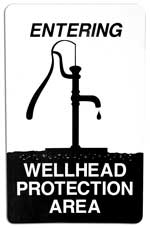
Frannie is learning more and more about how to protect the groundwater in her community.  Recently, she saw a sign just outside of her city that said "Wellhead Protection Area".  She didn't know what that meant, so she went to The Groundwater Foundation's website to find out.
"Wellhead protection" is a fancy term for the idea that we should protect the land around the area where a community gets their water. Many communities use wells to withdraw groundwater and then transport it to a water treatment plant where they treat it and pipe it into the public water system.  Growth and development in a community is important, but it also brings the potential to deplete or contaminate the water everyone drinks.
Each state has a different approach to wellhead protection but will generally involve 5 key points:
1) Delineating the Wellhead Protection Area.  Several maps, containing data on groundwater flow and geology and geographic boundaries, are combined into a single map that determines the land area that could influence the groundwater supply.
2) Conducting a Potential Contaminant Source Inventory. This just means that information is collected about all of the sources in the areas that could potentially contaminate the groundwater.  This may include farms, gardens, factories, or other types of industry.
3) Contaminant Source Management. All of the information that was collected in the Potential Contaminant Source Inventory is put to use to develop best practices where businesses can safely use their materials without threatening the groundwater.
4) Contingency Planning. No wellhead protection plan is complete without a plan for the worst case scenario.  In the event of a well that has to be shut-down due to contamination, natural disaster, physical breakdown, or any other cause, a community must have an idea of short-term and long-term drinking water supply replacements.
5) Education. A community is made up of it's people, so ultimately it is the people in the area who have to protect their water.  A community should make their wellhead protection plan available to the public as well as provide workshops or opportunities on social media for people to learn about the plan.

Wednesday, November 15, 2017

It's Water-Wise Wednesdays with Frannie the Fish! {Fish-water for Fertilizer}

Whenever Frannie travels, like a few weeks ago for the 2017 Groundwater Foundation National Conference, she makes sure follows her packing list very carefully.

Toothbrush: check.
Camera: check.
Fish tank and cleaner: check.

Frannie loves having clean water and a clean fish tank in her home, but she used to feel bad about wasting so much water. She then learned that she could use her dirty water to fertilize plants and gardens. Here’s how.

The water in the aquarium are rich in elements like nitrogen, potassium, and phosphorus and a compounds like ammonia from the fish food and excretions. If you look at the ingredients in plant fertilizers, you’ll see that they have those exact same elements.  If you regularly clean your fish tank, then that water dilutes those chemicals to appropriate dosages for your garden or house plants to handle.  In some cases, gardens that have been fertilized with aquarium water grown twice as large as those without!

Be careful, though, because you can’t always just pour dirty fish water on your plants.  For example, if you aren’t like Frannie and haven’t cleaned your tank in a very long time, you will need to add fresh water to the dirty water in order to dilute the chemicals a little more.  If you have treated your tank to adjust for pH or kill algae, you should not water any plants that you intend to eat.  Also, using water from a salt-water aquarium is more likely to hurt or kill your plants than it is to help them grow, especially if they are potted plants.

What other cool ways can you save water at home?  Share them with us at guardian@groundwater.org or on Facebook, Twitter, and Instagram.

Friday, November 10, 2017

BLOG: 5 Ways to Save Water in Your Home

by Jennifer Wemhoff, The Groundwater Foundation

The average American uses about 100 gallons of water a day. For comparison's sake, the average person in the Netherlands uses only 27 gallons per day, and the average person in the African nation of Gambia uses only 1.17 gallons per day.

So how can we use less?

1. Take Shorter Showers
A quick shower uses 20-30 fewer gallons of water than a bath. Challenge yourself to take just showers of just 5 minutes or less, then challenge your family members to do the same. Use a shower timer to help keep the time down. 


2. Check the Plumbing
Proper maintenance is one of the most effective water savers. Faucet washers are inexpensive and take only a few minutes to replace. At home, check all water taps, hoses, and hose connections (even those that connect to dishwashers and washing machines) for leaks.


3. Don’t Let It Run
It’s simple really, before you turn on the tap, think of ways you can use less water to accomplish the same purpose. Always shut off the water when you brush your teeth, fill the sink when shaving instead of letting the water run, keep a pitcher of water in the fridge instead of running it til it gets cold.


4. Drip No More!
There is no such thing as a little drip. A leaky faucet can waste 10 gallons of water every day. On a toilet, an average leak can add up to 60 gallons per day! Replace worn sink washers or valve seals to get rid of the drip, and check for leaks in a toilet's tank or replace old toilets with low-flush units.


5. Fill It Up
Only run full loads in the dish and clothes washers. Get the most clean for the least amount of water!


For more ways to conserve water, download the free 30by30 water tracking app. Challenge yourself to reduce your water use, and tell us how you did.

Wednesday, November 1, 2017

It's Water-Wise Wednesdays with Frannie the Fish! {2017 Groundwater Foundation National Conference}


She's back!  Frannie the Fish spent most of last week in the lovely mountain city of Boise, Idaho for the 2017 Groundwater Foundation National Conference.  In the picture above, you can see her working hard to let people know about the Girl Scout Keep it Clean! and Ask Me About Groundwater patches for girls of all ages.

Frannie got to hear from amazing speakers like Pat Mulroy, from the Southern Nevada Water Authority, and Bill and Rosemarie Alley, authors of High and Dry: Meeting the Challenges of the World's Growing Dependence on Groundwater, as they discussed some of the most important issues surrounding groundwater at home and abroad.  Frannie also got to tour Boise's wastewater treatment plant and learn about Boise's struggle against the groundwater contamination they found when they were constructing a new park in the beautiful Boise River Greenbelt.

Frannie's favorite part of the conference was the Recognition Round Table Luncheon, where she got to hear from four leaders of Groundwater Guardian communities about outreach opportunities and solutions they've developed to solve groundwater issues in their area.  Each Groundwater Guardian speaker sat at the table for just a few minutes before moving on, but Frannie liked the personable experience and the chance to ask very specific questions about topics like sponsored field trips to the treatment plants in under-served communities and cost-sharing programs for well closure.

If you couldn't join Frannie at this conference, don't worry!  We are currently working to upload a conference summary and dozens of pictures on our website and we'll update the blog as soon as it's live.

Can't wait til then to learn more about groundwater?  Check out our Hydrogeology Challenge to see how water flows underground.

Monday, June 26, 2017

BLOG: Clean Car, Less Water

by Sally Phillips, freelance writer

If you're washing your car at home, you could be wasting a lot of water. The average home car wash uses about 80 to 140 gallons of water. This water picks up all the pollutants off your car, such as fuel, gas, oil, and tar and mixes it with the soapy car wash ingredients. This soapy, oily mixture then flows from your yard, to the storm drain, and ultimately to streams and lakes where it damages the environment and causes harm to marine animals. So how can we keep our car in top shape while still protecting the Earth and its fellow inhabitants? Here are some eco-friendly tips for washing your car at home.


Do Away with the Open Hose
Many people prefer washing their car at home, but to reduce the amount of water you use, try an automatic shutoff nozzle for your hose. This nozzle prevents the continuous flow of water and can save up to 70 gallons of water per wash. You can also use a power washer, which uses about 2-5 gallons of water per minute, compared to an open hose which uses 10 gallons per minute. Simply using a bucket is also a great way to manage how much water you use. Fill your buckets with water and refill only when necessary. This will allow you to calculate exactly how much water you’re using and force you to cut down.

Watch Where You Wash Your Car
Most people wash their car in their driveway, but this water goes directly to the storm drains. These typically don’t lead to sewage treatment plants but instead go directly into our lakes and streams. An eco-friendly approach to car cleaning is to move your vehicle to a grass or gravel surface. This allows the ground to soak some of the water and filter out the harmful contaminants that make their way into runoff water.

Use the Right Products
Many soaps that we use to wash our cars have chemicals that are harmful to the environment. These chemicals decrease water quality and damage the life of aquatic species. Instead, opt for a waterless cleaner. You can get a spray-on product and wash your car with minimal or no water at all. These solutions are also biodegradable so they don’t add any chemicals or pollutants to the environment. Simply spray on your car and use a microfiber towel to remove dirt.


Following these three tips will help reduce the amount of water you use when washing your car, and ultimately protect the aquatic environment from harmful pollutants.

__________


Sally Phillips is a freelance writer with many years experience across many different areas. She enjoys reading, hiking, spending time with her family, and traveling as much as possible. Reach her at sally@diamondmail.net.

The views expressed in this blog are those of the authors and do not necessarily represent the view of The Groundwater Foundation, its board of directors, or individual members.

Tuesday, October 4, 2016

BLOG: We Get By With a Little Help

by Kirk Welch, North Plains Groundwater Conservation District, Dumas, Texas

In the immortal words of John and Paul, “I get by with a little help from my friends.” The famous song by the Beatles probably didn’t specifically consider the challenges of water conservation outreach, but you get the idea. The point here is, that at one time or another, we all need a little help. In the world of groundwater conservation outreach, it’s sometimes more than a little.

As the assistant general manager in charge of conservation outreach for the North Plains Groundwater Conservation District (GCD), I find that often times the scope of the great ideas we have for extending the reach of groundwater conservation, far exceeds our ability to realize on our own. Whether it’s an idea for an award-winning agricultural demonstration, birthed as a friendly wager amongst our board members, or a project initiated by my predecessor, like our “Save the Planet’s Water Festival”, many of the district’s projects require partners. 

The district was formed in 1955 and celebrated its 60th Anniversary in 2015. It covers all or part of the eight northern most counties in the Texas Panhandle with the southern boundary roughly following the Canadian river. The district encompasses about 7300 square miles overlaying the Ogallala aquifer throughout, as well as the Dockum and Rita Blanca aquifers. The district has about 1,000,000 acres of irrigated cropland and some of the highest groundwater producing counties in the State of Texas. The water table is dropping an average of 2-3 feet a year across the district. Consequently, the heavy reliance on the declining Ogallala aquifer makes conservation a necessary way of life in the North Plains GCD, and we can’t do it alone.

One project that would be absolutely impossible without partners on all sides is the district’s Save the Planet’s Water Festival. Started in 2005, the festivals have hosted almost 6,000 4th graders for this full day of interactive water and natural resource conservation education. Beginning with one festival in Dumas the first year, a festival was added in the town of Perryton in 2006 and finally in Dalhart in 2011. The “Save the Planet’s Water Festivals” are made possible by community partners including Valero Energy, Frank Phillips College, United States Department of Agriculture (USDA) - Natural Resources Conservation Service (NRCS), West Texas A&M University, Texas A&M Agrilife Extension, Texas Parks and Wildlife, Panhandle Groundwater Conservation District, all of the area’s school districts and many private schools, as well as many individual volunteers.

Agriculture conservation demonstration is another extremely resource intensive initiative of the district. Since roughly 95-percent of the groundwater produced in the district is used for irrigation, the board of directors, in 2009, began talking about how the district could demonstrate how agricultural users could conserve, while maintaining viable irrigated operations. The “200-12 Project,” based on the goal of producing 200 bushel corn crops with only 12-lnches of supplemental irrigation, was born out of a challenge between board member/growers who wanted to see who could be the most efficient.

Since beginning as a district-funded demonstration with board members as the only participants in 2010, the “200-12 Project” has received funding from both the Texas Water Development Board (TWDB) and the USDA – NRCS, and has involved many of the most progressive farmers in the northern Panhandle, including four members of the district board of directors. In 2015, the district's agriculture demonstrations were energized by a unique private/public partnership with Crop Production Services of Loveland, CO to cooperate in the operation of the district's North Plains Water Conservation Center (WCC). The 320 acre working farm is a showcase for agricultural water conservation strategies and corporate partner, CPS, along with local grower Stan Spain have worked side-by-side with the district to develop this unique project.

The “200-12 Project” received the NRCS Conservation Innovation Grant as part of the Texas High Plains Initiative for Efficient Irrigation Management and Conservation (Texas High Plains Initiative). The Texas High Plains Initiative was a cooperative effort between the district’s “200-12 Project” and the Texas Alliance for Water Conservation, including Texas Tech University, High Plains Underground Water Conservation District and others. With demonstrations spanning the High Plains from north to south, the Texas High Plains Initiative helped extend the reach of the conservation mission through out the region.

After several years of demonstration projects showcasing many best practices in agricultural water conservation, the board of directors wanted to take the next  step to move the initiative from demonstration to producer adoption. Recognizing that one of the biggest obstacles in adoption is the learning curve involved with many of the conservation strategies and technologies, the Master Irrigator program was created as a way to shorten that curve for a group of committed, influential producers. The Master Irrigator curriculum is made up of 4-5, full-day sessions and covers the topics of residue management; remote pivot monitoring and control; irrigation management using soil-moisture probes, telemetry and irrigation scheduling tools; managing irrigation with planting date; use of low-energy precision application irrigation or other high-efficiency delivery system; and adjusting nutrient application to address reduced irrigation. In addition, each session includes the economic implications of the strategies being presented. In its first year, the program attracted a full complement of 25 progressive growers from the area.
Again critical partnerships were instrumental in the success of this project. First, USDA- NRCS agreed to provide a special $1.6 million fund to support the Master Irrigator program. The fund is part of the Environmental Quality Incentive Program, and participants in Master Irrigator are given priority ranking for this special pool of funds. In its first year, over $400,000 were distributed to local growers to implement conservation practices, as a result of their participation in the Master Irrigator program.  Second, Texas AgriLife Extension provided essential technical assistance in program development and content.
These are just a few of the projects in which we proudly partner with industry, academia and the public to further the cause of conserving, protecting and preserving groundwater in the district.
However, I would definitely be remiss in talking about valuable partnerships if I did not include the district’s long-standing relationship with the Groundwater Foundation. The district has been a Groundwater Guardian (GG) Community since 2005. The foundation is a valuable resource for ideas, inspiration and support. The GG program, encourages members to organize like-minded partners within their communities to come together to promote groundwater conservation. The foundation conferences also offer opportunities to network and appropriate, borrow, or out-and-out steal the best ideas for your next initiative. Also, observing the achievements of other Groundwater Guardians inspires us to try new things, look at our existing projects in different ways and ultimately, to be more effective.

And last, but certainly not least, the GG designation in itself has a couple of very important benefits. First, preparation of the annual entry and status reports provides an opportunity for GG Communities to take inventory of, and a critical look at, the merits of each of our projects and programs. The changing dynamics of regulation, communication and various technologies, just to name a few, may determine whether a project needs minor adjustment, a major overhaul, or needs to be scrapped altogether. Second, the public relations benefits of a third-party endorsement of what we are doing, reinforces the credibility and relevance of our organizations.

So, I commend all our fellow conservationists and thank you for any and all ways you have aided my group, or any other, in the cause of groundwater. If you have not worked with one or more of the previously mentioned groups, I would suggest you give them a try. If you have worked with some that I have not listed here, it sounds like we need to talk! We get by with a little help!


__________


Kirk Welch is the Assistant General Manager – Outreach at North Plains Groundwater Conservation District in the northern Texas Panhandle. He has worked for the last 28 years as a communications professional in television news, telecommunications and healthcare education, including the last seven years telling the story of groundwater conservation in the Texas Panhandle. He also serves on The Groundwater Foundation's Board of Directors. Reach him at kwelch@northplainsgcd.org.

The views expressed in this blog are those of the authors and do not necessarily represent the view of The Groundwater Foundation, its board of directors, or individual members.

Monday, July 25, 2016

Save Water, Increase Yields with Close Spacing

by Jose Fontela, Senninger Irrigation

In the mid 80's Senninger worked with researchers at the Texas A&M AgriLife Research &
Close spacing combines bubbler sprinklers with
conservation tillage.
Extension Center to release the first Low Energy Precision Application (LEPA) sprinkler.  This technology was developed for center pivot irrigators in the western high plains of the United States who were affected by high energy costs and declining water availability due to dropping water tables or dwindling surface supplies. 

LEPA systems use low-pressure bubbler heads to deposit water directly into furrows just 8 to 18 inches above the ground. With the heads closer to the ground, the water avoids the hitting leaves, so it does not come in contact with plants and fruit susceptible to water borne diseases and nearly all of it is absorbed by the soil. In fact, researchers and growers have found that with these low pressure heads, at least 20 percent more water reaches the soil compared with conventional spray nozzles.

What began 30 years ago as LEPA has evolved into one of the most effective irrigation methods known today for center pivot systems ‒ close spacing. Close spacing has been a proven success in many dry regions across the US.  It is an irrigation method based off LEPA that is gaining ground in areas where water is regulated and people are increasingly concerned about diminishing natural resources. The reason why close spacing irrigation is gaining popularity among growers in America is simple ‒ growers are saving water, saving energy, and seeing increased yields. 

Furthermore, this high-performance technology works at low pressures, which makes it ideal for reducing energy and pumping costs, as well.  

A Closer Look
Close spacing combines the use of the same water-efficient LEPA bubbler heads with conservation tillage. Just as in those LEPA applications, close spacing heads are mounted 8 to 18 inches above the soil to combat wind-drift and prevent evaporation losses.  Both methods require nearly identical management practices and provide similar benefits.

The close spacing method, with 30 inches
between heads.
Close spacing started to take shape among North Texas growers who experimented with combining LEPA technology with conservation tillage, and began placing bubbler heads on every row.  In traditional LEPA systems, sprinklers are placed 60 inches apart to irrigate every other furrow.  The close spacing method, with 30 inches between heads, distributes water over most of the soil surface.  The crop residues left over from previous growing seasons helps prevent evaporation loss and run-off and holds the water until the soil is ready to soak it in.  As a result, close spacing technology achieves application efficiencies typically exceeding 95 percent.

Making It Work
Success with close spacing depends on three key factors: the right irrigation equipment, the right farming practices and the right field conditions. 

Senninger bubblers made for LEPA have proven to be the ideal sprinklers for getting the most out of close spacing irrigation.  They operate at low pressures ranging from 6 to 20 PSI, using less energy than conventional low-pressure sprinklers, and operate using fewer gallons per minute than conventional spray nozzles ‒ approximately 0.27 to 21.18 gpm. 

Bubbler sprinklers deposit water
directly into furrows, which avoids
wetting the foliage.
There are two types of bubbler sprinklers currently available.  One creates a narrow, aerated stream of bubbling water that resists high temperatures and strong winds. This sprinkler deposits water directly into furrows, which avoids wetting the foliage.  The other deflects water down in a wide, dome-shaped pattern that gently delivers the water without spraying, which is ideal for germination, low crop watering and sensitive soils that are prone to compaction.  Due to its less concentrated distribution pattern, it can be used on fields without furrows and on some rolling terrains.

Because close spacing sprinklers are mounted 8 to 18 inches above the ground, this method works better on relatively flat farms. The maximum recommended slope for fields considering close spacing is one percent. Circle planting allows bubblers to be centered in furrows, which is ideal for further controlling run-off.  It is used by growers who also want to prevent wetting the crop canopy when taking advantage of close spacing applications.

The versatility of bubbler sprinklers provides the opportunity to combine various components to suit different crop and soil needs.  Some growers, for example, combine conventional spray heads with bubble applications at various crop stages. Others alter the spacing on the first few spans, vary the sprinkler height off the ground, and even alter the application rate by irrigation cycle. 

For more information about close spacing and LEPA sprinklers, visit www.senninger.com.

Sources:
__________

About the Author: Jose Fontela is a Copywriter and Digital Marketing Coordinator for Senninger Irrigation, a Hunter Industries Company based in Clermont, Florida. He can be reached at jfontela@senninger.biz.

The views expressed in this blog are those of the authors and do not necessarily represent the view of The Groundwater Foundation, its board of directors, or individual members.