Showing posts with label wells. Show all posts

Wednesday, September 30, 2020

It's Water-Wise Wednesdays with Frannie the Fish! {TAPS Manual Part 6: Improperly Constructed Hydraulic Fracturing Wells}

 Frannie's friends at the Groundwater Foundation recently published the second edition of the Training About Protecting the Source (TAPS) Manual. The manual guides users through hands-on activities that explore potential threats to groundwater and challenges them to think about what can be done to protect this key drinking water source.

This manual can be used inside the classroom and is aligned to the national Next Generation Science Standards, but Frannie loves just learning about groundwater, no matter where she is. For the next few weeks, you can join her as she works through the different activities. 

Frannie will be using the Groundwater Foundation's Awesome Aquifer Kit, but if you don't have one, you can follow along with materials that might be found around your home. This is the second part of Frannie's exploration of the TAPS Manual. You can follow the link to see what she learned about improperly operated landfillssinkholesleaky underground storage tanksimproperly abandoned wells and the over-application of fertilizer.

Today's activity is....Improperly Constructed Hydraulic Fracturing Wells.
---

Hydraulic fracturing, commonly referred to as “fracking”, breaks up the ground deep beneath the surface in order to allow companies to more easily access oil and gas. The technique uses a mixture, or slurry, of water, chemicals, and sand and pumps it into the ground at a very high pressure. Fracking fluids can contain a variety of toxic chemicals such as diesel fuel, acids, and acetone. Grouting is the process of filling the spaces between the borehole, or the hole drilled during construction, and the well casing with an impermeable material like cement. Proper grouting and proper disposal of the fracking fluids can prevent these chemicals from leaching into the groundwater. 


For this activity, you will need:
  • Awesome Aquifer Kit
    • Plastic box
    • Gravel
    • Plastic tube
    • Hand pump or syringe
    • Nylon
    • Rubber band
  • Plastic bendable straw
    • Prepare the straw by trimming the longer end so that it's approximately 3 inches long. Poke several holes along the longer side with a pushpin to represent where the fracking fluid is expelled to release the natural gas.
  • A small cup (approximately 30 ml) of intensely colored water
  • 16 oz cup of water

Activity Steps 
1. Read through all the instructions first before you begin to build the model. Make sure you have all the needed materials and supplies.
 
2. Fill the plastic box with gravel until it is about ¼ full.
 
3. Add water so that half of the rocks are covered. (This will represent an aquifer.)
 
4. Create a hydraulic fracturing injection well by securely attaching the straw to the plastic tube with a rubber band. Secure the well screen (piece of nylon) to the end of the straw with an additional piece of rubber band. You may have to cut a small slit at the short end of the straw in order to get it to roll in on itself and slide into the tubing.

5. Place your hydraulic fracturing injection well on top of the gravel. Add more gravel until the box is about ½ full.
 
6. Fill the syringe full of the intensely dyed water, which represents fracking fluid. Attach the full syringe to the well. 
 

7. Pump the fluid into your aquifer by pushing on the plunger. Observe what happens to the fracking well and the water around it.
 

Frannie noticed that the toxic fracking fluid was escaping out of the poorly sealed section between the well casing and the injection casing. Proper grouting could have contained the chemicals better, allowing it to be pumped out with the rest of the fluid once the hard rock layer had been sufficiently broken up. If she had properly sealed and grouted her well with cement or bentonite clay, which could be represented by the modeling clay included in the Awesome Aquifer Kit, she could have prevented this dangerous contamination.

Wednesday, January 8, 2020

BLOG: Choosing a Water Well Professional

A qualified water well contractor is vital for proper construction, maintenance, and necessary repairs of your well system. There are many things to consider, questions to ask, and job components to compare before choosing the right contractor for your system:

1. Contractor Qualifications

  • Is the contractor licensed by the state? (Not all states require licensing.)
  • Is the contractor certified through the National Ground Water Association or a member of NGWA? 
  • Does the contractor submit well logs?
  • Does the contractor have adequate equipment in good condition to do the job?
  • Does the contractor have adequate liability and workers’ compensation insurance to protect you? 
  • Is the contractor familiar with applicable health and safety codes?
  • What is the contractor’s reputation with previous customers?
  • Will the contractor furnish a written contract specifying the terms and conditions of the job?

2. A Written Contract
It's important to have a written contract with the water well professional when preparing to have a well constructed. Unless you know what each contractor will do for his specified price, you cannot compare offers and decide which one to hire. For a drilled well, the contract might include:

  • Liability insurance coverage held by both the owner and the contractor
  • A statement that all work is to comply with local and state regulations and codes
  • The diameter and well thickness of the casing to be used
  • The type of well development and yield evaluation procedures to be used
  • The type of screen to be installed, where needed
  • The type of well cap or seal to be provided
  • The disinfection procedure
  • The cleanup after drilling, which includes all material abandoned without authorization at a drill site except drill cuttings and wastewater
  • An anticipated date for start of drilling
  • A guarantee of materials and workmanship (the contract should specify that the contractor will return to do or to correct the initial work if necessary)

3. Estimated Costs
An itemized list of charges is better than a lump sum for easy comparison. The list could include:

  • Cost of drilling per foot
  • Cost of casing per foot
  • Cost of other materials such as drive shoe, grout, and well cap
  • Cost of other operations such as grouting, developing (if longer than one hour, as in screened wells), test pumping, and disinfection
  • Cost of drilling deeper and/or second well, if required to ensure an adequate water supply
  • Cost of abandonment should it prove necessary (for instance, if saltwater is encountered and another site is selected)
  • What costs are not included in the specifications.

4. Post-Construction Checklist
After the well has been constructed and before the contractor removes his equipment from the site, you should check the well for:

  • Well Depth—This is easily done by tying a weight on a tape. Verify the measurement against the well construction report made out by the contractor.
  • Well Yield—Ask the contractor at how many gallons per minute (gpm) the well was tested, what distance the water level dropped during the test, and how quickly the water level recovered after the test.
  • Well Cap—Ensure that the well is capped and secure and that the cap is at least 6 inches above ground level.
  • Disinfection—Ask the contractor if the well was disinfected.
  • Well Construction Record—Make certain that you receive your copy of the well record. The contractor is required to deliver copies of the record to the owner. It would be advisable to keep your well record with your house deed so that the information is passed on to future owners.

Other Things to Keep in Mind . . .

  • The contractor is the expert, not you. Trust the contractor’s judgment in solving unforeseen difficulties that may come up, and discuss unforeseen costs.
  • If original construction plans must be changed, discuss the options with the contractor.
  • Don’t expect the contractor to work for free if the well does not fulfill expectations.
Use the National Ground Water Association's Contractor Lookup tool to find a contractor in your area!

Adapted from Wellowner.org.

Friday, July 26, 2019

BLOG: One Person Doesn't Leave a Legacy

by Jennifer Wemhoff, Groundwater Foundation

Groundwater Guardian teams are often the result of the interest of a community’s sparkplug - someone who is passionate, committed, and capable. That’s certainly been the case in Mecklenburg County, North Carolina, which was first designated as aGroundwater Guardian in 1998 under the leadership of Lisa Corbitt.

Lisa was first introduced to the Groundwater Guardian program at a conference in Chicago in the fall of 1997. Hearing different Groundwater Guardian teams talk about what they were doing in their communities - water festivals, educational outreach, establishing regulatory requirements - inspired Lisa to get a team going in Mecklenburg County.


Mecklenburg County is an urban county home to over one million people. The County encompasses 546 square miles and includes the City of Charlotte as the county seat. Most people in the county get their drinking water through Charlotte’s municipal water source, Mountain Island Lake, a surface water source. Approximately 15% of the population relies on groundwater for drinking water, industrial water, or irrigation from an unconfined bedrock aquifer.

Lisa’s background as a Licensed Geologist and 31 years of working on groundwater issues in Mecklenburg County as a Hydrogeologist and Program Manager gives her a unique perspective on the County’s water resources. Though groundwater provides a small portion of the city’s water source, protecting it and raising awareness has long been a goal of the Lisa and her team. Over 1,800 groundwater contamination sites can be found in the county, ranging from a leaking home heating oil tank to a Superfund site.

The County’s programs and approaches have changed dramatically over the last 20 years. “In the beginning we were in the towns and schools educating high school students to teach elementary school students about the groundwater system through Aquifer Clubs, and annually we would have a Water Festival,” she says, which were great ways to reach students.


Then in 2005, the Mecklenburg County Groundwater Well Regulations were adopted. About the same time, the Learn and Serve Grant the team had been relying on stopped funding the type of educational programs they were offering, and the school system began implementing new restrictions on student involvement.

As a result, the team combined with other local efforts and shifted its focus to new water supply wells, identifying and sampling wells near contamination sites, and educating Water Well Contractors as well as Realtors. Team members are still able to participate in youth education efforts, such as classroom presentations, Science Olympiad, and Envirothon.

Before Lisa retired in December 2018, she laid the foundation for the efforts of the Groundwater Guardian team she’s led for over two decades to continue.

“Mecklenburg County’s GroundwaterAdvisory Board was established in 2005 as a requirement of the Groundwater Well Regulations,” she explains. “As long as the regulations are in effect there will be a citizen advisory board,” which is part of the Groundwater Guardian team. Staff members from Mecklenburg County Groundwater & Wastewater have taken leadership roles in education outreach as part of the Groundwater Guardian team’s efforts.

As for her personal legacy? Lisa is humble: “One person does not leave a legacy. Each success we’ve accomplished is because we have had a great team working together.”

Over 30 years ago, she was hired to establish a groundwater program. The program has gone from zero to:

  • Groundwater Well Regulations for permitting, repairing and abandoning water supply wells
  • Requirements for areas of regulated groundwater usage 
  • Groundwater Contamination Database 
  • A program that identifies and samples wells within 1500 feet of a known contamination site (Mecklenburg County Priority List) 
  • A public portal for well and groundwater contamination information (Well Information System) 
  • A public portal for permitting and abandoning monitoring wells (MAPS) 
  • Combined Groundwater Program with the Onsite Wastewater Program to address an entire piece of property with groundwater in mind. 
Groundwater Guardian has been a memorable part of Lisa’s career. And the best part of it? “The building of collaborative relationships and friendships with people across the United States that care about protecting the groundwater resource,” she says. “We openly share ideas and information. We learn from each other on what works well and what does not work well. We encourage each other to use our ideas. When one community is successful we are all successful.”


“It’s been rewarding to help individuals that have found out their well is contaminated and don’t know what to do next. I’ve had the opportunity to work beside them in making sure that they have a safe drinking water source,” she says.

After all, groundwater is the water we drink. And we thank Lisa for being an active partner through Groundwater Guardian and working to protect it for over 30 years.

Thursday, July 11, 2019

BLOG: Proactively Addressing Nitrate Contamination

by Jane Griffin, Groundwater Foundation Executive Director

At the Groundwater Foundation, we always say that your community’s drinking water in your hands.

This is specifically the case for residents of Springfield, Nebraska. We've been working with a group of stakeholders, along with various state and local agencies, consultants, and involved community members, to develop a Drinking Water Protection Management Plan. Springfield's water situation is one faced by many small communities - its drinking water wells are threatened by nitrate contamination.

The City of Springfield is taking a proactive approach to their nitrate issue, and developing a Management Plan to address the rising nitrate levels before they become problematic. To do this, all the Springfield community needs to be involved to help protect their drinking water source - groundwater - now and for the future.

Community members are invited to attend an Open House on July 30 from 6:00 - 8:00 p.m. at the Springfield Community Building (104 Main Street). This won't be a typical boring open house with talking heads at a microphone - it will include fun, hands-on activities to learn about groundwater for kids and adults of all ages, agency representatives to answer all questions about groundwater quality and quantity in Springfield, and information about the new well that will serve the community.


Be part of this process and let your voice be heard about the future of Springfield's most precious resource - its drinking water. Join us, and remember, your community’s drinking water is in your hands!

Friday, October 5, 2018

BLOG: Protect and Prepare Your Well for Flooding

Heavy rainfall events are becoming more and more common, triggering devastating flooding. Hurricanes and strong thunderstorms have dumped massive amounts of rain on many parts of the U.S. recently, and experts fear it's getting worse.

If you're a well owner, you need to be prepared to deal with keeping your well safe before, during, and after flood and storm events.

1. Prepare, Prepare, Prepare
When a storm is imminent, take some time to protect your wellhead and pump if they're exposed to the elements. Covering or securing them can help protect them from any flying debris. If you don't have a surge suppressor on your pump, now is a good time to add one. Power surges during and after storms can damage a well's electrical components. Also, it's a good idea to fill your tub and sinks with water before the storm - if you lose power this water can be used to wash hands and flush toilets - as well as stock up on bottled water for drinking.

2. Ride Out the Storm
If your well loses power during the storm, make sure you turn off the pump at the circuit breaker and leave it off through the duration of the storm. Power outages can result in spikes/surges which can damage the well's components. Stay away from the well during the storm to avoid electrical shock.

3. After the Rain
If you didn't have any flooding, examine your well equipment for damage. If you see any damage, contact a professional before you attempt to turn on or operate the pump.

If your property has flooding, you'll want to be extra cautious. Do not turn on the power! Don't go near it for your safety and to avoid electrical shock. Wait until the water has receded before you approach the well. Don't drink the water or use it for cooking or washing - use an alternative source like bottled water. Get in touch with a qualified water well contractor or pump installer to get your well up and going.

Adapted from Wellowner.org's Hurricane/Flooding Resources

Friday, March 23, 2018

BLOG: Groundwater Perspectives - Part 1

by Robert Swanson, retired Director, USGS Nebraska Water Science Center

Bob Swanson speaks at the 2017 Groundwater Foundation
National Conference.
When Jennifer Wemhoff from the Groundwater Foundation asked if I would write a blog, I thought, “This is it, I’ve made it.....I’m old!” And, yes, I just retired from a 38-year career in hydrology with the U.S. Geological Survey (USGS), so I guess the thought was warranted. 

As the title suggests, this is first of a series that I hope to inform the members and followers of the Groundwater Foundation on different perspectives of how groundwater has influenced my life and career.

I can even take my connection to groundwater a couple of decades further back to predate my employment at the USGS. Like the vast majority of Nebraskans, my family drank water from a domestic well and our livestock drank water supplied by windmills. However, one of my earliest memories is watching our brand new irrigation well being drilled in the early 1960s on the family farm. The first time that propane powered engine roared to life, began pulling 600 gallons per minute from the Red Willow Creek alluvial aquifer, and flowed through gated pipe and irrigation ditches was in every way a miracle to me. That well sits within a few hundred yards of the outcrop of the Ogallala formation, part of the High Plains regional aquifer system that spans parts of eight states in the Great Plains.

Irrigation didn’t make our lives any easier, just the opposite. We didn’t have a center pivot that a person could simply throw a switch and effortlessly irrigate 160 acres. No, we owned about a quarter mile of 8-inch aluminum pipe. We picked it up in the morning, loaded it onto a wagon and moved it to one of a half dozen fields in the 80 odd acres we had under irrigation. We irrigated that field through the day and night, perhaps longer if it was a large field, and the next day we repeated the task. Then the whole orchestrated routine began all over again...four, sometimes fives times during the summer. It was backbreaking work in which the entire family took part. Once the pipe was laid at the edge of the field, we would open, or set, the gates to distribute cold, clean, water to thirsty corn, milo, soybeans, and alfalfa. Our hands would be touching that water, our bare feet sank in the cool mud. My brother and sisters and I would crawl down, to us, endless rows of water flowing under a canopy of green to the other end of the field looking for and plugging gopher holes that intercepted the water from intended purpose. Yes, I have a connection to groundwater.

Irrigation didn’t make us significantly wealthier. It did, however, save us from the unpredictable and harsh penalties that drought visits on farms in the Great Plains. It helped alleviate the perpetual boom and bust crop cycles. Irrigation arguably allowed for me to go to college to pursue a career in hydrogeology. In fact, all four of the Swanson kids would attend college and become the first of our family name, that immigrated from Sweden, to do so.

Years later, my father would voluntarily retire that irrigation well as groundwater declines in our corner of Nebraska necessitated sacrifices to maintain water levels. Much of the earth that once produced grains and hay has been fallowed and returned to grassland. It remains, however, that my family and I literally owe our lives to the magic that resides in water. 

So, now you have an idea of the appreciation and reverence for which I hold this resource and what provides the backstory for future installments of this series. Next up...my relationship to the Groundwater Foundation and how it shaped a life dedicated to the study of water.
__________

Robert Swanson was Director of the USGS Nebraska Water Science Center (NEWSC) from 2004 until his retirement in 2017. The NEWSC has 40 dedicated water science professionals, support personnel, and students and offices in Lincoln and North Platte, Nebraska. He oversaw a science program that is managed through two sections, Hydrologic Surveillance and Hydrologic investigations. The USGS operates over 130 streamgaging stations, about 70 continuous groundwater recorders, and compiles ground-water levels for over 5,000 wells in Nebraska.  

Prior to 2004, he gained a wide range of experience in the Hydrologic Surveillance (Data) Section as a hydrologic technician and hydrologist in the Lincoln, Cambridge, Ord, and North Platte Field Offices. He served as field hydrologist for the National Water Quality Assessment (NAWQA) program's Central Nebraska River (CNBR) Basins Study Unit research team and later as CNBR Study Unit Chief.  From 1999 to 2004, Bob was assigned to the USGS Wyoming Water Science Center as the Chief of Hydrologic Surveillance. He has also been Acting Director for both the Iowa and Missouri Water Science Centers. He has served on numerous committees for the advancement of science and technology in the USGS, as well as business practice committees.

Thursday, February 22, 2018

BLOG: Flooding, Groundwater Contamination, and Your Family’s Safety

by Sally Phillips, freelance writer


All 50 states in the U.S. have experienced some level of flooding in recent years. It is the #1 natural disaster in the country, and from 2005 to 2014, flood insurance claims amounted to an average of $3.5 billion annually.  

But it’s not all about flood claims and fixing structures that were damaged by such a disaster. A less visible threat is water contamination after a major flood. Groundwater contamination is a big concernas 50% of the country’s population get their drinking water from groundwater resources. It is also the country’s primary irrigation source.

How can flooding threaten groundwater?
In the event of a flood, contaminants from septic tanks, farms, storage tanks, uncontrolled hazardous waste, and landfills can flow into floodwaters. As the water subsides, these contaminants can enter groundwater. Water contamination following a flood can lead to serious waterborne diseases such as cholera, dysentery, and the like, affecting both public water systems and those relying on private wells for drinking water.

Contaminants from uncontrolled hazardous waste alone is a scary prospect. There are thought to be over 20,000 abandoned and uncontrolled sites in the United States today and if these areas are flooded, contaminants will find their way to the water source.

Living in a Flood Prone Area
If you live in a flood prone area, it is important to check your homeowners insurance for flood coverage, since many homeowners plans don't include flood damage. An average insurance claim of $42,000 are filed by American families after every flood. This is a huge expense for most families, which is why ensuring that you have flood coverage is very important. As experts say, it is better to have it and not need it than not to have it and need it.

Preparing for a Flood
Considering climate change and the natural disasters it has brought in the past decade, it is vital to be prepared for flash floods or flooding. Families can prepare for this type of natural disaster by assembling emergency kits and having basic items ready. Having crates for your pets is also a must. It is also advised that you prepare bug-out bags for your four-legged family members too. Preparing an escape plan is just as important. Knowing the routes to find higher ground is a great idea. Experts note that you should know these routes by heart so that you can keep your whole family safe. Making advance arrangements for a place to stay is also a good idea.

Apart from being prepared, one of the most important things to remember after a flood is to be careful of the water you drink. It is best to have bottled water on hand so you don’t have to drink water from the tap until supplies are safe after a flood event, helping protect you and your family from diseases brought about by possible water contamination.


__________

Sally Phillips is a freelance writer with many years experience across many different areas. She enjoys reading, hiking, spending time with her family, and traveling as much as possible. 


The views expressed in this blog are those of the author(s) and do not necessarily represent the view of The Groundwater Foundation, its board of directors, or individual members.

Wednesday, January 10, 2018

It's Water-Wise Wednesdays with Frannie the Fish! {Wellhead Protection: What is it?}

This is Part 1 in Frannie's exploration of Wellhead Protection.   Look for her upcoming blogs to learn more about what it is, who protects the wellheads, and why it's important.

----

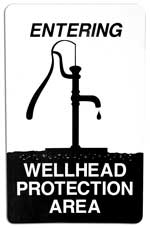
Frannie is learning more and more about how to protect the groundwater in her community.  Recently, she saw a sign just outside of her city that said "Wellhead Protection Area".  She didn't know what that meant, so she went to The Groundwater Foundation's website to find out.
"Wellhead protection" is a fancy term for the idea that we should protect the land around the area where a community gets their water. Many communities use wells to withdraw groundwater and then transport it to a water treatment plant where they treat it and pipe it into the public water system.  Growth and development in a community is important, but it also brings the potential to deplete or contaminate the water everyone drinks.
Each state has a different approach to wellhead protection but will generally involve 5 key points:
1) Delineating the Wellhead Protection Area.  Several maps, containing data on groundwater flow and geology and geographic boundaries, are combined into a single map that determines the land area that could influence the groundwater supply.
2) Conducting a Potential Contaminant Source Inventory. This just means that information is collected about all of the sources in the areas that could potentially contaminate the groundwater.  This may include farms, gardens, factories, or other types of industry.
3) Contaminant Source Management. All of the information that was collected in the Potential Contaminant Source Inventory is put to use to develop best practices where businesses can safely use their materials without threatening the groundwater.
4) Contingency Planning. No wellhead protection plan is complete without a plan for the worst case scenario.  In the event of a well that has to be shut-down due to contamination, natural disaster, physical breakdown, or any other cause, a community must have an idea of short-term and long-term drinking water supply replacements.
5) Education. A community is made up of it's people, so ultimately it is the people in the area who have to protect their water.  A community should make their wellhead protection plan available to the public as well as provide workshops or opportunities on social media for people to learn about the plan.

Friday, September 1, 2017

BLOG: Protect Your Groundwater Day is September 5


If you are a private water well owner, there are many ways to protect your water quality. Two of the most important are:

1. To make sure your well is properly capped, and 
2. To properly plug any abandoned wells on your property. 

That’s why the 2017 theme for Protect Your Groundwater Day, on Tuesday, September 5, is “Cap It, Plug It!” 

Why is this so important? A water well provides a direct connection between the what’s above the ground and groundwater in the subsurface. 

If an active water well is not properly capped—or if an abandoned well is not properly plugged—it can create a direct pathway for contamination in the same groundwater you and others use for their drinking water supply. 

If you own a household well, you are responsible for making sure that your well is properly capped and any abandoned wells on your property are properly plugged. 

What makes a properly capped water well? First, not just any covering will do on top of the well casing, that vertical pipe that extends above the ground in your well. A proper well cap should: 
• Be bolted or locked, so that it cannot be easily removed, 
• Have a rubber seal to prevent anything from infiltrating the well where the cap is joined to the well casing, 
• Be in good condition. 

A tight-fitting well cap that is not bolted or locked can be jarred loose or removed by someone other than the well owner. Also, a well cap that lacks a rubber seal or is cracked or otherwise broken can allow bugs, vermin, bacteria or other types of contaminants above the ground surface into the well.

 Well caps should be installed by a water well system professional, and any well cap maintenance or replacement should be done by a professional. Also, a well system should be disinfected when a well cap is installed, repaired, or replaced. 

How do I properly plug an abandoned well? First, the challenge is to find abandoned wells on your property. Some abandoned wells are obvious while others are not. Survey your property for: 
• Pipes sticking out of the ground. 
• Small buildings that may have been a well house. 
• Depressions in the ground. 
• The presence of concrete vaults or pits. 
 Out-of-use windmills. 

Other tips for finding old, abandoned wells can be found in: 
• Old maps, property plans or property title documents. 
• Neighbors. 
• Additions to an old home that might cover up an abandoned well. 

A water well system professional may do additional checking—including a records check—for more information about abandoned wells. 

A water well system professional should always plug an abandoned well using proper techniques, equipment, and materials. The professional should: • Remove all material from the well that may hinder proper plugging. 
• Disinfect the well. 
• Then plug the well using a specialized grout that (1) keeps surface water from working its way into the borehole, and (2) prevents water from different subsurface levels from mixing. 

The cost to plug a well depends on factors including: 
• The depth and diameter of the well 
• The geology of the area 
• Accessibility to the well, and 
• The condition of the well. 

For more information, please visit www.ngwa.org.

Wednesday, May 31, 2017

It’s Water-Wise Wednesdays with Frannie the Fish! {Awesome Aquifer Kit: Improperly Abandoned Well}

This week in Frannie’s exploration of the Awesome Aquifer Kit is all about why you should properly seal abandoned and unused wells.

Did you know that 42 million people in the United States use a private, or individual well to provide water for their families?  But as cities grow and develop, more and more people are turning to municipal systems to get clean, treated water directly to their faucets.  An unused well is basically a direct line for contaminants to enter the groundwater, so it is very important that, if a well is going to be decommissioned, then a well contractor should be called to seal it properly.

But what actually happens if a well is not sealed properly?

In rural areas, such as homes on or near farms, an open well can be contaminated with animal waste, fertilizers, and pesticides.  After a rain, runoff may simply pick up these dangerous chemicals and flow right over the open will, depositing them into the groundwater supply.   If a well is dug deep enough and is connected to other water supply sources in the area, it could contaminate large sections of the aquifers and prevent many other people in the area from being able to access clean water.

Forgotten wells are a big problem too.  Well casings may rust or break down and, even without the help of any outside contaminants, pollute the groundwater.
Wells that are dug, instead of drilled, are typically shallow enough not to majorly affect groundwater quality.  However, if these wells are not sealed properly, their wide shape may cause unsuspecting people and animals to fall into them and injure themselves.

To learn more about wells and to find out where you can go to test and protect yours, visit The Groundwater Foundation's Wells and Wellhead Protection webpages. 

Monday, March 6, 2017

BLOG: Groundwater: Out of Sight, But Not Out of Mind

by Kevin McCray, CAE, Executive Director, National Groundwater Association

Some 44 percent of the U.S. population depends on groundwater, the water that fills cracks and other openings in beds of rock and sand, for its drinking water supply — be it from either a public source or private well. In rural areas, the number is about 96 percent. That fact alone justifies the need for National Groundwater Awareness Week, to be observed this week, March 5-11, 2017. 

But groundwater is important to us in many other ways, as well. Consider:   
  • Groundwater provides much of the flow of many streams; often lakes and streams are "windows" to the water table. Groundwater adds 492 billion gallons per day to U.S. surface water bodies. In large part, the flow in a stream represents water that has flowed from the ground into the stream channel.
  • Scientists estimate U.S. groundwater reserves to be at least 33,000 trillion gallons — equal to the amount discharged into the Gulf of Mexico by the Mississippi River in the past 200 years.
  • The United States uses 79.6 billion gallons per day of fresh groundwater for public supply, private supply, irrigation, livestock, manufacturing, mining, thermoelectric power, and other purposes.
  • Groundwater is tapped through wells placed in water-bearing soils and rocks beneath the surface of the Earth. There are nearly 15.9 million of these wells serving households, cities, business, and agriculture every day. Wells are constructed by the 8,100 contracting firms employing nearly 45,000 people dedicated to providing and protecting our nation's groundwater supplies.
  • Irrigation accounts for the largest use of groundwater in the United States, about 67.2 percent of all the groundwater pumped each day. Some 53.5 billion gallons of groundwater are used daily for agricultural irrigation from more than 407,913 wells. Irrigation is a major reason for the abundance of fresh produce and grains that we all enjoy.
  • One ton of groundwater used by industry generates an estimated $14,000 worth of output.
These facts help us connect with the important role we each play as stewards, or protectors, of groundwater. Man can adversely affect the resource. Fortunately, there are simple steps that will help protect groundwater and the wells systems that distribute it.
  • Always use licensed or certified water well drillers and pump installers when a well is constructed or serviced, or when the pump is installed or serviced.
  • Keep hazardous materials away from any well. Never dump such materials, motor oil, or anything else that could impact water quality onto the land surface, into a hole or pit, or into a surface water supply.
These tips and more are available from sources such as a state groundwater or water well association, NGWA, or from your county agricultural extension agent or state government agency with responsibility for groundwater. A convenient source for a broader understanding of our groundwater protector role can be found at www.wellowner.org, a Web service of NGWA.

National Groundwater Awareness Week is not a celebration such as the Fourth of July has become. Instead, we should use the week to reflect more deeply on groundwater's value and its contributions to our lives.

Thursday, February 23, 2017

BLOG: Change for Change: The Well Project

by Sunni Richardson, Director of Discipleship, First Lutheran Church, Lincoln, Nebraska

Did you know 663 million people in the world live without clean water? That's nearly 1 in 10 people worldwide, or twice the population of the United States. The majority live in isolated rural areas and spend hours every day walking to collect water for their family. Not only does walking for water keep kids out of school or take up time that parents could be using to earn money, but the water often carries diseases that can make everyone sick. Access to clean water means education, income and health, especially for women and kids. 

The Creation Care Team at First Lutheran Church (FLC) made water the focus of keeping care of the earth in the forefront all year long, with the goal of raising $2500 for a water well for a village somewhere in the world. The well project was kicked off  at the annual Earth Day Celebration in April 2016.

The weeklong Celebration included water education with Sunday school students, First Learning Center's preschool students, and a congregational celebration event.

The week before the event, the Creation Care team met with the Sunday School children to make rain sticks, talk about the importance of conserving water, and why we were going to help build a well somewhere in the world. The children also learned how to make the sound of rainstorm using their hands and feet, and led the congregation in the rain sounds during worship. Throughout the week, Creation Care members met each day with First Learning Center Preschool children. The 3-5 year-olds learned about water conservation, enjoyed hands-on water activities, and planted a straw bale garden in First Lutheran’s Certified Outdoor Classroom. Children were invited to take a water jug home and help with the “Change for Change” Project. 

Adults were brought up to speed on the well project through a Sunday morning adult forum. They learned a village well may serve as many as 500 people. The well not only provides clean water, it opens the door allow people to work, farm, and go to school. Clean water is one of the most powerful ways to create change in the world. When a community gains access to clean water, everything changes. Women and children don’t spend hours gathering water. Communities are healthier. Together, they build stronger economies and a future filled with hope. 


On April 24, 2016 little ones with parents, adults of all ages, and youth abandoned their regular Sunday School class time and came to the Activity Center, which was turned into a water lab for the day! The place was buzzing with conversation ranging from worries about the Ogallala Aquifer to water efficient gardening ideas, from the safe disposal of medications and chemicals to plastics contaminating our oceans. Hands-on activities, including carrying jugs of water around a track set up indoors, had everyone learning about the importance of protecting and conserving water. 

The well project was also launched, with a plastic swimming pool serving as our well. The coins tossed in the well and dollar bills in a jug kicked off raising the $2500 needed to build a well through the Evangelical Lutheran Church in America (ELCA) Good Gifts program. Water jugs were available for families to take home to collect loose change as part of a “Change for Change” campaign. 

Fund were also raised for the well project through FLC's Noisy Offering on the 1st Sunday of the month. The Noisy Offering is a way for kids to give, see, feel and hear their offering at work! (Watch and listen to the noise these kids are happy to make with their offering! The Noisy Offering isn't just for kids - note the number of adults passing coins to the children.)

So what happened? 
  • We learned we are lucky to have easy access to clean water. In other places around the world, people have to spend 6+ hours each day walking to and from their only available water source. 
  • We learned through hands on projects the importance of caring for God’s creation, treating the earth with respect and conserving our natural resources. 
  • We kept people talking about the project and about water through newsletter articles, Facebook posts and displays. 
  • We made our goal! The well is a reality! 
  • And then – donations kept coming in. We are building a second well! 
We celebrate the generosity of the congregation, the opportunity to partner with the ELCA Good Gifts program knowing the dollars raised will indeed be used to build a well, the joy and change the well will bring a village, and the wonder and majesty of God’s creation. 

Sunni Richardson is the Director of Discipleship at First Lutheran Church in Lincoln, Nebraska. Learning, serving and praying are the primary focus of Sunni's call, and she likes helping others discover their potential and use their talents. She is known for stretching people out of their usual comfortable places so they can experience new life. Reach her at sunni@flclinoln.org.

The views expressed in this blog are those of the authors and do not necessarily represent the view of The Groundwater Foundation, its board of directors, or individual members.

Wednesday, February 22, 2017

It’s Water-Wise Wednesdays with Frannie the Fish! {Awesome Aquifer Kit: Pumping the Supply}

This week in Frannie’s exploration of the Awesome AquiferKit is all about how we can pump water from the ground.


We can use groundwater to grow food, water farm animals, drink, and even take baths and wash dishes in.  In order to get to this groundwater, we have to pump it up through wells that are drilled deep into the saturated zone.  This syringe attached to the plastic tube serves as our pump and the nylon fabric at the end is our screen that prevents sediments from getting into the well. 
You will need: Water, a syringe, a plastic tube, some nylon, a rubber band
a clear container to pump water into, and your clear contain filled with gravel


Well siting is the process of finding a location to place the well.  We can’t drill a well into a lake, so we’ll drill our well on the top of our hill and make sure the bottom of the well is far below the water table.

When we pump the water out, the level of the water in our aquifer goes down. We are withdrawing, or taking away groundwater from the whole area.  We can see that, as the water table goes down, our lake shrinks.   Remember, our lake is under the direct influence of groundwater.
The more water we pump out, the shallower Frannie's pond is!

The amount of water pumped out that matches the amount of water that can naturally recharge the aquifer is called safe yield.  If we keep withdrawing water but we don’t allow the aquifer time to recharge, then we are depleting the groundwater source.