Friday, September 27, 2019

BLOG: Emergency Management and Drinking Water Protection Workshop

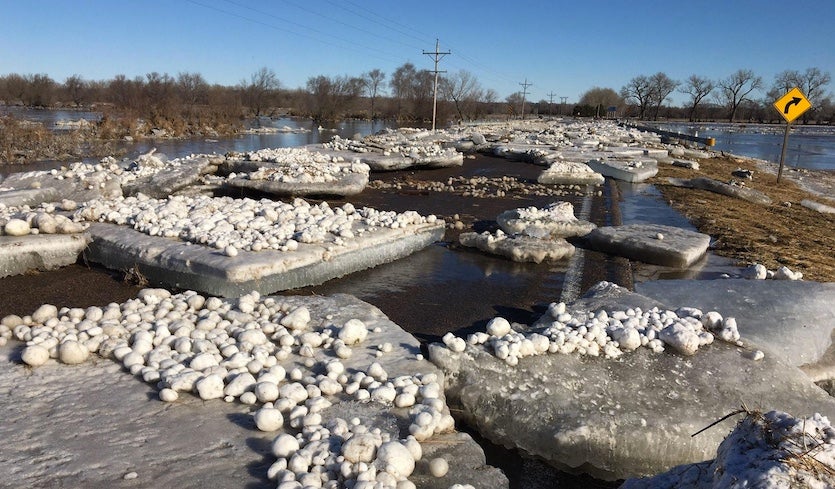
The effects of the historic flooding Nebraska experienced this spring are still being felt all these months later, and will continue to be felt into the future. A natural disaster such as this is a good opportunity to look at contingency planning for community drinking water supplies in the event of an emergency.

Image credit: Nebraska State Patrol

The Nebraska Wellhead Protection Network is hosting a workshop on the subject October 3, 2019 from 9:00 a.m. to 4:30 p.m. at Valley Irrigation (28800 Ida Street, Valley, Nebraska) and invites you to join us. "Emergency Management and Contingency Planning to Protect Nebraska's Water Supply" will cover:

  • Why having a comprehensive emergency management plan is important
  • How to develop an emergency management plan
  • Stories of how towns and businesses survived Nebraska's flooding this spring
The agenda includes:
Lunch and a tour of Valley's facilities, which were impacted by spring flooding, are generously provided by Valley Irrigation.

Join us and help your community be prepared for emergencies! Register by October 1.


Questions? Contact the Groundwater Foundation at info@groundwater.org or 402-434-2740.

Wednesday, September 18, 2019

It's Water-Wise Wednesdays with Frannie the Fish! {Visit a Sustainability Fair}

A local branch of Fiserv, a national financial services company, held their first ever Green Day Sustainability Fair for their employees. Frannie and her friends at the Groundwater Foundation were invited to share their knowledge about our groundwater resources. Frannie met many people from local organizations that are doing good work to grow our food, save electricity, and recycle or repurpose old materials! 
Frannie shared an activity called "How Wet is Our Planet". Did you know that 70% of the Earth is made up of water?
Well, imagine all of that water could fit inside a 5-gallon bucket. Now, take a little over 1 1/2 cups, 25 tablespoons, out of the big bucket and put it into a smaller container. That represents all of the freshwater in the world.
But we don't always have easy access to freshwater. Sometimes, the water is stored inside plants or glaciers or ice caps or clouds. Have you ever tried to drink a cloud? It's pretty hard!
If we take a 1/2 cup or 8 tablespoons out of the freshwater jar, that's about how much clean, fresh groundwater is available for humans to use.
If we take a little eye dropper and place 25 drops from the groundwater cup into the rivers, streams, and lakes cup, then that's how much fresh surface water in the world that humans can use.
Isn't it wonderful and weird to know that ALL of the water we use is just a fraction of the total amount of water on Earth? If we keep it clean now, we will be able to keep using it way into the future.
Have you attended a festival recently? Share your favorite activity with us on Facebook, Twitter, or Instagram! See you next time!

Wednesday, September 4, 2019

It's Water-Wise Wednesdays with Frannie the Fish! {Protect Your Groundwater Day 2019}

Yesterday was Protect Your Groundwater Day! Everyday, we use water for cooking, drinking, cleaning, and more. Fish like Frannie call the water home.

But did you know that the groundwater we drink can be at risk for pollution and overuse? Even though Protect Your Groundwater Day is over this year, there are still many things we can do to help keep our water clean and make sure there's plenty of it for the future. Frannie wants to share an activity that will help you celebrate every day like Protect Your Groundwater Day.

You only need 2 things: a writing utensil and something you can write on!

Here's what to do:

1. Look around your home, school, or neighborhood for ways you can help save water and ways groundwater pollution can be prevented.

2. Make a checklist of all the ways you and your family can help protect groundwater. Check out the example checklist below to get started!

  • Use fertilizer according to package directions.
  • Take back leftover, unused, and expired medications to a pharmacy participating in the Nebraska MEDS project.
  • Reduce, reuse, and recycle!
  • Take hazardous waste to places where it can be properly disposed.
  • Shut water off while brushing your teeth.
  • Only run full loads of dishes and laundry.
  • Check for leaky faucets and have them fixed.
  • Water the lawn during cooler hours of day and only when the grass needs water.
  • Sweep your sidewalks and driveways rather than rinsing them with water.
  • Take a shower instead of a bath.
  • Take short showers and use an aerator or low-flow shower head.
  • Take motor oil and other household hazardous waste to a recycling or collection center.
  • Use environmentally-friendly cleaners.

You can download the free water-tracking app for
Android and Apple, 30by30, to track your water use and learn even more ways you can help conserve water.

3. After you decide what activities you can do to help protect groundwater, take the groundwater pledge:

"I believe clean water is important to all things. I pledge to:
Be aware of activities that can be harmful to groundwater.
Do my part to help protect groundwater and all natural resources.
Make an effort to educate myself and others about water and ways that we can make a difference.
Let's keep it clean!"


Now share the checklists you and your friends made with us on Facebook, Twitter, or Instagram!

Friday, August 30, 2019

BLOG: The Importance of Well Owner Maintenance Practices

Routine maintenance and inspection of water wells can help protect water quality, ensure your well is operating properly, prolong the life of the well system, and protect your investment. Greatest of all
these is the protection of groundwater and your health, as water quality issues can have adverse health impacts without any detectable indicators.

Small problems can often be identified by performing maintenance before they become costly, inconvenient situations. It’s similar to routine maintenance on your vehicle—if you have the oil changed at specified intervals, the engine will operate reliably much longer than if you don’t.

At a minimum, wells should be evaluated annually by a licensed or certified water well systems professional and include a flow test; visual inspection; a water quality test for coliform and anaerobic bacteria, nitrates, and anything else of local concern; checking valves; and electrical testing.

You should receive a written report following the annual checkup that describes recommendations and all laboratory and other test results. Keep this with all other well information.

Understanding Your System
Well owners should have a basic understanding of their well system. Start by maintaining records of any well logs. A detailed log of your well’s construction and the pump installation record are two important tools in troubleshooting and potentially fixing issues with your well and well pump in the future. Ask your well contractor for these records. A well log can provide information regarding the depth of the well, the type of casing used, grouting practices and intervals, static water levels, what type of pump test was performed and results, if the well is screened or not, and more.

You should also be aware of any filtration or treatment systems. Know if one is installed, what type of treatment method is used, and what the water is being treated for. Read the owner’s manual and  keep a copy with your well records for when an issue arises.

Visual Inspection
Well owners should also conduct a regular visual inspection of the well to monitor its performance.

  • On the wellhead, inspect the casing’s general condition and if it extends at least 12 inches above ground. The well cap on top of the casing should be securely attached. Verify that any electrical connections are secure.
  • Survey the area above ground surrounding the well. Check the location relative to potential sources of contamination, flooding, and physical dangers. Maintain at least 50 feet between the well and any kennels, pastures, feeding areas, or livestock operations, and ensure a proper distance is maintained from buildings, waste systems, or chemical storage areas (including fuel tanks). Be sure the ground surrounding the wellhead is sloping away from the well to divert surface runoff.
  • Any growth of weeds, trees, shrubs, or grasses with root systems within 10 feet of the well should be physically removed. Avoid the use of chemicals or herbicides near the wellhead. 
  • The well should not be in a roadway or driveway. If it is within close proximity to a roadway or driveway, it should be properly marked to avoid being hit by vehicles. Be conscious of any other potential threats to the wellhead—garages, ATVs, sledding hills, debris, dirt, surface water, fuels and chemicals (including fertilizers), and runoff water from kennels, pastures, or feedlots. 
  • Well owners should visually inspect any above-ground pumping equipment. Ensure motors are  properly cooled and vented, check for shaft seal leaks, and rust or other signs of weakened fittings.
  • Examine other above-ground well system wiring and parts such as pipes, connections, joint seals, gauges, pressure relief valves, and the water meter (if present). A water sample tap should be located near the pressure tank, high enough to easily collect a water sample.
  • Note the condition and accessibility of above- and below-ground storage tanks. Evaluate the condition of the control box and connections. Maintain water softeners, conditioners, and filtration equipment.

When to Call a Professional
A qualified water well professional should be consulted for any issues discovered during a visual inspection. When in doubt, call a water well systems professional, but especially:

  • Anytime the well has to be opened (cap or well seal removed). 
  • If you experience taste or odor problems.
  • If you experience turbidity or cloudiness (“dirty” looking)
  • If there is a loss of capacity or pressure—the well is not producing as much water as previously produced, the pressure drops and surges, or the pump cycles on and off frequently. 
  • If a test is positive for total coliforms, anaerobic bacteria, or any positive test results indicating a potential health concern. 
  • If you find defects with your wellhead, the wellhead area, or the overall water system during your routine inspection.

Cleaning and disinfection should only be performed by a qualified water well systems professional—for your safety and the protection of your well system.

Find out more about proper well maintenance and much more online at www.wellowner.org.