Showing posts with label environmental education. Show all posts

Wednesday, September 16, 2020

It's Water-Wise Wednesdays with Frannie the Fish! {World Water Monitoring Day}


Frannie will be back in two weeks with the last installment of the TAPS activities, but she didn't want to miss sharing World Water Monitoring Day with you!

World Water Monitoring Day is celebrated on September 18th and is different that World Water Day (which we celebrate on March 22). The first World Water Monitoring Day was in 2003 when America's Clean Water Foundation created a challenge to empower individuals to monitor their local water bodies. In 2015, the challenge was taken on by EarthEcho International. 

Now, with a simple test kit and an account on the EarthEcho Water Challenge app, you and your friends can join over 1.6 million people in 146 counties world wide in learning about and protecting our water sources.

Joining online or via the mobile app is easy and you can create an account with Google or Facebook. Once you have an account, you can start monitoring your local creeks, rivers, ponds, lakes, and more! The database allows you to add important water quality information, pictures of the site, and information about the citizen scientists (that's you!) who collected the data.


You can collect data all year long, as long as you can access the liquid water in your area. Just remember to follow the water safety rules, which you can find on The Groundwater Foundation's website.

Be safe and Happy World Water Monitoring Day!


Wednesday, July 22, 2020

It's Water-Wise Wednesdays with Frannie the Fish! {TAPS Manual Part 2: Over-Application of Fertilizer}

Frannie's friends at the Groundwater Foundation recently published the second edition of the Training About Protecting the Source (TAPS) Manual. The manual guides users through hands-on activities that explore potential threats to groundwater and challenges them to think about what can be done to protect this key drinking water source.

This manual can be used inside the classroom and is aligned to the national Next Generation Science Standards, but Frannie loves just learning about groundwater, no matter where she is. For the next few weeks, you can join her as she works through the different activities. 

Frannie will be using the Groundwater Foundation's Awesome Aquifer Kit, but if you don't have one, you can follow along with materials that might be found around your home. This is the second part of Frannie's exploration of the TAPS Manual. You can follow the link to see what she learned about improperly abandoned wells.

Today's activity is....Over-Application of Fertilizer.
---

Fertilizers promote plant growth and green lawns by helping plants meet their nutrient needs, primarily for nitrogen, phosphorus, and potassium. Plants, however, are limited in the amount they can absorb and use. Fertilizers applied in excess can soak down into the groundwater or run off into surface water bodies. This pollution of surface and groundwater can impact our drinking water supplies.


For this activity, you will need:
  • Awesome Aquifer Kit, OR
    • Plastic box
    • Gravel
    • Plastic tube
    • Hand pump or Syringe
    • Nylon
    • Rubber band
  • 1 packet or 1 tablespoon of colored powdered drink mix (ex. Kool-Aid, Gatorade, etc)
  • 16 oz cup of water
Activity Steps


1. Read through all the instructions first before you begin to build the model. Make sure you have all the needed materials and supplies.
 
2. Fill the plastic box with gravel until it is about ¼ full.
 
3. Add water so that half of the rocks are covered. (This will represent an aquifer.)
 
4. Create a well by covering the end of the plastic tube with nylon, securing it with a rubber band.
 
5. Insert the well, with the well screen on the bottom, near one corner of the plastic box. Push the well down so that it reaches the bottom of the model.
 
6. Add more gravel until the box is about ½-¾ full. The surface of the gravel should be fairly level across the box.
 
7. Sprinkle ½ a packet, about 1 tablespoon, of powdered drink mix (i.e. Kool-Aid) 
on the surface of the gravel to simulate fertilizer.
 
   
8. Pour water on the surface of the gravel to simulate rain.
 
9. Make observations
 
10. Pump the well by inserting the tip of the syringe into the well (plastic tube) or attaching and pumping the hand pump.
 
11. Observe what happens to the fertilizer and water when the well is pumped.


Frannie observed that once the water "rained" over her aquifer, the colored drink mix, which represents fertilizer, quickly mixed with the recharge and infiltrated into the groundwater below. Very quickly, the whole aquifer was contaminated with the red drink mix. When she tried to pump groundwater out, Frannie wasn't able to get any clean water. 

Frannie knows that fertilizers help plants grow healthy and strong, but there are ways and times to apply them responsibly so that plants can absorb all of the nutrients they need without any extra leaching in the groundwater below.

Wednesday, August 7, 2019

It's Water-Wise Wednesdays with Frannie the Fish! {The Water Cycle: Part 8 - Runoff}

This is the eighth part of Frannie’s exploration of the water cycle. Please check out her previous blog on the overview of the water cycle and her deep dives into groundwater, discharge, surface water, evaporation, condensation, and precipitation.


Welcome back to Frannie’s exploration of the water cycle! The green bead on the water cycle bracelet represents runoff. When rain falls, snow melts, or when Frannie’s friend accidentally leaves the hose running in the garden (oh no!), the water that flows over the land and into the sewers, rivers, and lakes is called runoff.
A watershed is an area of land that surrounds a basin of water, such as a river or lake, that collects the runoff. Watersheds can be as small as the little neighborhood that surrounds and drains water into Frannie’s pond or huge, like the Mississippi River Watershed that drains water from 31 U.S. states and two provinces in Canada.

Runoff often picks up pollutants as it flows over the land. Not only can this affect the ecology in the area, but it can also have serious effects on local surface water and, eventually, the reservoir or ocean where it ends up.

Sometimes, precipitation doesn’t make it all the way down to earth. For example, when it rains in a Frannie’s neighborhood, the rain can be intercepted, meaning it lands on the buildings, sidewalks, streets instead of the grass or garden. The water that flows down the side of the street eventually runs into storm drains, which transport the water to a drainage area. Some water may even seep into the ground in a process called recharge!

Join us next time as Frannie explores recharge, the final stop on her water cycle journey.

Wednesday, February 6, 2019

It's Water-Wise Wednesdays with Frannie the Fish! {Girl Scout Groundwater Patches}

National Groundwater Awareness Week is coming up next month, March 11-16th. One way Girl Scout troops can celebrate is by earning the Girl Scout Groundwater Patches! There are patches and guide books for every grade level so you can keep learning more about groundwater, the water we drink and the water that grows our food.


To earn your “Ask Me About Groundwater” patch, all you need to do is complete two activities from different steps within the booklet. These steps can include anything from upcycled crafts to meeting with water professionals or even conducting your own experiments. Seem too easy? Show everyone that you’re a groundwater expert by completing more activities listed in the book and earn the “Let’s Keep It Clean” patch!

Girl Scout Troop 20605 from the Spirit of Nebraska Council earned their Brownie level groundwater patches while exploring the “WOW!: Wonders of Water” Journey. You can read more about their story or start your own water journey by finding your patch booklet on the Groundwater Foundation's website!

Don't forget to share your progress with Frannie on Facebook, Twitter, and Instagram. Good luck!


Tuesday, December 4, 2018

BLOG: Showing, Not Telling

by Michelle Dry, Education and Outreach Director for the Center for Applied Earth Science and Engineering Research (CAESER) at the University of Memphis

For those of us who are out in the trenches educating our communities about the sources of their drinking water when it is groundwater, the question “Where does your water come from?” is often met with puzzled looks, especially from some of the youngest members of our communities – school-aged children. They may reply the faucet or the sky, but when pressed to guess, they often reply with some creative responses, such as the ocean, despite an ocean being hundreds of miles away. In the past year or so, another response has been, “the sewer,” which is mostly likely the result of the 2014 movie, “Teenage Mutant Ninja Turtles.” Sometimes the guess given is a body of water people are familiar with, such as a nearby lake or a river.

In the city where I work, Memphis, Tennessee, another response I sometimes hear is the Mississippi River. Because Memphis is one of the largest cities in the U.S. that solely uses groundwater for its tap water, it is crucial that its residents know and understand the source of their tap water so that it can be managed sustainably.


Part of my job is to educate the public about the source of its drinking water as well as why it is important to preserve and protect it. Memphis drinking water is highly praised by locals and visitors. Because it is abundant and of high quality, it is inexpensive, compared to areas where it may be scarcer and of lower quality. For many, it is easy to take Memphis water for granted. However, the biggest cheerleaders for Memphis groundwater are typically those who have lived elsewhere and those who have traveled widely. The cheerleaders know just how lucky Memphis is to have what is known as the Memphis Sand aquifer.

Although I work with engineers and geologists in my role at CAESER, I am not one. It is my job to translate their research efforts and results into meaningful information for the Memphis area community.

Because groundwater is not visible on the surface of the Earth, the way a river or lake is, even people who know water cycle concepts may not always know that the source of drinking water for our area is water from an aquifer. For those who do know that it comes from an aquifer, they may not know what an aquifer is, and they imagine it as an underground cave or lake.

When it comes to educating people about groundwater, whether they are adults or children, there are challenges to overcome because groundwater is a something people cannot see. We may be able to explain the concept in a way that some people can understand. However, if we can show that same concept by using visuals, it is more likely to be understood and remembered.

An ideal time to educate students about local water sources is when they are introduced to the water cycle. In Tennessee, state science standards require that the hydrologic cycle to be taught in the 5th grade.

As a former classroom teacher, I know that the teaching profession is demanding and busy. Teachers often have limited resources. Since leaving the classroom, I have continued to work with teachers through outreach positions. When I reach out to teachers, my philosophy is that if I can make their job easier, I am more likely to have success in reaching their students. I build on what teachers are required to teach and try to supplement their efforts while extending student learning. They want their students to understand the hydrologic cycle and do well on state standardized tests. My goals are that students learn about their water resources and become good stewards of water, and that they understand how water connects to our daily lives.

In trying to reach a maximum number of students, the idea of a traveling museum on wheels, or a mobile learning lab, seemed to be an efficient way connect with students from all over the city and to nearby areas, since they all use the same aquifer system. I wanted this museum on wheels to have the fun and excitement of a field trip, without the issues that sometimes accompany field trips, such as lost learning time, liability, cost, finding chaperones, and arranging for transportation. This mobile museum would be a fun experience as well as an educational one.
Fortunately, the International Paper Foundation helped to make this dream a reality. In addition to the $60K grant from the IP Foundation, my university based research center was able to utilize other campus resources to create the Water on Wheels (WOW) mobile. The WOW mobile now exists as a 24’ trailer housing interactive and colorful exhibits that educate visitors about the Memphis aquifer and other water related topics. In creating the exhibits, I wanted visitors to have a comprehensive experience so that they could understand different aspects of water, yet understand that these aspects are connected. Visitors would be able to enter the trailer from either of the two doors and go to any exhibit as part of a self-guided learning experience prompted by their own curiosity and interests. The final product accomplishes this.

However, in a school setting, we typically start with a bit more structure. Once in the trailer, a WOW educator will typically focus a group’s attention on one display and move to another display, guided by a group’s questions and interests. Some teachers prefer a more structured learning experience and the students will have a sheet of questions that encourage them to read the exhibits’ text panels in order to find the answers. Free time is a part of the learning experience, too.

Free online lesson plans that complement the WOW exhibits are available, and some teachers will use these with their students prior to the WOW arriving at their school. A select group of teachers created these lesson plans, incorporating Common Core and Next Generation Science Standards into them. Since most students are introduced to the hydrologic cycle in the 5th grade, the lessons are designed for students in grades 4th through 6th.

Although the WOW was designed primarily for students in 4th-6th grades, it is also appealing to adults. Text for the exhibits was crafted in a way that it would be appropriate for students in upper elementary grades, but adults will find the information informative, too. Both the interior and the exterior are bright, colorful and inviting, which was intentional.
Since its debut in the fall of 2014, the WOW has been a tremendous success. Approximately 5,000 people a year experience the WOW, and if funding and staffing were available, it would reach even more people of all ages.

When visitors experience the WOW, one might hear, “Oh, wow!” because it is colorful and engaging. When former WOW visitors makes a repeat visit, they often share what they remembered and learned, especially if they are a schoolage visitor.

Follow-up evaluations done with teachers after a school visit are universally positive. “In 4th grade, the students are expected to recognize the components of the water cycle and describe their important to life on Earth,” said Logan Caldwell, a former teacher at Campus School, who now works at the University of Memphis. “The Water on Wheels experience seamlessly fit into our unit of study. My students were able to learn so much in such a short amount of time because of the hands on experience and the incredible visuals that the WOW possesses.”

The WOW is the most popular education and outreach program for the Center for Applied Earth Science and Engineering Research (CAESER) at the University of Memphis. Although CAESER offers traditional classroom talks, career day visits, and hands-on activities such as building an aquifer in a cup, the uniqueness of the WOW makes it a sought after learning component for classroom teachers in Memphis and nearby areas, as well as a festival attraction. The WOW makes it easier for people of all ages to understand where their water comes from, where it is stored, and where it goes.
As we continue to expand and develop our water education and outreach activities, we are looking at how to expand the WOW experience so that it continues to provide useful information to teachers and students in the K-12 community as well as the community at large. We know the WOW gives us access to our diverse city and community and we want to make it more accessible. We want everyone in our area to know where their water comes from and why it is so special. The WOW allows us to do that.

For more information about the WOW, go to memphis.edu/wateronwheels or contact Michelle Dry directly at mdry@memphis.edu. For more information about CAESER, go to strengthencommunities.com.

Wednesday, August 23, 2017

It’s Water-Wise Wednesdays with Frannie the Fish! {Food Waste Part 3: Upcycled Leftovers}

This is the third part of Frannie’s dive into reducing food waste at home.  Click to read the first and second parts.

Did you know that there are ways to reduce food waste and save water even after you’re done cooking and eating?

If you’re like Frannie, you know that variety is the spice of life. Eating the same thing for several meals each week can get a little boring.  Instead of letting all of those leftovers go to waste, consider freezing them for a few weeks or, depending on the item, up to a few months.

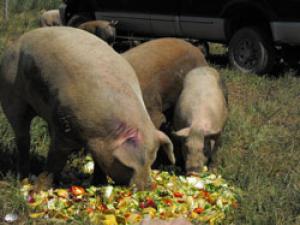
If you have so many leftovers that you can’t possibly eat them all before they good bad, consider donating them.  Even if your food is a little too old for food centers to take it, many farmers accept scrap donations for pig feed or to add to their own compost piles. To find a farm near you that does this, click here.

After your morning cup of coffee or afternoon tea, the used leaves and grounds can be added to your compost pile or simply scooped on top of your houseplants or garden.  If you use coffee pods, consider starting seedlings or small succulents in them instead of heading straight for the garbage bin.  You can find ideas for pod potters, along with other artsy ways to upcycle the pods, here.
 
And remember, the best way to really reduce food waste is to educate yourself and others about why it's an issue and what you can do about it.


Share with us some of your ways to reduce food and water waste after your meals on our Facebook, Twitter, or E-mail.  Happy Upcycling!

Wednesday, August 9, 2017

It’s Water-Wise Wednesdays with Frannie the Fish! {Food Waste Part 2: Save and Reuse}

This is the second part of Frannie’s dive into reducing food waste at home.  To read the first part, click here.
---
Do you like to cook? Frannie does!

There are ways to reduce food waste and save water even when you’re preparing food and cooking food.

To make sure our food is clean, we should wash our fruits and vegetables even if they come in a bag.  Before turning on the tap, put a bowl in sink to catch the dirty water.  When you are done washing your food, you can use the water on your houseplants or garden instead of letting it run down the sink.  You can also do this with the water you have used to boil fruits, vegetables, and eggs after, of course, you let it cool.

As pointed out last week, you can easily use vegetable peelings to start your own compost pile, but did you know you can also some vegetable food waste to make soup?  Save your carrot and celery ends and freeze them for up to six months and boil them in water to make a delicious vegetable broth.  You can also do this with vegetables that are beginning to get old by simply cutting away any bad parts and chopping them into large chunks.

Want a meat broth instead? Save bones and scraps leftover from your pork chops or chicken and add them to boiling water or the veggie broth.

When your bread goes stale, you can break it into pieces and make homemade croutons or breadcrumbs using recipes like this one.  If you want to try something a bit different, try these cornbread croutons!

Even cheese can be reused.  After cutting away the Parmesan rind, turn it into a nice cheesy broth for a Wisconsin Cheese soup or a creamy pasta sauce for your next Italian night.


Share with us some of your ways to reduce food and water waste while cooking on our Facebook, Twitter, or E-mail.  Bon appetite!

Friday, August 4, 2017

BLOG: Recharging Groundwater Education

Recharging Groundwater Education trains teachers to
further engage students in groundwater education.
The Groundwater Foundation is thrilled to begin work on a new project funded by EPA Region 7.

The Environmental Education grant was awarded in conjunction with EPA’s Office of External Affairs and the Environmental Education Program in Washington, D.C.

The grant project, “Recharging Groundwater Education,” will train teachers to engage students in problem-solving and critical thinking around local environmental threats to the groundwater supply in Nebraska; mentor high school students through outdoor internships and stewardship projects; and promote student exploration and awareness of career opportunities in water-related science and engineering fields.

“This grant helps teach Nebraska students about how to protect their Nebraska groundwater through hands-on experience with nature, and explore Science, Technology, Engineering and Math (STEM) career paths,” said EPA Administrator Scott Pruitt.

Jane Griffin, Groundwater Foundation President said, “We are excited about the opportunity to equip educators to teach about groundwater and to complement the lessons learned in the classroom with mentoring opportunities for students to learn about careers and to get involved in local protection efforts.  With over 30 years of experience our organization has witnessed how education is a catalyst to action. We look forward to working with our partners across the state to foster a new generation of environmental stewards and are grateful EPA makes these efforts possible.” 

The Groundwater Foundation is a nonprofit organization that seeks to educate the public about the need to conserve and protect groundwater. Surface water or ground water can serve as sources of drinking water. Protecting source water from contamination can reduce treatment costs, and risks to public health from exposures to contaminated water.

For more information about the Recharging Groundwater Education project, contact us at info@groundwater.org or 402-434-2740.

Thursday, June 22, 2017

BLOG: 7 Fun Ways to Teach Your Kids About Groundwater This Summer

by Jennifer Wemhoff, The Groundwater Foundation

Summer is a time for fun and adventure. Combine those with some hands-on learning about groundwater and you've got a win-win summer activity! 

Mini-terrarium
1. Build a mini-terrarium with a clear plastic cup, gravel, potting soil, a few seeds, plastic wrap, and a rubber band (get full instructions here). Learn about groundwater's role in the water cycle and in helping plants grow. It also gives kids a plant to nurture over the summer.

2. Dig a hole. Kids love dirt. Ask them to explore the hole. Is the soil warm or cool? Is it damp or dry? How does the soil change the deeper you dig? Pour a bucket of water in the hole - where did it go? It became groundwater, filling the cracks and crevices beneath the earth's surface.

Betty Crocker website
3. Make a contamination cake. Start by baking a white cake, then turn it into a poke cake (here's a recipe for a strawberry poke cake, but you can use any flavor gelatin you want). Cut a piece of cake, and talk about how the gelatin is like contaminants in groundwater, seeping into the ground (or cake). What happened to the gelatin when it was poured onto the cake? How is this like a contaminant being poured on the ground? Talk about these things while digging into a yummy piece of cake.

Edible Aquifers
4. Another yummy - but educational - dessert activity! Make an edible aquifer. Build a simple aquifer out of ice chips, cereal, ice cream, sprinkles, clear soda, and a straw. Find the complete instructions here. Have fun and be creative! Of course, the final step is to eat your aquifer creation.

5. Build an aquifer in a cup (get full instructions here). All it takes is a clear plastic cup, rock/gravel, and water. For more fun, add a clean soap or lotion pump to simulate a well and pump the groundwater out of the model aquifer.

Visit a water body
6. Visit a local lake, river, or stream. Talk about the connections between groundwater and surface water. Groundwater contributes to stream flow, and stream flow recharges groundwater. Add a community service project to your visit and clean up litter around the water body.

7. Find a cool spot in nature. What can you discover by simply looking around and listening to the surroundings? Imagine the path taken by a drop of rain from the time it hits the ground to when it reaches a river, groundwater, or the ocean. Draw a picture and/or talk about the paths it might take.

Keep the fun and learning going this summer! For more fun educational ideas, visit www.groundwater.org/kids. 

Wednesday, May 3, 2017

It's Water-Wise Wednesdays with Frannie the Fish! [Awesome Aquifer Kit: Erosion and Weathering}

This week in Frannie’s exploration of the Awesome Aquifer Kit is all about the concept of erosion and weathering.

Photo credit: howtosmile.org
Weathering is the slow destruction or wearing away of soil or rock which is followed by the process of erosion, where the broken particles are then carried away.  This is a very important concept for groundwater and it can happen in two ways: mechanical weathering or chemical weathering.

Mechanical weathering is when rock or soil is physically broken down by constant exposure to flowing or moving water.

Imagine a river that’s moving quickly, picking up sand from the beaches and carrying it downstream.  That’s an example of the beach being mechanically broken by the stream, which carries the sand downstream and makes those beaches smaller.  The same thing can happen underground where, as water slowly flows and picks up particles of soil or rock, the land might get worn down and even sink slightly. 
 
Photo credit: USGS
If the sinking of the land occurs over a long period of time, we call that subsidence.

Chemical weathering is when the rock or soil mixes with the water and dissolves to become a new substance.

This usually happens when polluted rain seeps down into a carbonate type of bed rock.  The acidic water comes into contact with the basic soil and changes the chemistry of the rock so that it breaks down and forms new particles that move with the water flow.


Photo credit: ABC News
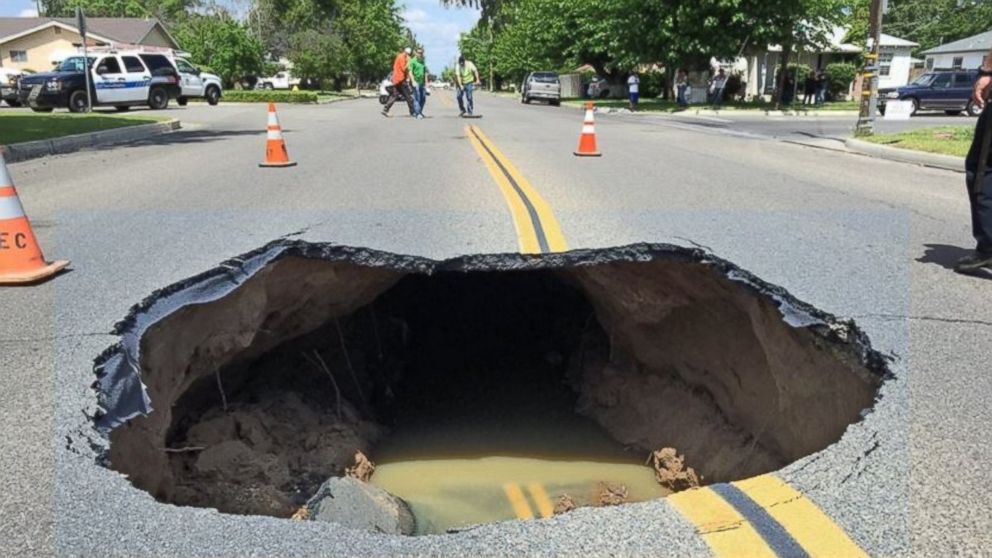
It is this kind of weathering and erosion that is usually the cause of sinkholes, a type of sudden natural disaster that results with a large hole in the ground.  Frannie will show us more about sinkholes next week.

Tuesday, April 25, 2017

BLOG: Developing Science Literacy Through Environmental Education

by the WELS2 Project Team (Tina Vo, Cory Forbes, Nick Brozovic, and Jane Griffin)

Around the globe, humans face an array of contemporary challenges associated with food, energy, and water systems. To prepare future generations of problem-solvers equipped to address these challenges, education must go beyond merely disseminating information. The Environmental Protection Agency (EPA), for example, has identified important components of environmental education that include an emphasis on awareness, knowledge and understanding, attitudes, skills, and participation in environmental challenges. When focused on these challenging issues of today, science literacy can involve:
  • Explaining, describing, predicting natural phenomena  
  • Considering multiple viewpoints and different stakeholders invested in the system
  • Identifying issues, biases, or limitations within research
  • Accounting for various mechanisms and their effects within a system 
  • Evaluating the validity of data collection methods
  • Creating and evaluating arguments around environmental topics
  • And a myriad of other science-oriented tasks and practices 
This knowledge and the associated skills define scientific literacy about interactions between humans and the environment. Supporting audiences to become more scientifically literate requires cultivating a culture and perspective that values critical thinking, problem-solving, and informed decision-making.


For example, decisions about water resources are complicated and involve human and environmental concerns.  A scientifically-literate person is one who’s prepared to ask questions such as: Who/what benefits from resource allocation? Who/what might be hurt by these decisions? What evidence do we have to support these claims and how did we obtain that evidence? How will this impact the water availability for others? Have we considered the natural and economic factors will be influenced? And these are only a few aspects to consider. While issues like this are complicated, frameworks like the ones developed at the University of Nebraska help untangle them by providing guidance such as where to start, who to ask for help, and how to educate ourselves.

Another way these key components of environmental education are highlighted and science literacy is supported is through the adaptation of state and national standards that acknowledge the role of ‘science practice’ as a way of doing and knowing science and requesting these practices be taught in the classroom. Teachers can support students through meaningful and directed educational experiences by providing opportunities to develop knowledge about food, energy, and water issues (e.g. water resource management) and scientific practices (e.g. scientific modeling). 

One aspect of environmental education that can prove challenging for learners of all ages centers on the complexity of hydrological phenomena. Complicated environmental issues develop around balancing humans’ use of groundwater against depletion and recharge rates. Supporting and fostering critical thinkers who can find solutions for these multifaceted issues will take dedicated educators who are well versed in science practices and environmental education. 

A program targeted to support these dedicated teachers to provide quality classroom instruction is the WELS2 project. Based at UNL, this project is a collaboration between the UNL Science Literacy Program, Daugherty Water for Food Global Institute, and The Groundwater Foundation. 

The WELS2 project (Water Education Leaders for Secondary Science) is committed to providing high school and middle school teachers in Nebraska with the training, supplemental educational materials, and experiences around hydrological phenomena, to support their food, energy, and water education efforts in the classroom. Through this professional development program, teachers can earn up to 9 hours of graduate course credit through the College of Agricultural Sciences and Natural Resources at the University of Nebraska-Lincoln, as well as a stipend, to support their ongoing professional learning. WELS2 introduces teachers to various resources including computer-based water modeling tools, pedagogical strategies for encouraging students' model-based reasoning about water, and strategies for grounding these experiences in real-world, issues-based contexts. Teachers will learn to use these resources to develop their professional skill sets, as well as how to use them in their classrooms to enhance their students’ learning about water systems. Participating teachers use part of this experience to collaborate with educational specialists and scientists and tailor resources suited to their students’ needs. This collaboration is an important facet of the project which highlights the expertise of the participating teachers to assess and develop materials specifically for their use. If you are interested in joining this program or would like to learn more, please inquire here.

Environmental education is an important part of supporting and developing science literacy in audiences of all ages. Educators who wish to help students develop these tools for critical thinking, reasoning, and problem-solving need to be supported and provided opportunities to do so. By partnering with institutions and organizations like the UNL Science Literacy Program, Daugherty Water for Food Global Institute, and The Groundwater Foundation, educators can leverage additional tools and resources delving deeper into environmental challenges and supporting their students in building critical thinking, problem-solving, and decision-making skills. 

The WELS2 Project Team includes Cory Forbes, Associate Professor of Science Education, Institute of Agriculture and Natural Resources Science Literacy at the University of Nebraska-Lincoln, cory.forbes@unl.edu; Tina Vo, PhD Candidate, University of Nebraska-Lincoln, ms.tinavo@gmail.com; Nick Brozovic, Director of Policy, Robert B. Daugherty Water for Food Global Institute, nbrozovic2@unl.edu; and Jane Griffin, President, The Groundwater Foundation, jgriffin@groundwater.org.

Friday, April 21, 2017

BLOG: Groundwater Guardians Go Big on Earth Day

by Sara Brock, The Groundwater Foundation

The Groundwater Foundation’s Groundwater Guardian Program, launched in 1994, has teams across the United States from California to the Carolinas.  Year round, the teams work to increase awareness and education on groundwater issues and on special occasions, like this Saturday’s Earth Day, they get to go big.  Here are 5 communities using Earth Day to bring a little light to this underground resource.

Hamilton to New Baltimore’s Groundwater Consortium plans and implements an entire Earth Day Celebration Butler County aimed at increasing public awareness of local groundwater protection efforts.  By collaborating with local environmental groups and educators, they are able to provide over 25 exhibits and demonstrations of the area’s groundwater and surface water protection programs.

Lincoln’s Groundwater Guardian team is one of 73 sponsors of the Lincoln Earth Day event.  Schools, private businesses, government offices, and scientists are represented at various booths at this event with local food, music, and speakers. Check out the line-up here: http://www.lincolnearthday.org/ 

The team in Valparaiso is hosting an informational booth at the Northwest Indiana Earth Day Celebration.  As regular presenters at this fair, they are prepared with educational materials and reusable water bottles for the over 2500 people expected to attend this year. If you live in the area, you can even stop by and pick up a rain barrel or compost bin for your home!  Find out more here: http://portercountyrecycling.org/

Moving away from the fairs and festivals, the Chippewa Falls Groundwater Guardian team puts on a targeted program that, while is still associated with the city’s Earth Day Festivities, provides volunteers with a deeper understanding of and chance to experience groundwater protection in their area.  They do this by attaching “Dump No Waste, Drains to River” buttons on catch basins and illuminating the issue of contamination and drainage in informational sessions before and after. 

The Groundwater Guardian team at the Central Regional Groundwater Protection Planning Committee keeps things running through the weekend with their Clean Water Celebration. Celebrating their 25th anniversary as one of the largest clean water festivals in the world, this year is made extra special by keynote speaker Dr. Jacqueline Quinn, an engineer, inventor, and payload manager for NASA.  Check out the schedule and the speakers here: http://sunfoundation.org/