Showing posts with label gardening. Show all posts

Wednesday, June 13, 2018

It's Water-Wise Wednesdays with Frannie the Fish! {Irrigation: Urban Agriculture}

This is the third part in Frannie's exploration of irrigation. Check out the previous post here!
---

If you have a garden at home, think about what kinds of things you grow. Do you grow pretty bushes and flowers? Maybe some fruits and veggies to eat?

If you don’t have enough space for your garden at home, you might take part in a community garden.  A community garden provides a space for many people to grow fresh produce or raise small livestock like chickens and ducks on shared land. While each person is responsible for their own plot, they may choose to assist their neighbors and split their products or sell surplus at local markets.

Many communities, especially cities, are looking to take community gardening to the next level.  A food desert is a region within a city where it is difficult to buy affordable or good-quality fresh produce.  Many people who live in cities either choose not to have or can’t afford a car and the only locations to buy food within walking distances are convenience stores, bodegas, or gas stations.  Most of these places carry cheap, processed foods that aren’t healthy compared to fresher fruits, vegetables, and meat.

Urban agriculture is a part of that solution. While community gardens are a part of urban agriculture, the term more broadly includes things like beekeeping, farming, raising animals, aquaculture, and growing orchards all within an urban setting.

Just like in rural agriculture, urban farms need water sources to irrigate the plants. Many of these come from hook-ups to city wells or pumps. Cities can’t usually allow big irrigation systems like center pivot sprinklers for obvious reasons. Can you imagine one of those huge sprinklers rolling through the streets?
In relatively large plots of land, some sprinkler systems can be adapted to move or be moved through the field. Many smaller lots find drip irrigation or use of rain barrels to be a better, less expensive, more efficient solutions.  The labor-intensive irrigation methods that are so impractical on huge tracts of farmland can be more easily applied in urban environments.

Two very different and interesting kinds of urban agriculture are aquaculture and hydroponics.  Join Frannie as she learns more about them in her next blog!  In the meantime, share pictures of your garden or your community’s garden with us or check out previous blogs to learn more about irrigation.

Wednesday, April 18, 2018

It's Water-Wise Wednesdays with Frannie the Fish! {Rain Barrels}

If April showers bring May flowers, then what do May flowers bring?

June bugs!


All joking aside, it’s very hard to keep those beautiful May flowers alive and blooming through the hot and dry summer months. Frannie wants to share with you an easy, and even artistic, way to save and repurpose rain water this season.


Rain barrels are, broadly, any type of above-ground container that has been modified to collect and store rooftop runoff for non-drinking uses. During a heavy rain, gutters efficiently move the water away from the roof and out onto the ground below but all of the water can quickly over-saturate the soil. By collecting that water in a rain barrel instead, we can reduce the amount of water that evaporates or flows away.

Rain barrels can cost as little as $20 for a simple container installed by the homeowner or as much as $300 for a fancy set-up and you can be as creative with it as you like. Many people opt to paint the barrels with their favorite flowers or insects that help pollinate the gardens.

And in case you need another reason to start building your own rain barrel, the EPA suggests that the average home saves 1300 gallons of water over the course of the summer!

Save money and water this summer by installing a rain barrel and share your progress with us on Facebook and Twitter!

Wednesday, August 23, 2017

It’s Water-Wise Wednesdays with Frannie the Fish! {Food Waste Part 3: Upcycled Leftovers}

This is the third part of Frannie’s dive into reducing food waste at home.  Click to read the first and second parts.

Did you know that there are ways to reduce food waste and save water even after you’re done cooking and eating?

If you’re like Frannie, you know that variety is the spice of life. Eating the same thing for several meals each week can get a little boring.  Instead of letting all of those leftovers go to waste, consider freezing them for a few weeks or, depending on the item, up to a few months.

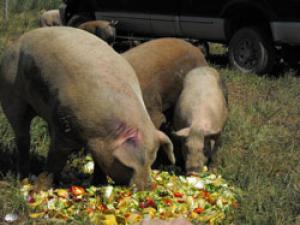
If you have so many leftovers that you can’t possibly eat them all before they good bad, consider donating them.  Even if your food is a little too old for food centers to take it, many farmers accept scrap donations for pig feed or to add to their own compost piles. To find a farm near you that does this, click here.

After your morning cup of coffee or afternoon tea, the used leaves and grounds can be added to your compost pile or simply scooped on top of your houseplants or garden.  If you use coffee pods, consider starting seedlings or small succulents in them instead of heading straight for the garbage bin.  You can find ideas for pod potters, along with other artsy ways to upcycle the pods, here.
 
And remember, the best way to really reduce food waste is to educate yourself and others about why it's an issue and what you can do about it.


Share with us some of your ways to reduce food and water waste after your meals on our Facebook, Twitter, or E-mail.  Happy Upcycling!

Wednesday, August 9, 2017

It’s Water-Wise Wednesdays with Frannie the Fish! {Food Waste Part 2: Save and Reuse}

This is the second part of Frannie’s dive into reducing food waste at home.  To read the first part, click here.
---
Do you like to cook? Frannie does!

There are ways to reduce food waste and save water even when you’re preparing food and cooking food.

To make sure our food is clean, we should wash our fruits and vegetables even if they come in a bag.  Before turning on the tap, put a bowl in sink to catch the dirty water.  When you are done washing your food, you can use the water on your houseplants or garden instead of letting it run down the sink.  You can also do this with the water you have used to boil fruits, vegetables, and eggs after, of course, you let it cool.

As pointed out last week, you can easily use vegetable peelings to start your own compost pile, but did you know you can also some vegetable food waste to make soup?  Save your carrot and celery ends and freeze them for up to six months and boil them in water to make a delicious vegetable broth.  You can also do this with vegetables that are beginning to get old by simply cutting away any bad parts and chopping them into large chunks.

Want a meat broth instead? Save bones and scraps leftover from your pork chops or chicken and add them to boiling water or the veggie broth.

When your bread goes stale, you can break it into pieces and make homemade croutons or breadcrumbs using recipes like this one.  If you want to try something a bit different, try these cornbread croutons!

Even cheese can be reused.  After cutting away the Parmesan rind, turn it into a nice cheesy broth for a Wisconsin Cheese soup or a creamy pasta sauce for your next Italian night.


Share with us some of your ways to reduce food and water waste while cooking on our Facebook, Twitter, or E-mail.  Bon appetite!

Wednesday, July 26, 2017

It's Water-Wise Wednesdays with Frannie the Fish! {Food Waste Part 1: Composting}

Food is an integral part of the water cycle.  Plants need water to grow.  Animals need plants to eat and water to drink.  The big trucks need water to keep their engines cool on the long interstate drives from the farm to the store to the table.  You even use water to clean and cook your food.

We know it’s important to Reduce, Reuse, and Recycle, but did you know you can do that with your food, too?

Food waste is the name for our leftovers after we’re done preparing, cooking, or eating our food.  In this mini-series, Frannie will look at different ways that we can reduce, reuse, and recycle food waste.


Composting is one of the easiest way to reuse food waste from fruits and vegetables.  It reduces the volume of trash we put into landfills while creating nutrient-rich soils we can use to grow beautiful, healthy plants.

It starts with a box. Or a bin. Or hole in the ground. Or even just a pile in the corner of your yard that is out of the way and people know not to step in.  Any way you have it, the important part of the pile is the worms and fungi and bugs, decomposers that will take whatever you put into your compost and turn it into the dirt you want at the end.
 
Once you have your compost pile or box or hole, you can start putting things in there.  But wait, you can’t put all of your food waste in the compost.  Only put plant-based items in your bin, such as nut shells, fruit and veggie peelings, grass clippings, and weeds.  Things you should not put in your compost include meat, dairy, oils, or fats because they might attract some pests you don’t want near your home.

Once you have added your first compostable materials, cover them with soil or some already completed compost.  This will kick-start the decomposing process by introducing the worms and microbes (little bacteria) to the fresh scraps.

Add a little water for moisture, turn or stir it once a week, and voila! Your composted soil should be completely done and ready to use in just a couple months! Of course you can always add to the top of the pile and scoop out the finished compost at the bottom to keep the process going.

Like Frannie said before, the finished product that comes out of a compost pile is a nutrient-rich soil that you can use to start new seedlings or spread on the top of your garden like a fertilizer.


Share pictures of your compost piles and gardens for a chance to be featured in an upcoming blog! Happy Gardening!

Wednesday, July 12, 2017

It's Water-Wise Wednesdays with Frannie the Fish! {Mulch}

Evaporation happens when water is heated enough to turn into a gas and expand into the atmosphere.  When Frannie is gardening, she wants to make sure that her plants get enough water but that it’s not wasted by evaporating in the hot summer sun.

In the past, she learned the best times of the day to water are dawn and dusk when it isn’t so hot.  But there’s another common and inexpensive option that she’d like to share with you: Mulch.

Mulch is a material that you use to cover the soil around your plants. Many people use it in landscaping because it comes in a variety of colors and textures, but it also does several important things to help keep your plants healthy and strong.
  1. Evaporation Prevention. This is one of the most important purposes mulch serves in this hot weather. Mulch absorbs the heat from the sun and prevents it from reaching the soil that the plant is growing in. Because the soil is cooler, it is able to take in and retain more moisture than it would were it exposed.
  2. Weed Prevention. No one likes weeds.  They take up all the water and good nutrients in the soil that we want for our own flowers and food.  Mulch, by stopping the sunlight from reaching the ground, starves out weeds and they are unable to grow in that area. It also stops any new seeds from landing in your garden.
  3. Soil Improvement. Ok, so we know that the soil in our garden is cooler with more moisture and fewer weeds, but it also builds up the soil.  All types of mulch prevent the wind from eroding the soil but organic or natural mulch can go one step further by enhancing the soil with nutrients as they decompose.  An area mulched with pine needles, for example, becomes acidic as the mulch decomposes and becomes suited for acid-loving plants like azaleas. 
Try using mulch this summer and let us know how it goes on our Facebook, Twitter, or send us an email. Happy Gardening!

Thursday, June 16, 2016

11 Ways to Conserve Water During Summer Fun

by Jennifer Wemhoff, The Groundwater Foundation

Kids are out of school and summer is upon us. Many times summer fun involves water, and here are easy ways to conserve water during summer fun.

1. If you want to beat the heat by running through the sprinkler, make it have a purpose! Periodically move the sprinkler around the lawn to give it all a good watering. 

2. Position your sprinkler to water your garden or landscape while the kids splash and play.
3. Install a rain barrel on one of your home's downspouts. Let your kids paint and decorate it for a colorful, unique addition to your landscape.

4. If you're lucky enough to have a backyard pool, use a pool cover and keep the water cool to help reduce water lost to evaporation.

5. Stay cool by placing a wet cloth around your neck instead of using misters, where most of the water evaporates immediately.

6. Spend more time having fun and less time on yardwork - mow your grass less often and cut it longer. Less water will evaporate from taller grass, and you'll save time and energy by mowing less.

7. On your family vacation, reuse your hotel towels throughout your stay to conserve water and save on detergent added to water.
 
8. When eating out on your vacation, decline the frequent water refills if you don't plan to drink it for less water wasted down the drain.

9. Take the kids to the pool and skip the bath. Swimming counts as a bath during the summer, right?

10. Fill reusable water bottles instead of disposable plastic bottles during sporting events and summer road trips.

11. Keep a pitcher of water in the fridge for a refreshing drink after fun in the sun.

Friday, April 22, 2016

Earth Day Resolutions

by Jamie Kelley, Pioneers Park Nature Center


April means rain showers, morel mushroom hunting, spring cleaning, early season flowers blooming, goslings hatching, prescribed burns on the prairie, and celebrations of Earth Day and Arbor Day. To me, all of these things are signs of spring. Signs that the winter months have passed and the warmer weather and longer days are upon us. Windows are open letting in fresh air and sunshine, work is being done in our lawns and gardens, and our porches and patios are filled with friends and family, spring has arrived. 

Is there something that you look forward to each spring, something that tells you, spring is here? 

From gardens to goslings, all things spring has got me thinking. If this season brings so much newness and we are celebrating Earth Day, why not have springtime be a time of year to evaluate our sustainable goals? Our homes and gardens get spruced up, maybe our goals should too.  

Let’s make an Earth Day Resolution! You know, like a New Year’s resolution but one that is good for the earth. Start with something you’ve been wanting to do, such as adding a rain barrel to your home, or planting native plants that attract pollinators to your garden and use less water. Start small if that works best for you, and make it your sustainable goal for this spring, make it your Earth Day Resolution. 

So as you see more and more signs of spring, let that be a reminder to look at what you can do, what is that one thing you will do in your life to help move towards achieving a more sustainable lifestyle. Share your Earth Day Resolution with your friends and family, and together, let’s make our lives more sustainable this spring!

___________________

Jamie Kelley is a Naturalist at Pioneers Park Nature Center in Lincoln, Nebraska, which includes 668 acres of tallgrass prairie, woodlands, wetlands and a stream. Since 1963 the Nature Center has served the Lincoln area as an environmental education center and wildlife sanctuary. Eight miles of hiking trails wind through various habitats and take visitors past non-releasable raptor exhibits, as well as bison, elk, and white-tailed deer.

Pioneers Park Nature Center

Thursday, April 14, 2016

6 Reasons to Install a Rain Garden

by Jennifer Wemhoff, The Groundwater Foundation

Spring is here, and along with it comes spring yardwork. Spruce up your landscape and help control stormwater runoff by installing a rain garden in your yard this spring. 

Here are 6 reasons to install a rain garden at your home or business:

1. They help improve water quality.
Rain gardens collect and hold rainwater runoff from roofs, driveways, and other impvervious surfaces, allowing the water to be filtered by the vegetation.

2. They help recharge groundwater.
Since rain gardens collect rainwater, rather than allowing it to run off into storm drains, the water has time to percolate into the soil, recharging groundwater.

3. They are low maintenance.
Rain gardens typically incorporate native vegetation, which requires no fertilizer and minimal maintenance after the first year or so.

4. They look nice.
Rain gardens are an attractive addition to any landscape, generally featuring a mix of perennials, shrubs, ornamental grasses, and wildflowers.

5. They help with flood control.
During heavy rain events, rain gardens help reduce the load on existing stormwater infrastructure, while decreasing the nutrient load.

6. They attract beneficial birds, butterflies, and insects.
The plants included in rain gardens provide habitat for these creatures that are crucial to the ecosystem.

Want to know more and find out how to install a rain garden? Go here.

Thursday, March 5, 2009

Tuesday, March 3, 2009

Roll out the barrel, spring is right around the corner

by Carla Otredosky, The Groundwater Foundation

Out my window, the grass is beginning to peer from beneath the melting snow, a flock of birds gather and cheerfully chat. I note on my calendar to adjust my clock for daylight savings time this weekend and know that spring is just around the corner.
This got me thinking.

What is one simple thing that I can do in my own yard to become a groundwater-friendly gardener in 2009?


Use a rain barrel! A rain barrel is a large drum (50-60 gallon capacity) placed beneath the downspout of a home. This barrel collects rain water as it runs off the roof where it is stored for later use to water gardens and lawns.

The idea of capturing rain water has been around for thousands of years. While rain seems like an infinite resource, it is desperatley missed during a time of drought. If your water supply comes from a well or a stressed aquifer, then you are even more at risk during a dry spell of not having water available to irrigate your garden or lawn. Using a rain barrel is a great way to lower your water bill and become less dependent on your city’s water supply.

Rain barrels are an easy solution to becoming a groundwater-friendly gardener because they are easy to install and require very little maintenance.

Rain barrels are often available in shades of brown, black or green. But they can be painted in a color to match your house. Consider decorating your rain barrel with painted images (choose exterior grade paints) to add artistic interest to your yard.

Let's show our neighbors that we really do care about conserving water and install rain barrels this spring!

NOTE: The City of Lincoln Watershed Management Division and the Friends of Pioneers Park Nature Center invite you to view/bid on 25 rain barrels painted by local artists. Learn more about the "Artistic Rain Barrel Program" at http://www.lincoln.ne.gov/city/pworks/watrshed/educate/barrel/artist/index.htm.