Showing posts with label eco-friendly. Show all posts

Wednesday, April 18, 2018

It's Water-Wise Wednesdays with Frannie the Fish! {Rain Barrels}

If April showers bring May flowers, then what do May flowers bring?

June bugs!


All joking aside, it’s very hard to keep those beautiful May flowers alive and blooming through the hot and dry summer months. Frannie wants to share with you an easy, and even artistic, way to save and repurpose rain water this season.


Rain barrels are, broadly, any type of above-ground container that has been modified to collect and store rooftop runoff for non-drinking uses. During a heavy rain, gutters efficiently move the water away from the roof and out onto the ground below but all of the water can quickly over-saturate the soil. By collecting that water in a rain barrel instead, we can reduce the amount of water that evaporates or flows away.

Rain barrels can cost as little as $20 for a simple container installed by the homeowner or as much as $300 for a fancy set-up and you can be as creative with it as you like. Many people opt to paint the barrels with their favorite flowers or insects that help pollinate the gardens.

And in case you need another reason to start building your own rain barrel, the EPA suggests that the average home saves 1300 gallons of water over the course of the summer!

Save money and water this summer by installing a rain barrel and share your progress with us on Facebook and Twitter!

Wednesday, August 23, 2017

It’s Water-Wise Wednesdays with Frannie the Fish! {Food Waste Part 3: Upcycled Leftovers}

This is the third part of Frannie’s dive into reducing food waste at home.  Click to read the first and second parts.

Did you know that there are ways to reduce food waste and save water even after you’re done cooking and eating?

If you’re like Frannie, you know that variety is the spice of life. Eating the same thing for several meals each week can get a little boring.  Instead of letting all of those leftovers go to waste, consider freezing them for a few weeks or, depending on the item, up to a few months.

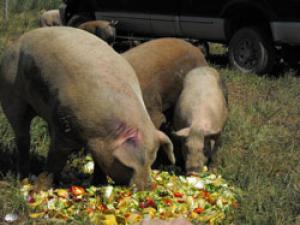
If you have so many leftovers that you can’t possibly eat them all before they good bad, consider donating them.  Even if your food is a little too old for food centers to take it, many farmers accept scrap donations for pig feed or to add to their own compost piles. To find a farm near you that does this, click here.

After your morning cup of coffee or afternoon tea, the used leaves and grounds can be added to your compost pile or simply scooped on top of your houseplants or garden.  If you use coffee pods, consider starting seedlings or small succulents in them instead of heading straight for the garbage bin.  You can find ideas for pod potters, along with other artsy ways to upcycle the pods, here.
 
And remember, the best way to really reduce food waste is to educate yourself and others about why it's an issue and what you can do about it.


Share with us some of your ways to reduce food and water waste after your meals on our Facebook, Twitter, or E-mail.  Happy Upcycling!

Wednesday, August 9, 2017

It’s Water-Wise Wednesdays with Frannie the Fish! {Food Waste Part 2: Save and Reuse}

This is the second part of Frannie’s dive into reducing food waste at home.  To read the first part, click here.
---
Do you like to cook? Frannie does!

There are ways to reduce food waste and save water even when you’re preparing food and cooking food.

To make sure our food is clean, we should wash our fruits and vegetables even if they come in a bag.  Before turning on the tap, put a bowl in sink to catch the dirty water.  When you are done washing your food, you can use the water on your houseplants or garden instead of letting it run down the sink.  You can also do this with the water you have used to boil fruits, vegetables, and eggs after, of course, you let it cool.

As pointed out last week, you can easily use vegetable peelings to start your own compost pile, but did you know you can also some vegetable food waste to make soup?  Save your carrot and celery ends and freeze them for up to six months and boil them in water to make a delicious vegetable broth.  You can also do this with vegetables that are beginning to get old by simply cutting away any bad parts and chopping them into large chunks.

Want a meat broth instead? Save bones and scraps leftover from your pork chops or chicken and add them to boiling water or the veggie broth.

When your bread goes stale, you can break it into pieces and make homemade croutons or breadcrumbs using recipes like this one.  If you want to try something a bit different, try these cornbread croutons!

Even cheese can be reused.  After cutting away the Parmesan rind, turn it into a nice cheesy broth for a Wisconsin Cheese soup or a creamy pasta sauce for your next Italian night.


Share with us some of your ways to reduce food and water waste while cooking on our Facebook, Twitter, or E-mail.  Bon appetite!

Wednesday, July 12, 2017

It's Water-Wise Wednesdays with Frannie the Fish! {Mulch}

Evaporation happens when water is heated enough to turn into a gas and expand into the atmosphere.  When Frannie is gardening, she wants to make sure that her plants get enough water but that it’s not wasted by evaporating in the hot summer sun.

In the past, she learned the best times of the day to water are dawn and dusk when it isn’t so hot.  But there’s another common and inexpensive option that she’d like to share with you: Mulch.

Mulch is a material that you use to cover the soil around your plants. Many people use it in landscaping because it comes in a variety of colors and textures, but it also does several important things to help keep your plants healthy and strong.
  1. Evaporation Prevention. This is one of the most important purposes mulch serves in this hot weather. Mulch absorbs the heat from the sun and prevents it from reaching the soil that the plant is growing in. Because the soil is cooler, it is able to take in and retain more moisture than it would were it exposed.
  2. Weed Prevention. No one likes weeds.  They take up all the water and good nutrients in the soil that we want for our own flowers and food.  Mulch, by stopping the sunlight from reaching the ground, starves out weeds and they are unable to grow in that area. It also stops any new seeds from landing in your garden.
  3. Soil Improvement. Ok, so we know that the soil in our garden is cooler with more moisture and fewer weeds, but it also builds up the soil.  All types of mulch prevent the wind from eroding the soil but organic or natural mulch can go one step further by enhancing the soil with nutrients as they decompose.  An area mulched with pine needles, for example, becomes acidic as the mulch decomposes and becomes suited for acid-loving plants like azaleas. 
Try using mulch this summer and let us know how it goes on our Facebook, Twitter, or send us an email. Happy Gardening!

Monday, June 26, 2017

BLOG: Clean Car, Less Water

by Sally Phillips, freelance writer

If you're washing your car at home, you could be wasting a lot of water. The average home car wash uses about 80 to 140 gallons of water. This water picks up all the pollutants off your car, such as fuel, gas, oil, and tar and mixes it with the soapy car wash ingredients. This soapy, oily mixture then flows from your yard, to the storm drain, and ultimately to streams and lakes where it damages the environment and causes harm to marine animals. So how can we keep our car in top shape while still protecting the Earth and its fellow inhabitants? Here are some eco-friendly tips for washing your car at home.


Do Away with the Open Hose
Many people prefer washing their car at home, but to reduce the amount of water you use, try an automatic shutoff nozzle for your hose. This nozzle prevents the continuous flow of water and can save up to 70 gallons of water per wash. You can also use a power washer, which uses about 2-5 gallons of water per minute, compared to an open hose which uses 10 gallons per minute. Simply using a bucket is also a great way to manage how much water you use. Fill your buckets with water and refill only when necessary. This will allow you to calculate exactly how much water you’re using and force you to cut down.

Watch Where You Wash Your Car
Most people wash their car in their driveway, but this water goes directly to the storm drains. These typically don’t lead to sewage treatment plants but instead go directly into our lakes and streams. An eco-friendly approach to car cleaning is to move your vehicle to a grass or gravel surface. This allows the ground to soak some of the water and filter out the harmful contaminants that make their way into runoff water.

Use the Right Products
Many soaps that we use to wash our cars have chemicals that are harmful to the environment. These chemicals decrease water quality and damage the life of aquatic species. Instead, opt for a waterless cleaner. You can get a spray-on product and wash your car with minimal or no water at all. These solutions are also biodegradable so they don’t add any chemicals or pollutants to the environment. Simply spray on your car and use a microfiber towel to remove dirt.


Following these three tips will help reduce the amount of water you use when washing your car, and ultimately protect the aquatic environment from harmful pollutants.

__________


Sally Phillips is a freelance writer with many years experience across many different areas. She enjoys reading, hiking, spending time with her family, and traveling as much as possible. Reach her at sally@diamondmail.net.

The views expressed in this blog are those of the authors and do not necessarily represent the view of The Groundwater Foundation, its board of directors, or individual members.