Showing posts with label public water supply. Show all posts

Wednesday, February 21, 2018

It's Water-Wise Wednesdays with Frannie the Fish! {Wellhead Protection: Annual Drinking Water Quality Report}

This is Part 4 in Frannie's exploration of Wellhead Protection.   Read Part 1Part 2, and Part 3 and look for more blogs to learn more about what it is, who protects the wellheads, and why it's important.
----

What is the Annual Drinking Water Quality Report?
The Annual Drinking Water Quality Report, also called the Annual Consumer Confidence Report, prepared by your local water system, is designed to provide consumers with information about the quality of the water delivered by their public water system.  The report includes information about the system itself, but also information on the source of the drinking water, contaminants in the raw and finished water, and any violations or exemptions that the water system is operating under. 
If you live in a community of greater than 100,000 people, you might be able to find your Annual Water Quality Report online, otherwise you can pick up a copy from your local health department or public water supplier.

Why is the Annual Drinking Water Quality Report Important?
Consumer awareness and education is the first line of defense in protecting wellfields and the groundwater below them.  The Annual Water Quality Report explains the process that delivers clean, safe water to our bathtubs, sinks, and garden hoses and alerts customers when they might need to take steps to prevent pollution and overuse of their water source.  

What Can You Do with the Information in the Annual Drinking Water Quality Report?
Beyond taking the preventative steps listed in the report to keep your water clean, you can also share the information with decision makers in your state and local governments, schools and school districts, and your friends and family. It’s important for you to take action and even more important for you to share with others how they can do the same. 

Wednesday, October 4, 2017

It’s Water-Wise Wednesdays with Frannie the Fish! {How to Read a Water Bill}

Water bills can be a little confusing when you are first learning to read them and, while it is easy to identify how much you have to pay for the current billing period, other information may vary in name and format from place to place.  So whether you have moved to into a new home or you are looking at your very first water bill, here’s some useful tips on reading it so that you can save money, and water, in the future.

1. Meter Class.  The class off the water meter indicates at what flow rate the water meter meets the common accuracy features.  Classes of water meter range from low (small, Class A meters, used in most residences) to high (Class D) degrees of accuracy at detecting very low flow rates.


2. Average Daily Consumption (ADC).  The ADC is an average of your water consumption over the course of the billing period.  On average, the ADC per person is 55 gallons.  If you track your usage with ADC, you can detect leaks earlier or proactively work to reduce your water use.


3. Consumption History.  Your utility bill may be nice enough to include a handy graph or chart with your water bill, essentially tracking your usage for you.  Again, this may help you detect leaks or identify times of the year where you need to make more of an effort to reduce water consumption.

4. Meter Readings in CCF.  Your water provider wants to accurately bill you for the water you use and will usually check your meter once every one to two months.  In some places, conditions may prevent Utility personnel from reading your meter and instead, they use your consumption history to estimate your total water usage.  If your meter reading is an estimate, you can request someone to come out and obtain an actual meter reading. Meter readings are taken by subtracting the volume at the end of a billing period from the volume at the beginning of that same billing period.  Water usage is measured in CCF, or 100 cubic feet. In this sample water bill, the meter registered 8 CCF, or 800 cubic feet, of wastewater and 0 CCF of yard water during the course of the billing period.

5. Sewer Fee, Stormwater Fee, Environmental Initiative Fees. These will be listed towards the bottom of your bill, including your city’s landfill or refuse service fee. These are fees that allow the city to maintain existing water and sewer systems and potentially build new ones.  There may be additional fees such as “flush” taxes that allow cities and states to develop wastewater treatment facilities or CAP (customer assistance programs) that collect funding to assist with the cost of well-closures or water expenses for low-income households.

Check out your water bill today and try to identify these 5 pieces of information.  Now you know how you can use your water bill and start saving money and water.

Friday, September 22, 2017

BLOG: 2017 Groundwater Guardians Make a Difference

by Sara Brock, Groundwater Foundation Program Manager

The Groundwater Foundation's Groundwater Guardian program has been around since 1994, but this was my first year working with the teams and learning about the various activities that communities across the country do to keep their groundwater safe. Communities earn their Groundwater Guardian designation by implementing Results-Oriented Activities (ROAs) that help educate their community about the their groundwater. These ROAs can take many shapes and forms, so here are my top 5 favorite ROAs that communities have completed in 2017.

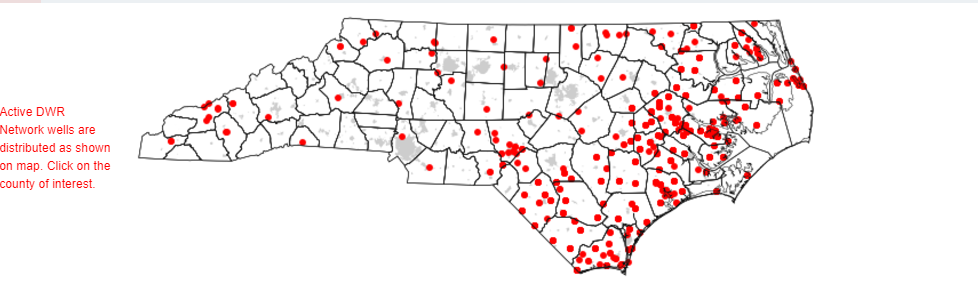
5. In North Carolina, Orange County’s team is contributing data for the Orange Well Net (OWN), a national groundwater observation well network. This network is a drought monitoring tool that is equipped with an early warning system for declining groundwater levels.  By detecting drought conditions earlier, water suppliers can enact the necessary steps to prevent a serious water crisis. 


4. Many of our teams are based in water districts and utilities or have roles in some other governing role in regulating their city’s water supplies.  It’s common, and in some cases legally required, that these agencies provide an annual water quality report. While steps like these are routine, they are a crucial and concise way of getting all relevant information out to the public.

3. In Elkhart, Indiana, a high school student aquatic biology program collaborated with community volunteers to remove a whopping 2,280 pounds of trash from their river! This number includes the 17 tires they pulled out, along with more commonly littered items. 


2.  Shrewsbury Borough’s Groundwater Guardian team in Pennsylvania is really friendly with its community, working within businesses and even hospitals to make sure that wellhead protection requirements are met. Developers are provided with GIS maps of Wellhead Protection Areas to ensure that no future contamination threatens the community’s water supply.

1. My favorite ROA is slightly biased in that, in May, I personally got to run an activity at the Grand Island Children’s Groundwater Festival. Over 700 5th grade students participated in a staple event of the area for almost 30 years. The most amazing thing about this festival is that it is replicated in almost every state that has a Groundwater Guardian team!  Besides the Children’s Groundwater Festival in Nebraska that I attended, similar festivals have taken place in Alabama, California, Illinois, Michigan, New Hampshire, New York, Ohio, and Texas.

Being the manager of the Groundwater Guardian program has been a great learning experience.  It’s sometimes easy to look at the gargantuan issues of depletion and pollution and think there’s no way to save our water.  The Groundwater Guardian’s network of talented and passionate individuals is an inspiring force that educates and supports communities to always do better by protecting and conserving of our most precious resource, water. 

Wednesday, May 31, 2017

It’s Water-Wise Wednesdays with Frannie the Fish! {Awesome Aquifer Kit: Improperly Abandoned Well}

This week in Frannie’s exploration of the Awesome Aquifer Kit is all about why you should properly seal abandoned and unused wells.

Did you know that 42 million people in the United States use a private, or individual well to provide water for their families?  But as cities grow and develop, more and more people are turning to municipal systems to get clean, treated water directly to their faucets.  An unused well is basically a direct line for contaminants to enter the groundwater, so it is very important that, if a well is going to be decommissioned, then a well contractor should be called to seal it properly.

But what actually happens if a well is not sealed properly?

In rural areas, such as homes on or near farms, an open well can be contaminated with animal waste, fertilizers, and pesticides.  After a rain, runoff may simply pick up these dangerous chemicals and flow right over the open will, depositing them into the groundwater supply.   If a well is dug deep enough and is connected to other water supply sources in the area, it could contaminate large sections of the aquifers and prevent many other people in the area from being able to access clean water.

Forgotten wells are a big problem too.  Well casings may rust or break down and, even without the help of any outside contaminants, pollute the groundwater.
Wells that are dug, instead of drilled, are typically shallow enough not to majorly affect groundwater quality.  However, if these wells are not sealed properly, their wide shape may cause unsuspecting people and animals to fall into them and injure themselves.

To learn more about wells and to find out where you can go to test and protect yours, visit The Groundwater Foundation's Wells and Wellhead Protection webpages. 

Friday, October 28, 2016

BLOG: First Groundwater Focused Plan to Address Nonpoint Pollution

by Sam Radford, Wellhead Protection Program Coordinator and Laura JohnsonIntegrated Report and TMDL Coordinator, Nebraska Department of Environmental Quality

The spotlight is on Nebraska as the EPA recently approved the Bazile Groundwater Management Area (BGMA) Plan. The BGMA Plan is the first groundwater focused plan in the nation to address nonpoint source pollution. The plan is the result of a collaborative effort to reduce groundwater nitrate contamination between the Nebraska Department of Environmental Quality (NDEQ) and four of Nebraska’s Natural Resources Districts (NRDs): Lewis and Clark, Lower Elkhorn, Lower Niobrara, and the Upper Elkhorn. The approval of this plan provides NRDs, Communities, and other Public Water Systems (PWS) an innovative framework to build upon, and new funding sources to protect the BGMA Wellhead Protection (WHP) Areas, as well as WHP Areas across the state.

Figure 1
The BGMA covers 756 square miles in northeast Nebraska and is home to 10 communities and over 7,000 residents (see Figure 1). Groundwater in the BGMA is the only drinking water source for communities and rural residents. Extensive row crop and sandy soils have allowed nitrate from land applied manure and commercial fertilizer to leach into the groundwater. The NRDs have collected data on groundwater nitrate concentrations since 1980. During that time, average nitrate concentrations have increased with some areas exceeding 30 mg/L, three times the levels safe for drinking water.

The plan focuses on reducing groundwater nitrate levels below 10 mg/L by progressively adopting more protective Best Management Practices (BMPs) throughout the BGMA. Community Wellhead Protection Areas are listed as the highest project funding priority. The NRDs will utilize a combination of agricultural BMPs required by elevated Groundwater Management plan phases, and voluntary BMPs outlined in the BGMA plan that go above and beyond phase requirements. Through the development of the BGMA Plan, the NRDs have created a cohesive strategy to monitor nitrate reductions in groundwater as fertilizer practices and irrigation methods are improved in the area. This monitoring data will also further refine future versions of the BGMA plan to ensure its goals are achieved.

To truly understand the significance of this plan, one must understand the history of water laws in Nebraska as well as at the federal level. In the past, groundwater and surface water were thought to be two separate water sources and were therefore regulated by separate water laws. At the federal level, the Clean Water Act (CWA) of 1972 charged the US EPA to regulate point source pollution to surface water. While the CWA began to successfully reduce point source contamination, it failed to effectively address nonpoint source contamination. In 1987, the CWA was amended, and the Section 319 Nonpoint Source Management Program was established to improve federal leadership and support, and focus local efforts on voluntarily reducing nonpoint source contamination (EPA 2016). Even with the 1987 amendment, the CWA act did not directly speak to groundwater, leaving management of groundwater resources to the states. Nebraska has been managing and regulating groundwater resources through the NRDs since the mid ‘70s. However, the hydrologic connection between surface and groundwater wasn’t legally recognized until 1996.This acknowledgement has led Nebraska to collaborative efforts that address nonpoint source contamination from a different perspective than what is generally found at the federal level.

The BGMA plan is the first EPA approved plan in the nation to address nonpoint source groundwater quality problems using the Clean Water Act. This is a milestone for communities who have struggled to obtain funding for projects that seek to educate and inform residents and local producers; and implement BMPs targeted at reducing nonpoint source groundwater pollution in their Wellhead Protection Areas. Until now, CWA Section 319 funding was only used on projects that address impairments in surface water or in areas that were listed as priority areas in a NRD’s watershed management plan. While more and more WHP areas are being targeted in watershed management plans, the BGMA plan is the first to address it from the standpoint of groundwater and to make WHP areas a priority for project funding.

Nebraska is unique in that approximately 88% of the state’s residents, and nearly all rural residents, primary source of drinking water comes from groundwater (NDEQ 2015). The geology, hydrology, and depth to groundwater determine how susceptible groundwater aquifers are to contamination. For example, sandy soils, little or no protective surface layers (i.e. clay or glacial till), and/or high groundwater tables leave drinking water aquifers especially vulnerable to point and nonpoint source contamination. The rate of groundwater movement ranges from inches per year(s) to inches per decade(s) compared to surface water which moves inches per day(s) to week(s) to enter surface waterbodies.

Table 1
Nonpoint source groundwater nitrate contamination is one of the most prevalent nonpoint source contaminants in Nebraska. It puts a heavy financial burden on communities and their Public Water Systems, as the only way to remove nitrate from drinking water is through treatment. In the last 20 years, five PWS and landowners with private wells in the BGMA have spent over $9 million dollars on treatment (see Table 1). This amount includes the cost of facility operations and maintenance (O&M) and point of use (POU) treatment systems for domestic well owners. Ultimately, the cost of treatment and O&M falls on the 4,201 residents that reside in the five affected communities and land owners in the surrounding area. In the future, the cost of treatment will only increase if the source of contamination is not addressed (NDEQ 2016). Nitrate contamination is prevalent throughout Nebraska and many other communities are dealing with the same problems as those in the BGMA (see Figure 2). This is just one example of why the work that has been done and will continue to be done in the BGMA is so important. Hopefully, the plan will pave the way for many other NRDs and communities to better respond to and manage nonpoint source contamination, especially in WHP areas.
Figure 2

The approval of the BGMA plan by the EPA has provided an entirely new source of funding that wasn’t previously available for groundwater and drinking water protection efforts. Since the creation of Nebraska’s voluntary Wellhead Protection Program, communities and PWS across the state have had the ability to create WHP protection plans to protect their drinking water sources. These plans identify possible sources of contamination in the WHP area and lay out management strategies to address sources of contaminants. The ultimate goal is to implement on-the-ground activities such as BMPs and education and outreach programs. More often than not this goal falls short as no direct funding is available to communities. Many communities do not have the time, support, education, or money needed to develop and implement effective WHP plans. Until now, the only financial assistance NDEQ has been able to give communities who wish to protect their drinking water sources are Source Water Protection (SWP) Grants. The grant program distributes up to $100,000 a year, which generally isn’t enough to fund multiple larger more involved projects. The SWP Grant has been limited in its ability to support long-term efforts to reduce nonpoint source contamination. The NDEQ is hopeful that communities will be able to better protect their drinking water sources through CWA Section 319 funding.

The BGMA plan approval by the EPA has also led to new activities for the SWP Grant to fund. As stated previously, the BGMA plan is the first in the nation to focus on ground water instead of surface water. Because most Nebraska communities use groundwater as a source for their drinking water, those communities were not included in earlier watershed management plans nor were they eligible for funding on their own. In response to the EPA approval of the BGWMA plan, the NDEQ is working with communities and the EPA to develop Drinking Water Protection Management (DWPM) Plans. These plans will be similar to the BGMA plan in that they will primarily be groundwater focused plans that specifically target WHP areas. These plans will:
  • Meet EPA requirements for alternative 9-element watershed management plans
  • Increase WHP area delineations from 20 to 50 year delineations using three-dimensional groundwater models
  • Include strong implementable Information and Education programs
  • Use community based planning processes to develop the plan

Currently three Nebraska communities are in the process of developing DWPM plans. Two through the 2016 SWP Grant and one proposed project that will combine available 319 planning money and other grant sources. The ability to independently qualify for 319 project funding would provide a much needed funding stream to the many struggling communities in Nebraska. These new opportunities would not be possible without the innovative work that was done on the BGMA plan. The NDEQ looks forward to working with Nebraska communities to protect and improve their drinking water.

A special thanks to the BGMA stakeholders and the many individuals from various local, state, and federal organizations for their contributions to the development of this plan.

You can view the plan at http://deq.ne.gov/publica.nsf/pages/16-013 and learn more about Drinking Water Protection Management Plans by visiting http://deq.ne.gov/NDEQProg.nsf/OnWeb/SWPGMain. Select the Invitations for 2016 Source Water Protection link and open the fact sheet PDF.

Sources:
EPA, 2016. Polluted Runoff: Nonpoint Source Pollution Webpage, https://www.epa.gov/nps/319-grant-program-states-and-territories

NDEQ, 2015. 2015 Nebraska Groundwater Quality Monitoring Report, 5 p. http://deq.ne.gov/publica.nsf/PubsForm.xsp?documentId=8DE603FF6ACDF2C086257F1100578674&action=openDocument.

NDEQ. 2016. Bazile Groundwater Management Plan, 42 p, http://deq.ne.gov/publica.nsf/pages/16-013.

Monday, September 26, 2016

BLOG: Protecting Groundwater Through Personal Contact and Best Management Practices

by Chris Barnett, Executive Director, Lawrence Community Development Corporation, Lawrence, Indiana

Indianapolis-Marion County, Indiana has been a Groundwater Guardian Community since 1998.  We recognized the value of The Groundwater Foundation’s programs even before that:  in the early 1990s, when the original team was helping to write our first Wellfield Protection Zoning Ordinance, the Foundation was able to provide us with examples of ordinances and regulations from other communities.

Our team is an all-volunteer board, which is legally structured as a 501c3 not-for-profit “supporting organization” to city-county government.  We contract with an environmental consulting firm to take care of two main responsibilities:  keeping a registry of the “potential contaminant sources” (commercial locations that use and store potential contaminants) in our seven wellfield protection areas, and working with those businesses to employ best practices and minimize risks to the water supply.  Our third main responsibility, which the board undertakes in cooperation with our consultant, is providing speakers and task force members to advise citizens and city-county government on a wide range of topics around groundwater protection.  Our association with The Groundwater Foundation and our long-time Groundwater Guardian recognition adds credibility to our message.  We highlight our Guardian status in presentations, reports, our website, and the printed materials we distribute to businesses.

Our universe is large.  Marion County is an urbanized county of approximately 400 square miles with an estimated population of 939,000.  The vast majority of residences and commercial establishments are served by the municipal water systems of Citizens Water, Lawrence Utilities, and Speedway Water Works.  The rest utilize private wells.  The City of Lawrence and its 47,000 residents are 100% groundwater-dependent.  The Town of Speedway, home to about 13,000 residents and the Indianapolis Motor Speedway, switches from part-surface to all-groundwater in winter when its surface water source becomes unreliable.  About 20-25% of Citizens Water production is groundwater, and that figure is growing with population and new connections.

Our program is voluntary and advisory, as local zoning ordinances can impose design and construction requirements but not operating requirements on businesses.  So our audience is generally limited to commercial/industrial property owners and operators, as well as city government and public health officials.   We stress personal contact and utilizing best management practices to reduce groundwater contamination risk within our wellfield protection districts.


The wellfield districts are set by ordinance as the 5-year time of travel zones around the public water supply wells in the county.  The wellfields encompass about 15% of the county’s land area.  On the map above, the 5-year TOT boundary is the white area; the dark gray area is the 1-year TOT.  Within these areas, there are 2,645 non-residential sites.  About half of the sites are judged to pose little or no risk to groundwater; 696 properties are regulated (or formerly-regulated) sites, and 681 more are unregulated but have commercial operations that could potentially pose a threat to groundwater.  Tracking the commercial uses and maintaining the registry database is a large undertaking, as is the effort to establish face-to-face communication with those businesses.

MCWEC consultant John Mundell addresses the
Riverside Area Superfund informational meeting.
Earlier in 2016, MCWEC directors and consultants mobilized to help organize and present information in a community meeting to address a proposed Superfund site in the midst of a high-production wellfield area.  Historic contamination suspected to be from commercial or industrial uses has been detected in raw water samples at production wells of Citizens Water.  The Indiana Department of Environmental Management worked with USEPA to study the issue, and the result was a proposed Superfund NPL designation.  Such designation in a drinking water protection area overlaid with a combination of residences and businesses carries both advantages and disadvantages.  We believe that the information presented by MCWEC helped community members who were present to better understand how they might respond to the proposed designation.

__________

Chris Barnett is the Executive Director of the Lawrence Community Development Corporation, as well as the team leader for the Indianapolis-Marion County Groundwater Guardian Team, the Marion County Wellfield Education Corporation. Chris also serves on The Groundwater Foundation's board of directors. Reach Chris at cbarnett.lcdc@gmail.com.

The views expressed in this blog are those of the authors and do not necessarily represent the view of The Groundwater Foundation, its board of directors, or individual members.

Monday, September 19, 2016

BLOG: Build the Relationship Before You Need the Relationship

by Christine Spitzley, Tri-County Regional Planning Commission, Lansing, Michigan

People dedicated to the protection of groundwater resources know that pollution prevention is easier, cheaper and more effective than cleaning up contamination. As Groundwater Guardian Team since 1995 our goal is simple, protect groundwater before it is polluted. The tricky part is messaging that goal in a way that is heard, believed and evolves into action. How do you effectively share messages about an unseen resource that everyone uses and yet takes for granted? How to you make it a priority in a world full of seemingly urgent information? How are you heard amidst all the noise? Is it worth it?

Randy Roost is the immediate past chair Michigan Section of the American Water Works Association and a Lansing Board of Water and Light employee. He succinctly summarized what we have been actively working towards in the Greater Lansing Area for decades: “You have to build the relationship before you need the relationship.”

Roost’s wisdom is directly on target. Confidence is earned. Locally, we do what many do across the country to tell our drinking water story. We host plant tours, write articles, bring booths to schools and fairs, engage in social media and give interviews. It can seem endless and repetitive. But when a boil water advisory becomes necessary, or an unexpected spill takes place, educated consumers who know their providers and understand their resources are more likely to trust that those responsible will put public health and safety first. Likewise, as the need to invest in aging water infrastructure continues to grow, stakeholders need to understand where their water comes from and how it is delivered. It is difficult for people to support what they do not understand.

If you are part of the media, seek out water professionals before an emergency. A resource every single person depends on daily IS interesting. A product that is delivered to every home and business daily IS worth noting.  

If you are a teacher please include water in your curriculum as part of science, math, and government. Create a generation of wise consumers who understand the many facets safe water.  

As a consumer, seek information and ask questions.  

If you are a Groundwater Guardian Team, keep sharing the message and building relationships.  

It’s worth it.

__________

Christine Spitzley is the Chief Environmental Programs Planner for the Tri-County Regional Planning Commission in Lansing, Michigan. She is also the team leader for the Greater Lansing Area Groundwater Guardian team, and has been since the team was formed in 1995. Reach Christine at cspitzley@mitcrpc.org.

The views expressed in this blog are those of the authors and do not necessarily represent the view of The Groundwater Foundation, its board of directors, or individual members.

Thursday, March 3, 2016

Groundwater Awareness is Important to You!

by Cliff Treyens, Director of General Public Outreach, National Groundwater Association

National Groundwater Awareness Week is March 6-12, 2016. Now well into its second decade, Groundwater Awareness Week spotlights one of the world’s most important resources — groundwater.

Who should be “aware” of groundwater? Quite simply, everyone.
 
Groundwater is essential to the health and well-being of humanity and the environment. Whether you’re on a public water system or a private well, whether you are a health care official, policymaker, regulator, an environmentalist or a groundwater professional, you can get involved in protecting this vital resource.

Groundwater Awareness Week is a great opportunity to raise awareness in your community about the importance of groundwater to all of us. Even if we don't have a water well ourselves, groundwater is an integral part of life on Earth.

Forty-four percent of the American population depends on groundwater for its drinking water supply — reason enough to act to protect groundwater. Another reason is that contaminated groundwater can harm the environment, including the ecosystems that depend on groundwater.

All people by their living habits can protect or harm groundwater — our nation and the world's most abundant freshwater supply. The first step toward protecting groundwater is to become aware of how it can be contaminated. The second step is to do your part to keep from contaminating groundwater. 

We challenge you to take this pledge:
 
I pledge to take one or more of the following actions to protect groundwater from contamination.
  1. Properly store hazardous household substances* in secure containers
  2. Mix hazardous household substances over concrete or asphalt where they can be cleaned up or absorbed
  3. Dispose of hazardous household wastes at an appropriate waste disposal facility or drop-off
  4. Do not put hazardous household wastes down the drain or in the toilet
  5. Do not put any wastes down a dry or abandoned well
  6. If I own a septic system, I will service it according to local health department recommendations
  7. If I own a water well, I will get a yearly maintenance check to ensure sanitary seals are intact
  8. Decommission abandoned wells on your property using a qualified water well contractor
  9. Fix or replace any leaking aboveground or underground tanks storing hazardous substances.
For more information about National Groundwater Awareness Week, please visit NGWA's website

Thursday, February 11, 2016

How We View Water


By: Anthony Lowndes, The Groundwater Foundation

With close to half of the United States relying on groundwater for drinking water, it is important to ensure a sustainable supply. In Nebraska, it’s close to 85 percent. The 2015 Statewide Groundwater-Level Monitoring Report indicates that Nebraska’s groundwater supplies are on the rebound. Aside from subsiding drought conditions and heavy rainfall, the implementation of technological advances in irrigation have reduced water consumption. On the domestic water use side, public awareness and the installation of water saving appliances has helped lower demand.

But quantity is not the only issue facing Nebraska, or any other area. While drought often causes increases in the amount of water withdrawn from the ground resulting in declines, contamination can ruin an entire source of water. There are several contaminants highlighted in the 2015 Nebraska Groundwater Quality Monitoring Report that are not so unique to Nebraska, such as nitrates and uranium. We need to continue to think critically and creatively when it comes to protecting water sources.

In several states, communities can proactively develop local protection measures for source water through Wellhead Protection programs. For the 43 million Americans who supply their own water through a private well, be sure to have your well tested on a regular basis and check with your local USGS office about potential contamination concerns.

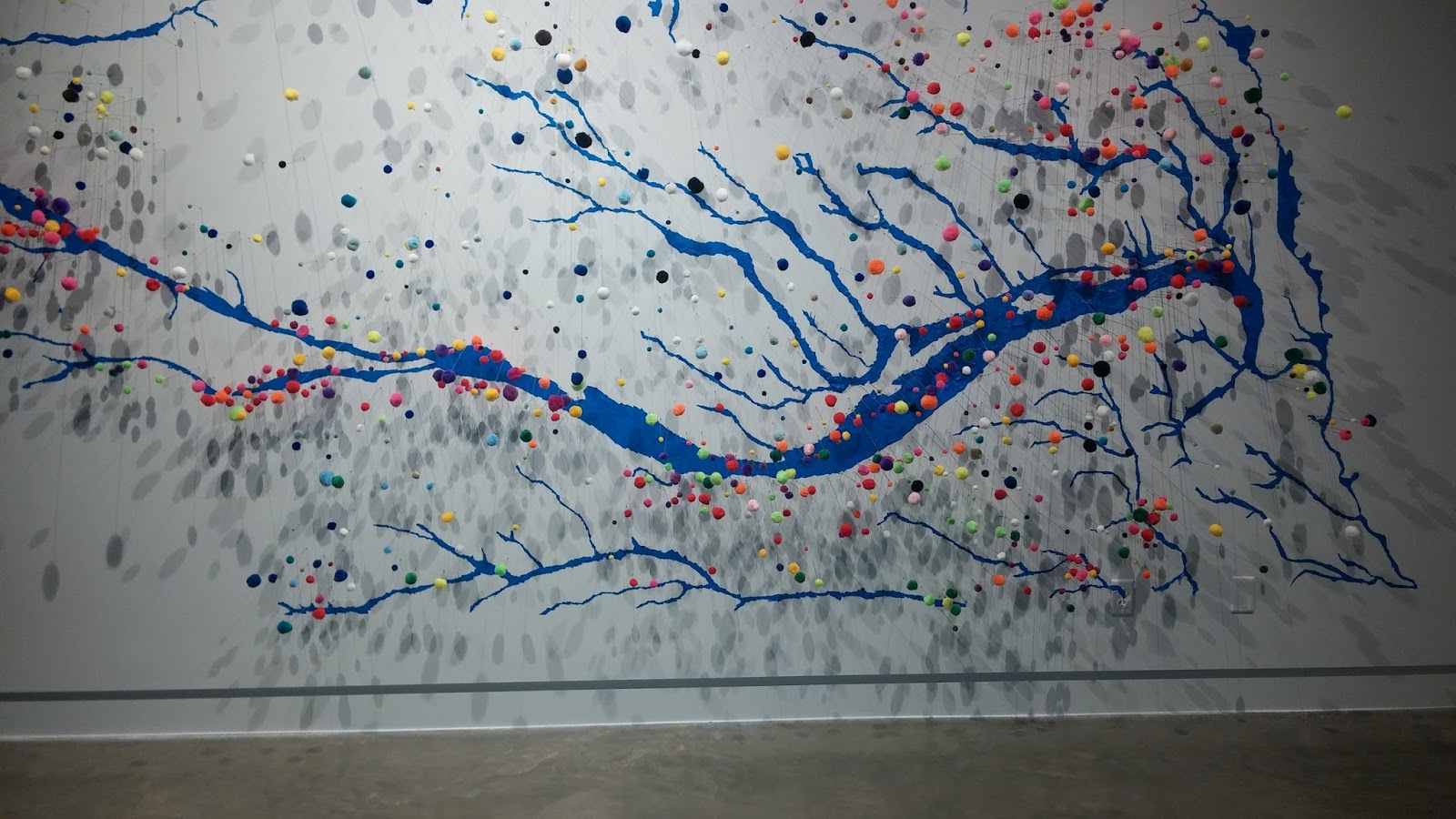
Water issues can be shared through a wide variety of mediums. For example, Kaneko, a public non-profit cultural organization in Omaha, NE, is currently exploring water issues in the Midwest and around the world through a variety of research and technological innovations and fine art displays, drawing the viewer into the world of water. One particular exhibit caught my eye. It is a to-scale outline of Nebraska that is over eight feet tall. The data points from the Quality Monitoring Report are represented by pompoms and color coded for each type of contaminant. Another is a fantastic artistic rendition of a combine and center pivot circling an enormous water drop.

Creating ways for people to visualize a resource that is often taken for granted is the goal of both the reports and the K
aneko Water exhibit. Find out more about water in your area and get involved in conserving and protecting it.

Friday, July 24, 2009

Tap or Bottled Water?

Recently I read an article about the difference and similarities between tap and bottled water. I began thinking more about some of the benefits and disadvantages of both. Bottled water can be convenient, it is sold cold at convenience and grocery stores everywhere; however tap water is a more economical choice. Some bottled water has distinct tastes that some people enjoy; however if you refill a reusable bottle or glass with tap water it reduces waste as well as the environmental impact of the bottling, packaging, and shipping process to get the water to your local stores.

Here are some other facts about tap and bottled water to think about the next time you are deciding between the two options.

- Americans drink more than 1 billion glasses of tap water per day. Water provided to consumers by a public water supply system is regulated by the Environmental Protection Agency (EPA). The EPA sets standards for over 90 contaminants that can be found in water. If the water from a public supply becomes contaminated and is a potential health risk, the water supply system is required to notify the public and provide an alternative safe source of water. In addition community water systems send out an annual report sharing with its customers the quality of their water source.

If the water you drink comes from a private well, which includes about 15% of the US population, you as the owner of the well are responsible for having the water tested. This should be done on a regular basis to make sure the water quality is sufficient for drinking. Water from private wells is not regulated by law; however the EPA sets guidelines for private well owners to follow.

- Americans spend over $10 billion dollars on bottled water every year. If you drink bottled water it may come from a public water system or a private source. The Food and Drug Administration (FDA) regulates bottled water and set standards for contaminants based on the EPA standards. When EPA creates a drinking water standard the FDA must either establish a new standard for bottled water or show proof that the EPA standard is not applicable to bottled water. When an FDA regulated contaminant is found at high levels in bottled water, the FDA will enforce action such as removing the product from stores. To learn more about the quality of bottled water consumers must contact the bottler directly.

When it comes to tap or bottled water, what do you choose? Are there specific reasons that make you decide to drink one or the other? I would like to hear what you think.